
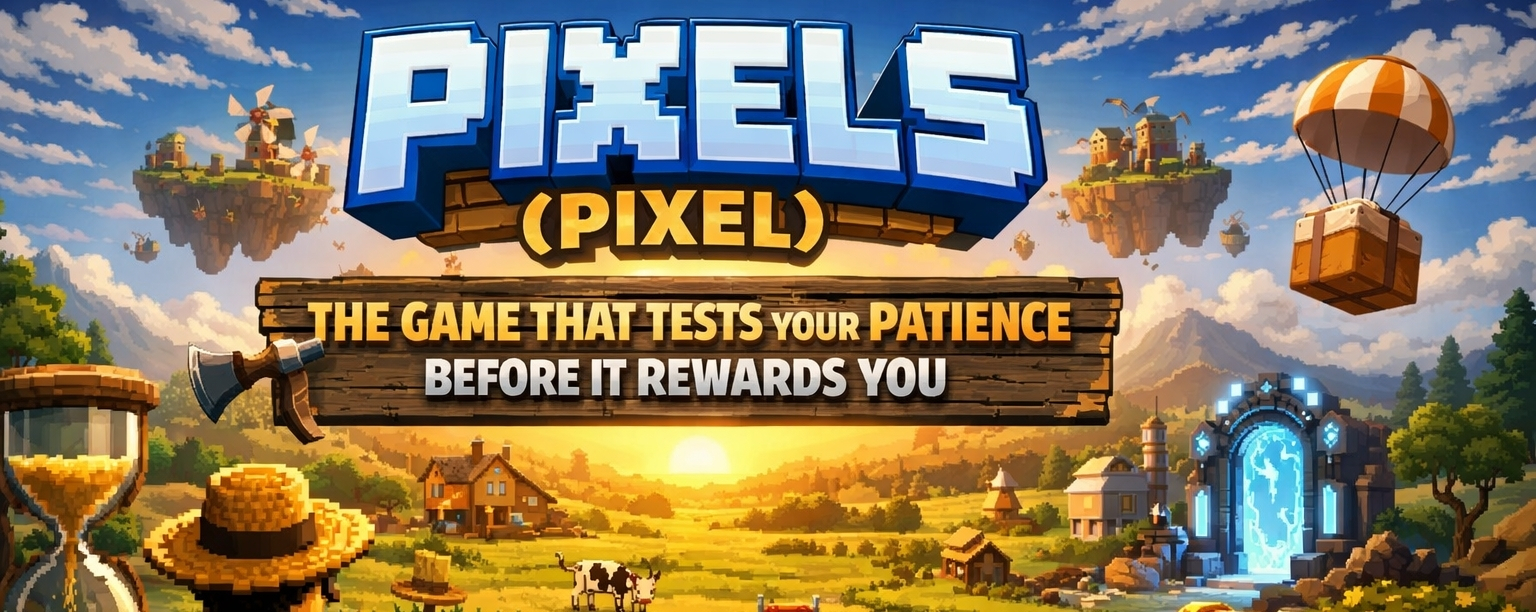
I didn’t expect much when I first opened Pixels. I’ve seen too many Web3 games front-load excitement — flashy rewards, fast tokens, quick exits. This one felt… slow. Almost uncomfortable at first.
You plant something, you wait. You walk around, nothing pushes you. No pressure to optimize, no loud signals telling you you’re “winning.” I remember thinking, is this even trying to keep me here?
But that’s where it started to feel different.
Most crypto games aren’t really measuring if you want to play. They measure how fast you react to incentives. Pixels flips that a bit. It holds value back. You don’t get much early on, and weirdly, that delay starts filtering behavior. If you’re still there after a few sessions, it’s not because of rewards… it’s because something about the loop is sticking.
And I think that’s the real system.
The farming, the pets, the land — those are visible layers. Underneath, it feels more like a test of patience and consistency. Time becomes the main input. Not capital, not skill, just… whether you come back. That’s a strange design choice in a space obsessed with instant ROI.
What makes it more interesting is how ownership ties into that. Assets aren’t just sitting in a wallet looking pretty. If you’ve got land or certain items, they actually shape how your time converts into output. It’s subtle, but it changes how you think about playing. You’re not just earning — you’re configuring your own small production system.
Still, I wouldn’t call it perfect.
There’s always that question in the back of my mind — does this kind of slow system hold up when real money pressure kicks in? When more players arrive chasing efficiency, do these quiet loops stay balanced, or do they get optimized into something else entirely?
I’ve seen enough in crypto to know that behavior changes fast once value becomes obvious.
But right now, Pixels feels like it’s trying something most projects avoid. It’s not asking how to attract users quickly. It’s asking who’s willing to stay without being bribed upfront.
And honestly… that might be the harder problem to solve.
Not how to bring players in.
But how to make them stay when nothing is forcing them to.
