
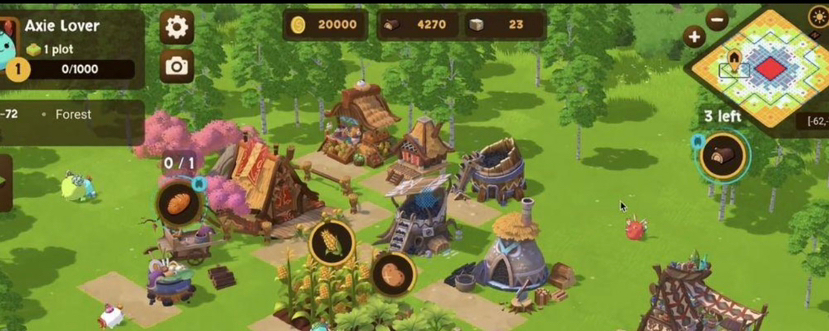


Pixels represents a deliberate shift in blockchain gaming, moving beyond speculative reward models toward a system grounded in economic design, player behavior, and long-term sustainability. Built on the Ronin Network, Pixels combines accessible gameplay with a more advanced framework for managing value creation and distribution within a digital ecosystem.
Moving Beyond Traditional GameFi
The first generation of GameFi projects relied heavily on static reward emissions to attract users. While effective in the short term, these systems often collapsed due to inflationary pressure and declining engagement. Pixels approaches this challenge differently by prioritizing gameplay as the foundation of its economy.
At a surface level, the game revolves around farming, exploration, crafting, and social interaction. However, these activities are not isolated mechanics. They form interconnected loops that generate, circulate, and consume resources within the ecosystem. This design transforms players from passive reward recipients into active economic participants.
A Closed-Loop Economic System
Pixels can be better understood as a closed-loop economy rather than a simple game. Value is continuously created through player activity and redistributed through in-game systems.
On the supply side, resources and rewards are generated through gameplay. Increased participation leads to higher output, which, if unmanaged, can create inflationary pressure. On the demand side, players require these resources for progression, crafting, and competitive positioning, creating internal consumption.
The balance between these forces determines the stability of the ecosystem. Unlike traditional models, where imbalance often leads to collapse, Pixels introduces mechanisms to dynamically adjust this equilibrium.
Dynamic Incentives and LiveOps Integration
A defining feature of Pixels is its adaptive reward system, influenced by LiveOps strategies commonly used in traditional gaming. Instead of fixed emission schedules, the game adjusts incentives in response to real-time player behavior.
For example, if a particular resource becomes overproduced, rewards associated with that activity can be reduced or redistributed. Conversely, if player engagement declines, incentives can be increased to encourage participation. This responsiveness allows the system to self-correct, reducing the risk of long-term imbalance.
Such a model reflects a broader trend toward integrating AI-assisted economic management, where data-driven insights guide reward distribution and ecosystem health.
Dual-Token Structure and Economic Segmentation
Pixels employs a dual-token architecture to separate routine economic activity from long-term value accumulation. One token facilitates everyday transactions within the game, such as crafting and trading, while the other supports governance, premium features, and broader ecosystem incentives.
This segmentation is critical for maintaining economic stability. By isolating high-frequency transactional usage from the primary value-bearing asset, Pixels reduces inflationary pressure while preserving utility across different layers of the system.
Infrastructure as a Strategic Advantage
The choice of the Ronin Network provides a strong operational foundation. Designed specifically for gaming, Ronin offers low transaction costs and high throughput, enabling seamless in-game interactions. This infrastructure reduces friction, which is essential for retaining users and sustaining economic activity.
Additionally, the network’s prior experience with large-scale blockchain gaming adoption, particularly through Axie Infinity, offers valuable lessons in both scaling and risk management. Pixels appears to incorporate these insights into its design, particularly in its focus on adaptability and retention.
The Central Variable: User Retention
Despite its sophisticated economic model, the long-term success of Pixels ultimately depends on user engagement. No system, regardless of design quality, can sustain value without active participation.
Retention drives every aspect of the ecosystem:
• Player activity generates supply
• Player demand consumes resources
• Continuous interaction sustains economic velocity
Pixels addresses this through social features, regular content updates, and its adaptive reward structure. However, maintaining this balance requires ongoing refinement and responsiveness to player behavior.
Risks and Considerations
While Pixels introduces several improvements over earlier GameFi models, it is not without risk. Over-adjustment of rewards could discourage participation, while under-adjustment could reintroduce inflationary pressures. Additionally, external market conditions and broader crypto sentiment can influence user behavior and capital flow.
The challenge lies in maintaining equilibrium between incentive and sustainability, ensuring that the system remains attractive without becoming unsustainable.
Conclusion
Pixels represents a meaningful advancement in the design of Web3 gaming ecosystems. By integrating player-first gameplay, dynamic economic management, and scalable infrastructure, it offers a more resilient alternative to traditional GameFi models.
Its long-term viability will depend on its ability to continuously balance supply and demand while maintaining an engaged user base. If successful, Pixels could serve as a blueprint for future blockchain games, demonstrating that sustainable value in Web3 is driven not by emissions or speculation, but by active participation and well-designed economic systems.
