
I was standing in the kitchen this morning, staring at the electricity bill that arrived yesterday—another quiet reminder of how much my daily routines depend on invisible systems of energy flow and cost. It made me pause over my coffee, wondering why we accept these hidden trade-offs without much fuss.
Later, while logged into Binance Square as part of the CreatorPad campaign task, I clicked into the Pixels section and scrolled through the marketplace listings. The energy bar sat right there on the screen, a small but insistent meter showing how many actions I could still take before needing to wait or spend more. That single moment—watching the energy tick down as I browsed farm plots and resources—hit me harder than expected. It corrected something I had taken for granted in crypto: the belief that digital scarcity is mostly about tokens or NFTs, when really it's engineered around these everyday limits that quietly shape who participates meaningfully and who just burns out.@Pixels
The uncomfortable idea is that energy systems in these environments aren't neutral tools for fairness—they're subtle mechanisms that recreate real-world economic hierarchies under the guise of gameplay. We like to tell ourselves in crypto that blockchain levels the playing field by removing gatekeepers and middlemen, letting anyone earn based on effort or capital. But when a project like Pixels ties progress to regenerating energy, it forces choices: casual players dip in and out with capped output, while those who can afford to accelerate or reinvest pull ahead consistently. It's not exploitation in the old sense, but it disturbs the romantic notion of pure meritocracy. Effort alone doesn't suffice if the system rations your capacity to exert it.
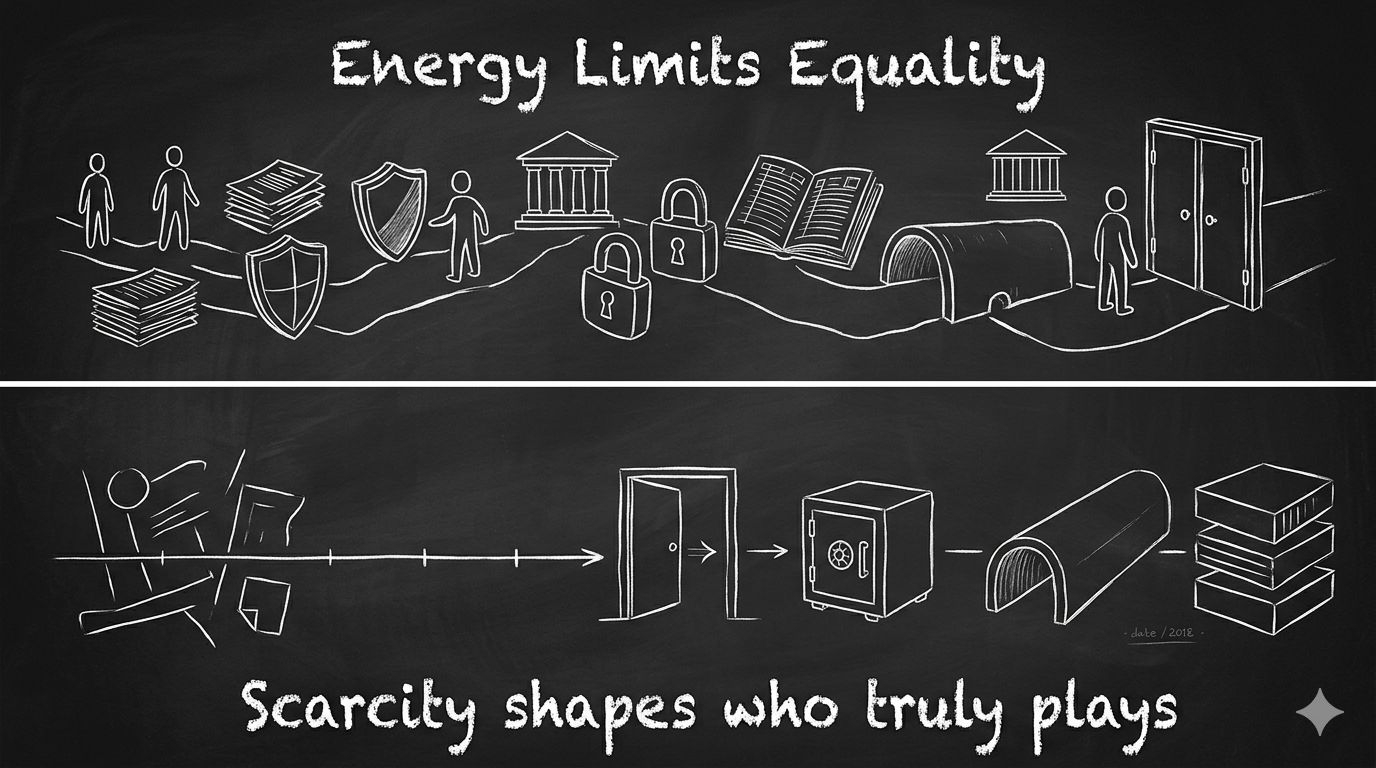
This goes beyond one game. Most crypto narratives push the dream of infinite scalability and open access, where participation equals opportunity. Yet these bounded resource loops reveal something riskier: economies, even virtual ones, thrive on managed scarcity and differential access. Without limits on energy or similar inputs, activity floods in chaotically, inflating supply or diluting value until nothing holds. The discomfort lies in admitting that what feels like thoughtful design might actually widen gaps—landowners or heavy investors gain compounding advantages through sharecropping mechanics or boosted regeneration, while others contribute labor that supports the whole without claiming equal upside. It's arguable, sure. Some will say it's just smart game balance that mirrors real farming or manufacturing. Others might counter that it exposes how crypto often imports the very inequalities it claims to disrupt.
Pixels serves as a clear example here, not as a flawless model but as one that's honest about these frictions. Its resource systems simulate decision-making under constraint: you plant, harvest, and expand, but always against that energy clock. The marketplace I navigated during the task wasn't just a shop—it was a window into how value circulates when time and capacity are rationed. Players aren't blindly chasing pumps; they're navigating trade-offs that echo broader economic realities, where abundance for some depends on calibrated limits for many.
What lingers is the quiet tension between the freedom crypto promises and the structures it still needs to function. If energy systems correct the illusion of effortless participation, do they ultimately make these digital worlds more resilient or just more stratified in ways we pretend aren't there? @Pixels #pixel $PIXEL