
 I’ve been rolling this around in my head for weeks now, and the more I play Pixels, the more I’m convinced it’s not really about the gameplay most of us think it is.
The first time I actually sat down and gave it some real time, nothing felt big or urgent. It was just… easy. Comfortable. I could hop in, wander through a few familiar loops, pick up a little progress here and there, and log out without the game ever nagging me to min-max every single second.
That laid-back vibe is honestly what got me hooked. It didn’t feel like one of those Web3 games slapping on a friendly face while secretly pushing you to grind nonstop. It felt like something quieter and smarter was going on underneath, just watching and remembering without making a fuss.
Then I started noticing certain players. Not the loud ones flexing their wallets or racing through everything. Just the quiet, steady ones who kept showing up with this natural rhythm. It was like the game already knew their vibe—like it wasn’t only tracking what they clicked, but how they moved through the whole thing day after day.
And that’s when it hit me differently.
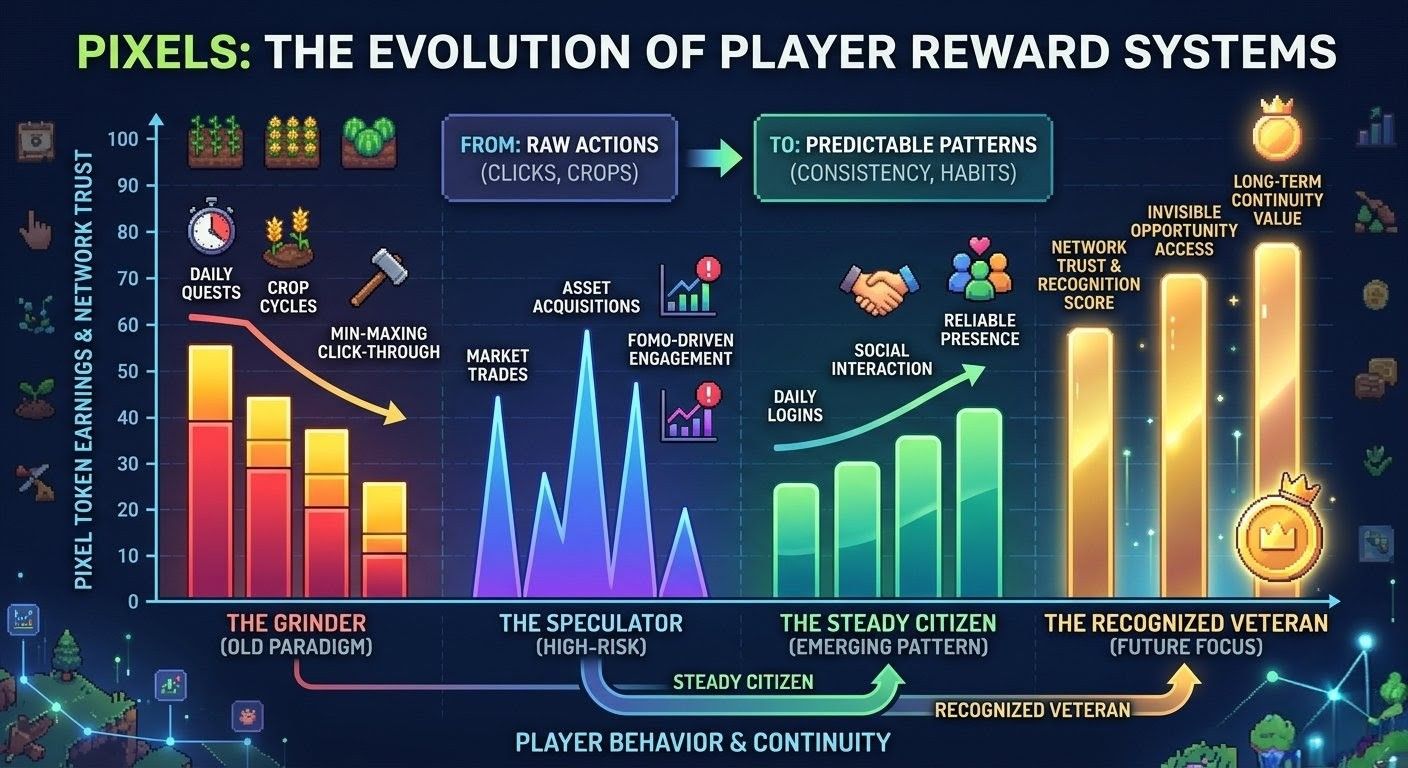
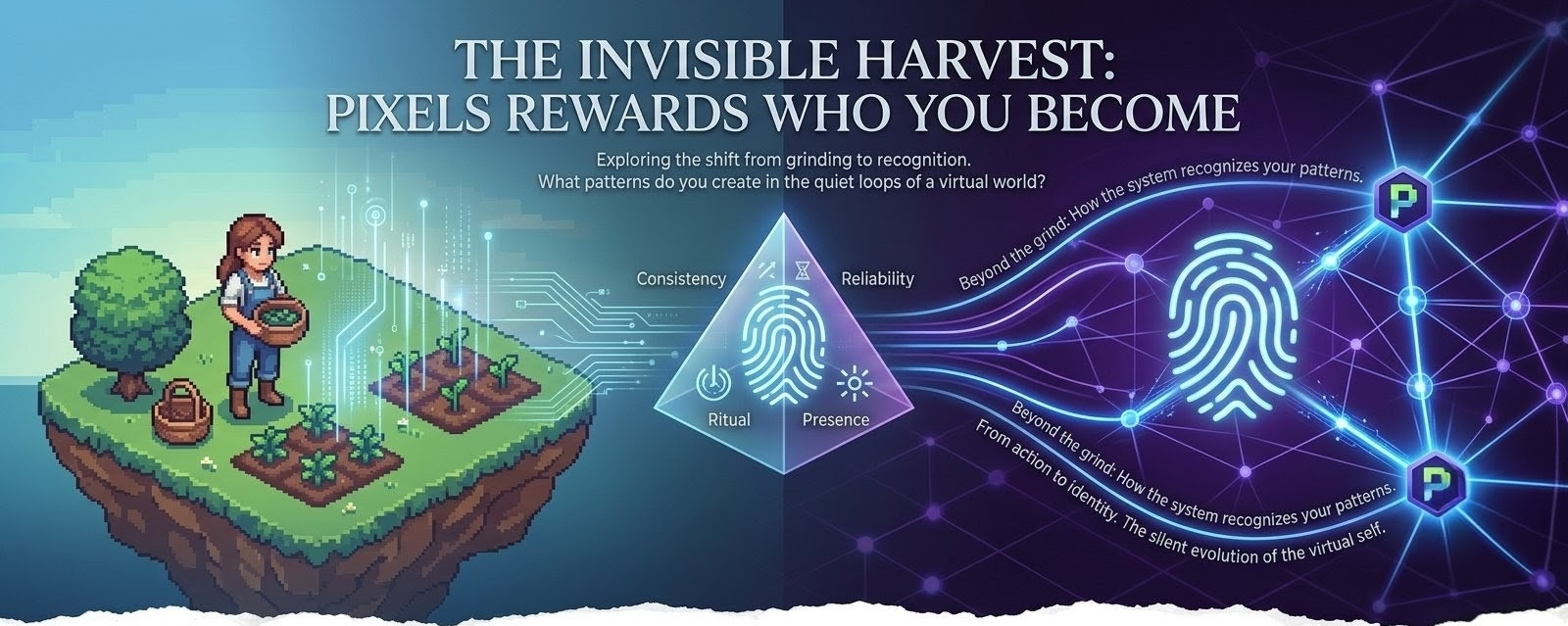
I don’t think PIXEL is mostly about paying you for clicks or crops or daily quests anymore. I think it’s starting to reward something closer to recognition.
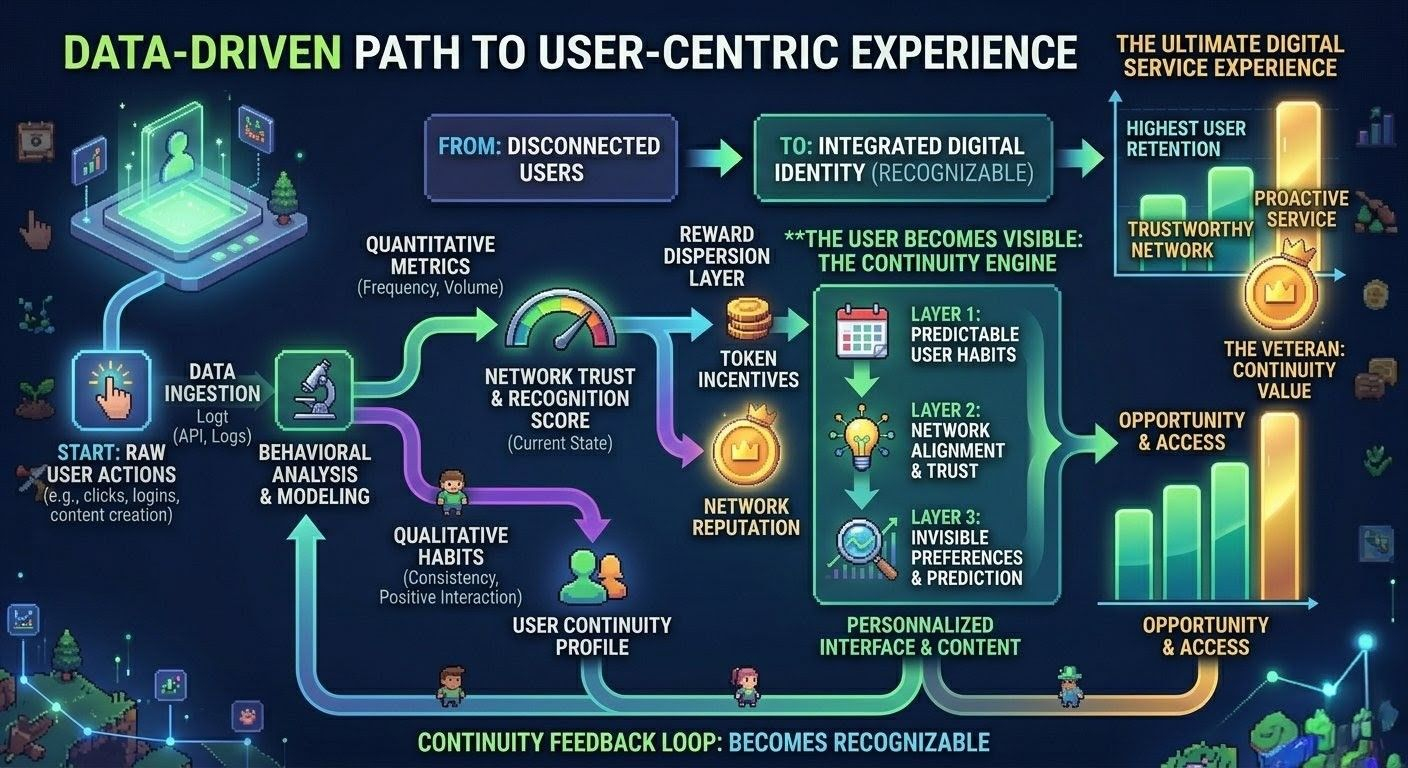
You know how most game economies are pretty straightforward—play, earn, spend, ride the hype wave? Pixels feels like it’s on a whole different wavelength. The stuff you see on the surface seems less important than the invisible patterns underneath: who keeps coming back in ways that feel reliable, who settles into a groove the system can actually understand over time.
Once the game starts recognizing you like that, it begins carrying you along in these tiny, almost invisible ways. Things just flow a little smoother. Opportunities line up better. It starts feeling like the world was kinda built for your style—not because you dropped the most money, but because your way of playing finally clicked with the machine.
It’s a weird kind of value, right? Not about doing more or grinding harder. It’s about becoming the kind of player the system actually wants to keep around—someone low-effort, consistent, worth quietly rooting for.
And yeah, that thought gets me both excited and a little uneasy.
Because the second people catch on to which habits “stick,” everyone’s gonna start copying them. What felt real and personal turns into performance. The game might look healthier on paper, but it loses all the weird little edges that made it fun in the first place.
There’s also the whole transparency thing that bugs me. Right now this layer is basically invisible—you can feel it happening, but you can’t really point to it or explain it. That’s fine early on, but eventually folks start sensing that some ways of playing are quietly getting favored, and when nobody explains why, the frustration builds up fast.
The big question for me is whether PIXEL is actually at the heart of any of this.
If you can ride those smooth, recognized loops without the token ever mattering much, then it all starts feeling like nice decoration instead of the real engine. The market will spot that disconnect sooner or later.
But if Pixels is truly turning real player behavior into something rare and valuable—if it’s building a system that rewards the people it can trust and keep reusing—then the token could mean something way deeper than the usual GameFi stuff.
I keep coming back to this one simple thought:
Maybe the real game in Pixels isn’t about pushing harder or doing more.
Maybe it’s about becoming recognizable enough that the system starts carrying little pieces of you forward—and making that quiet continuity actually matter.