


I didn’t expect that one phrase to carry this much weight.
“Return on reward spend.”
At first it reads like a metric. Something you track after the fact. But the more I sat with it, the more it felt like a constraint the whole system is being rebuilt around.
Because most Web3 games never treated rewards like something that needed to return anything.
They treated them like fuel.
Emit enough, activity goes up. Cut emissions, activity drops. That was the loop.
And it worked for a while until it didn’t.
Because the system never asked a harder question:
what exactly are we buying with these rewards?
That’s the part Pixels is trying to fix.
Not by reducing rewards. Not by redesigning missions.
But by forcing every reward to justify itself.
And once you do that, the architecture has to change.
Because you can’t measure return on reward spend inside a quest board.
A quest board only sees completion.
Task done → reward paid.
It doesn’t see what happens after. It doesn’t know if the player stays. It doesn’t know if they spend. It doesn’t know if they ever come back.
So it keeps paying for activity without knowing if that activity has any value.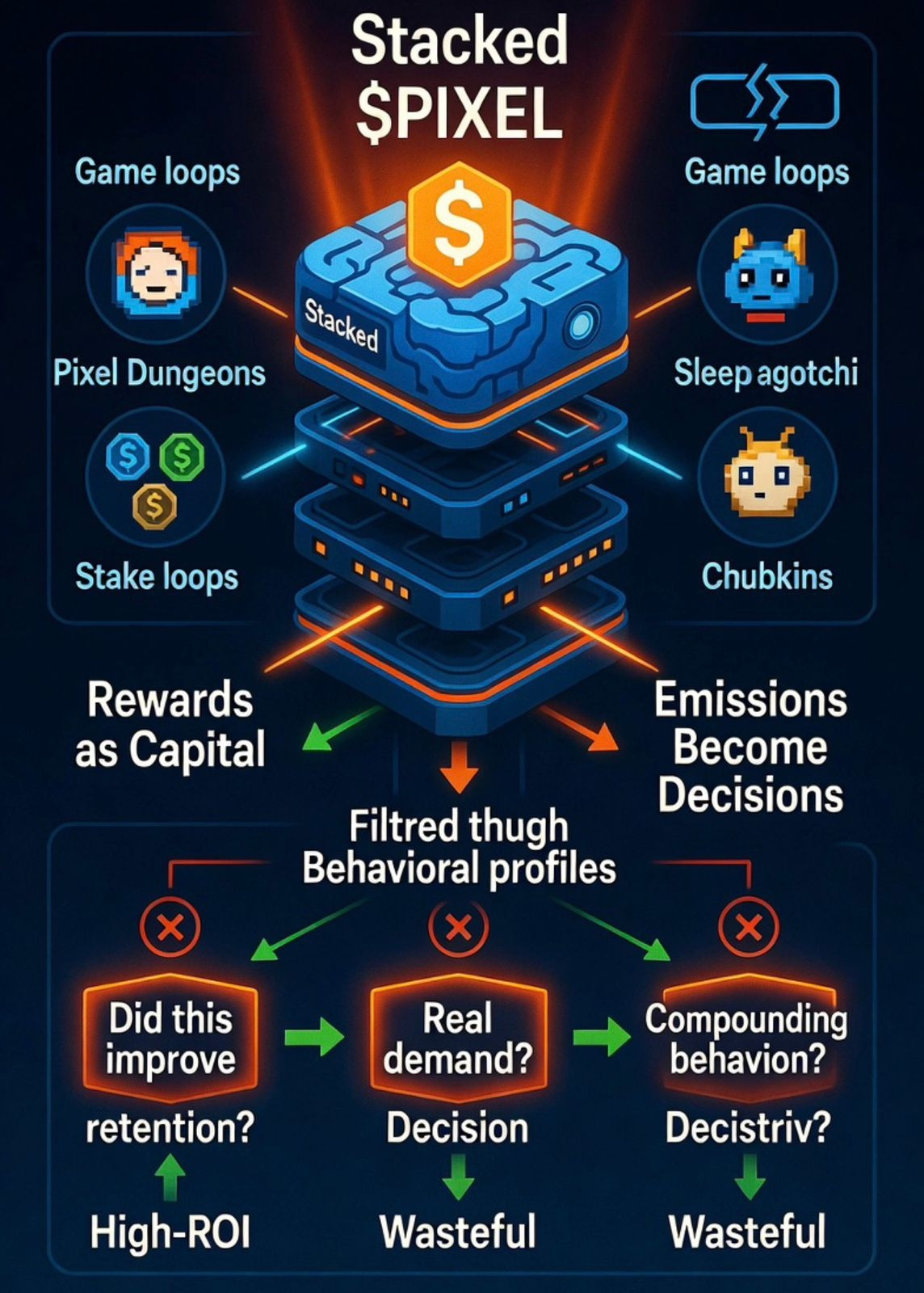
That’s where Stacked starts.
Not from missions, but from outcomes.
The system isn’t asking “did the player complete the task?”
It’s asking “did paying for this behavior improve the economy in any measurable way?”
That’s a much harder question.
Because now rewards become capital.
Every payout is a spend decision.
And every spend needs to produce something:
longer retention real in-game demand conversion into spending healthier circulation or at least behavior that compounds over time
If it doesn’t, it shouldn’t be funded again.
That’s the logic Stacked is trying to operationalize.
And it only works if the system sits above the game loop.
Because you need to see more than just the action.
You need to see sequences.
What did the player do before this? What do they do after? Do they return when rewards drop? Do they disappear the moment incentives compress?
That’s where event tracking stops being analytics and becomes infrastructure.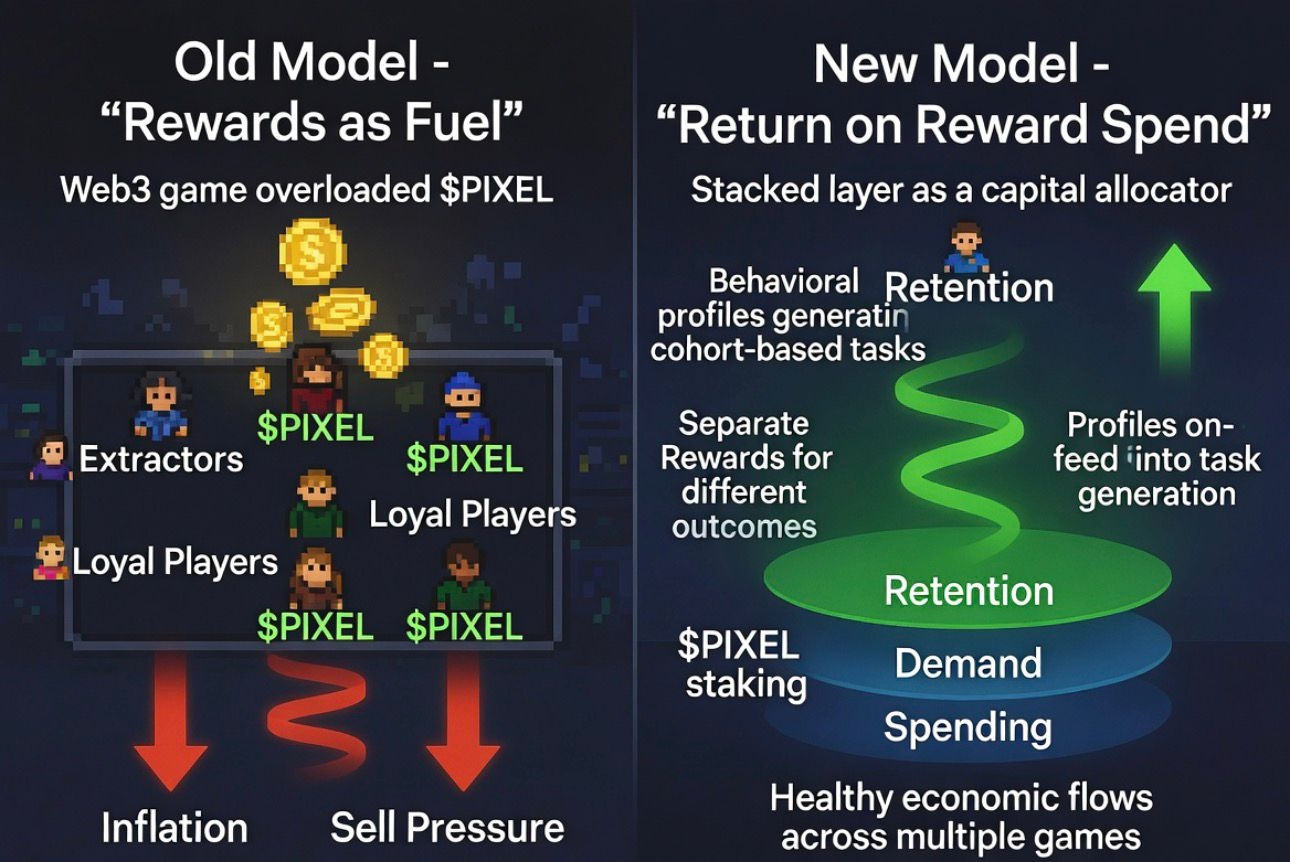
Every action feeds into a behavioral profile.
Not a static identity, but a pattern.
And those patterns are what the system actually uses.
Players who only show up during reward spikes. Players who stay even when incentives are low. Players who respond to streak pressure. Players who extract efficiently and leave.
These aren’t observations.
They’re inputs into how budget gets allocated.
Because once you move into a “return on reward spend” model, you can’t treat all players the same.
Paying an extractor and paying a long-term player is not the same investment.
Even if they complete the same task.
That’s where Stacked replaces the quest board entirely.
Instead of showing everyone the same missions, it decides who should see what.
Not based on level or progression, but based on expected return.
So the flow becomes:
behavior observed → cohort identified → task generated → reward calibrated → outcome measured
That loop is the core system.
And it only works because Pixels is no longer operating as a single game.
Pixel Dungeons, Sleepagotchi, Chubkins these aren’t just separate titles. They’re different environments generating different behavioral signals.
A player might grind efficiently in one. Explore casually in another. Disappear completely in a third.
Stacked sees all of that.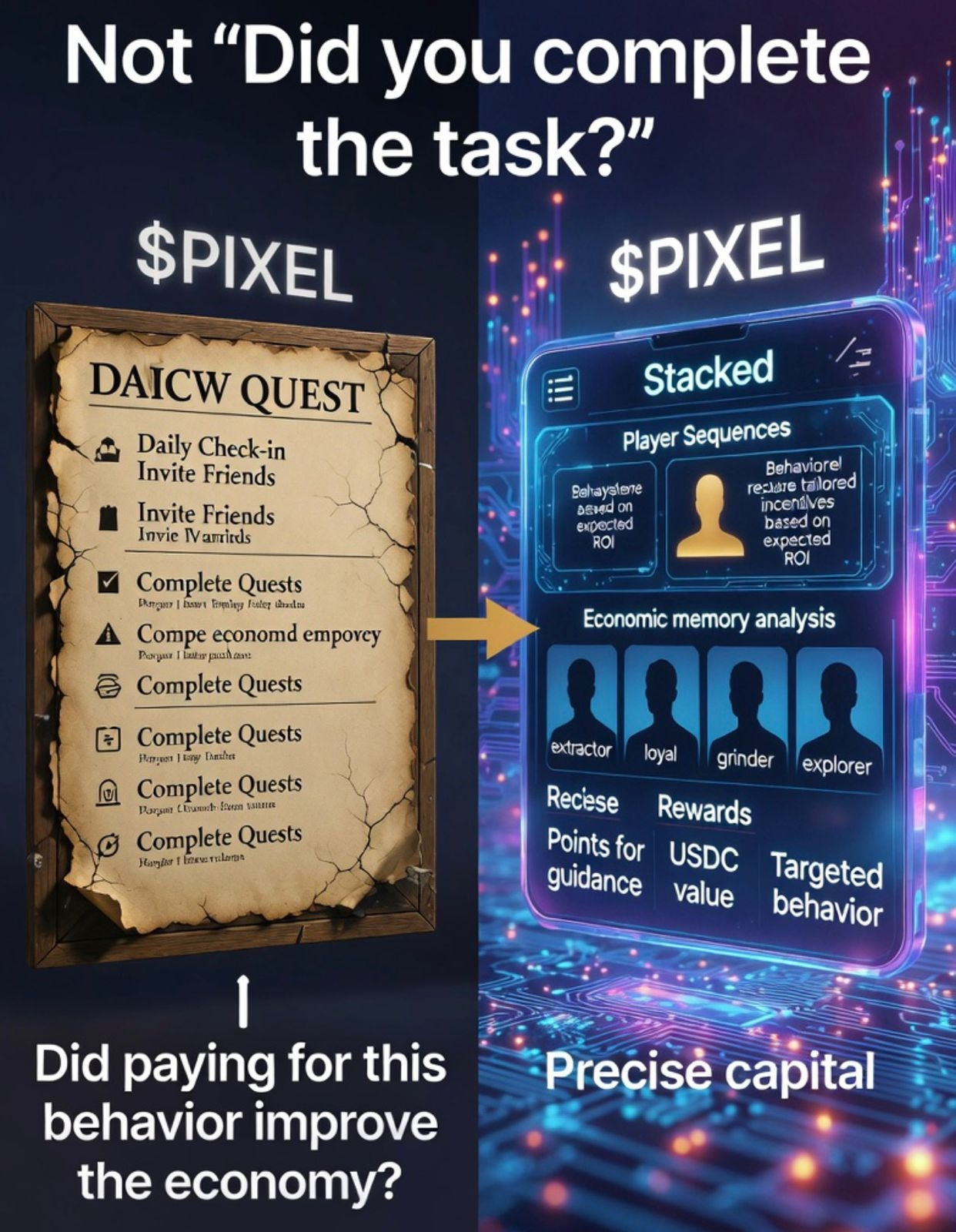
That’s where the system starts building memory.
Not session memory.
Economic memory.
It understands how a player responds to incentives across contexts, not just inside one loop.
That’s what allows it to make better decisions over time.
And it’s also what makes the system dangerous if it gets it wrong.
Because once rewards are allocated based on these signals, any misread scales.
If the system starts rewarding extractive behavior because it looks like engagement, it doesn’t just make a small mistake.
It funds that behavior across the entire ecosystem.
You end up with high activity, strong metrics, and an economy that’s quietly being drained.
That’s harder to detect than a broken emission model.
Because nothing crashes immediately.
It just degrades.
That’s why the controlled rollout matters more than the feature itself.
You can’t build this kind of system in theory.
You have to observe it under pressure.
Starting with internal titles gives Pixels something most projects don’t have context.
They already know where rewards leak. They already know which loops produce real value. They already know how players behave when incentives shift.
So when Stacked is introduced, every change is meaningful.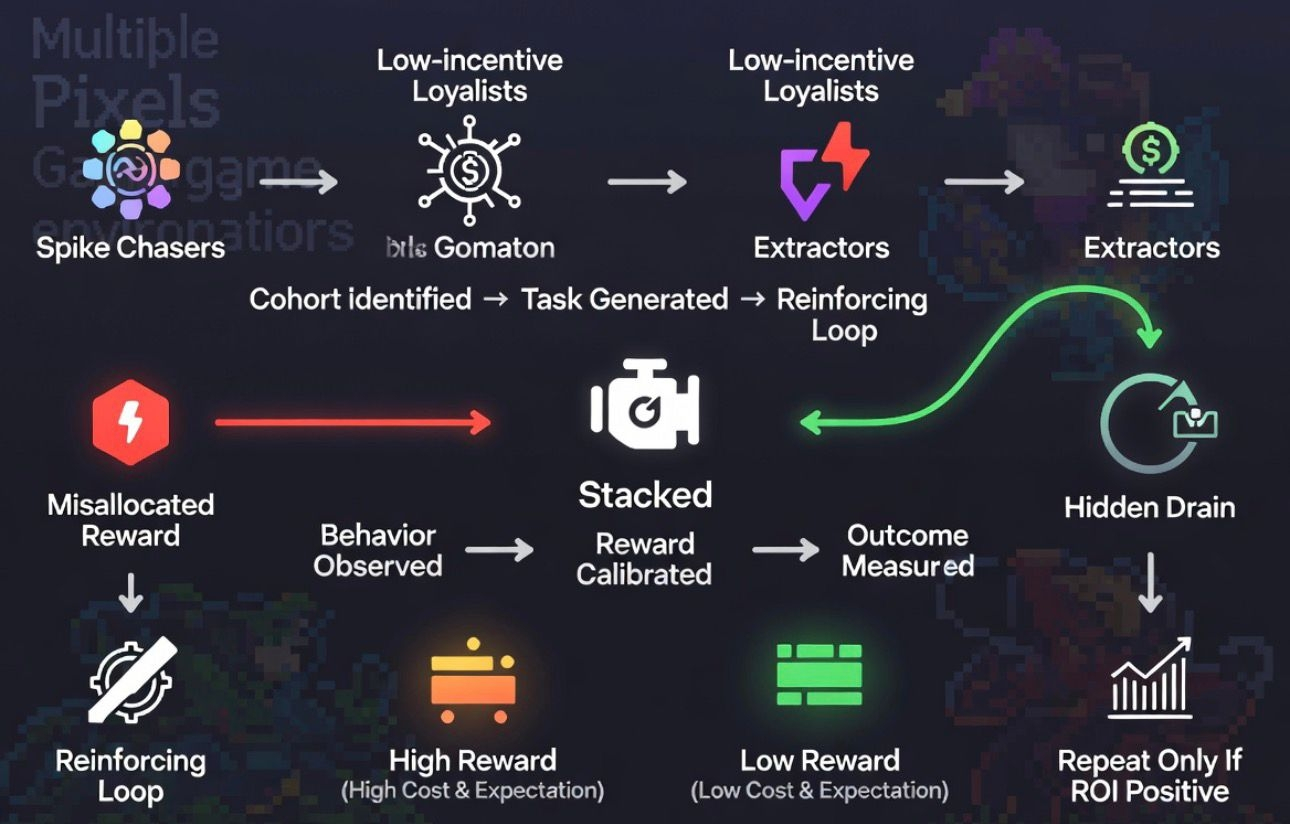
If a cohort starts exploiting a pattern, they can isolate it. If rewards overpay for low-value behavior, they can correct it. If something actually improves retention or spending, they can reinforce it.
That’s calibration.
And without it, a “return on reward spend” model collapses into guesswork.
The token design direction fits directly into this.
You can’t measure return properly if every reward is the same asset.
One-token systems force everything into a single stream.
That’s where most Web3 games broke.
Because the same token had to act as: reward incentive speculation layer alignment mechanism
Every behavior contributed to the same emission pressure.
And eventually, that pressure overwhelmed the system.
Stacked breaks that by separating rewards.
Stable assets like USDC can be used where predictability matters. Points can guide behavior without immediate economic pressure. $PIXEL can move toward a more staking-centric role, tied to deeper participation rather than constant distribution.
Each reward type carries a different cost.
More importantly, a different expectation of return.
That gives the system precision.
It can fund behavior without automatically turning every payout into sell pressure.
It can test incentives without risking the entire economy.
It can scale what works without inflating what doesn’t.
But this only works if the coordination layer holds.
Because once you introduce multiple rewards across multiple games, fragmentation becomes the default.
Players will chase the easiest payout. Studios will optimize for short-term engagement. The ecosystem can split into disconnected loops.
Stacked is trying to prevent that by acting as a central allocator.
Not just distributing rewards, but deciding:
which behavior deserves funding which cohort should see which task which reward type should be used and whether the outcome justifies repeating that spend
That’s not a quest system.
That’s capital allocation.
And it’s why this doesn’t feel like a feature launch.
It feels like Pixels externalizing something they were already using internally.
The mention of millions of players, hundreds of millions in rewards, thousands of experiments that’s not just marketing.
It’s context for how this system was shaped.
Through failure.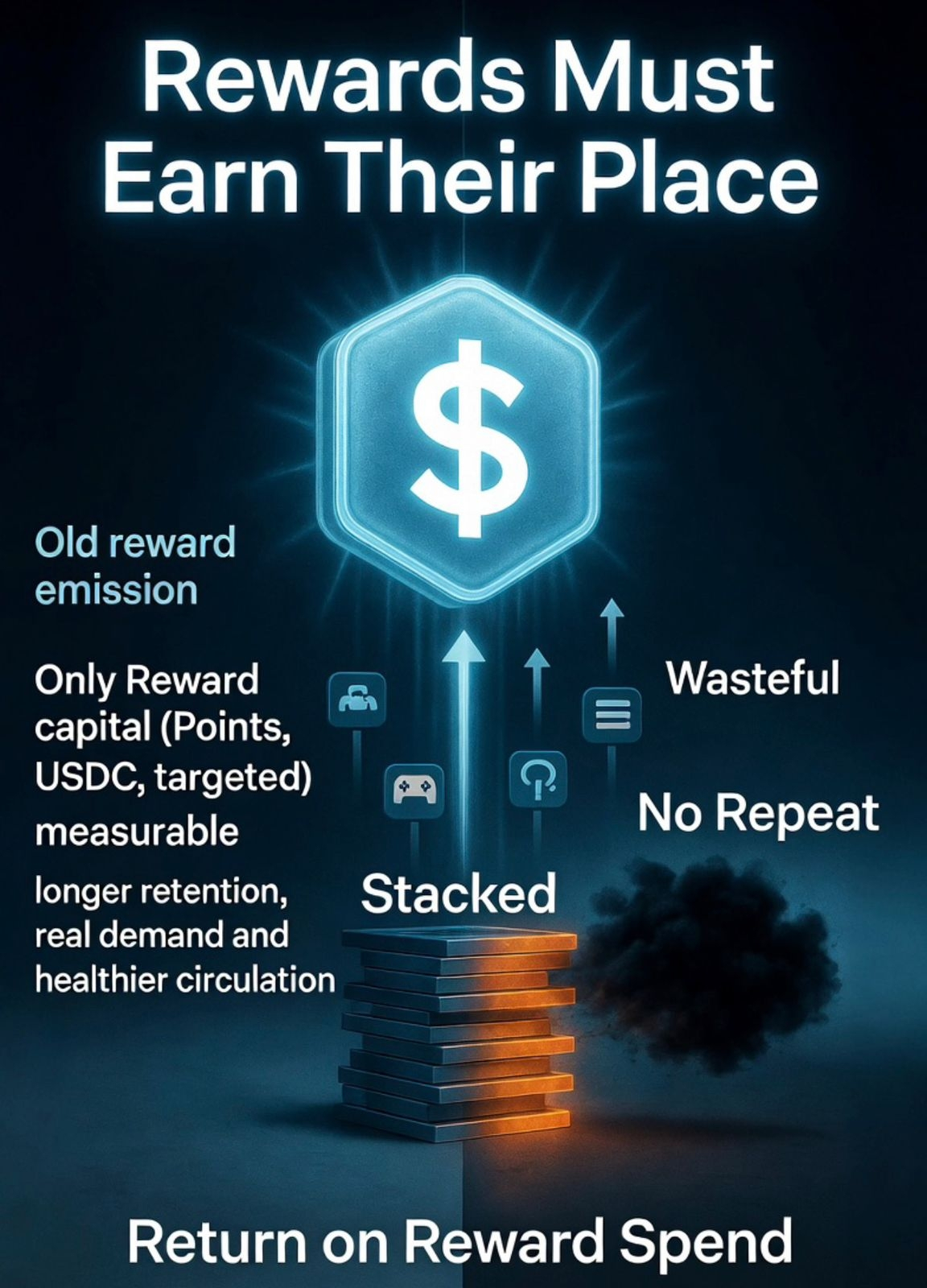
Reward inflation. Extraction cycles. Shallow retention.
All the patterns that broke earlier models are now constraints inside this one.
That’s why the tone is different.
It’s not “this will fix play-to-earn.”
It’s “this is what we built because the old model didn’t work.”
Now they’re turning that into infrastructure.
Something that can sit above multiple games and continuously decide where incentives should go.
That’s the real shift.
Not more rewards. Not better missions.
A system that forces rewards to earn their place in the economy.
And once you build around that, you don’t go back to emissions.
Because you stop asking how much to pay.
You start asking whether paying at all makes sense.