
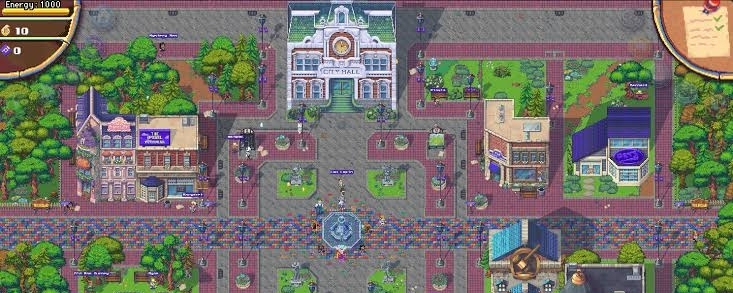
There is a moment in Pixels that most players experience but rarely talk about.
You walk into someone else's land for the first time, a proper NFT farm with industries lined up along the edges, crops in neat rows, a little cooking station tucked near the house. You have been playing on your free Speck for a few weeks. You know the basics. And then you see what a well-built farm actually looks like, the tier 3 oven, the organized soil plots, the mill running quietly in the background, and you realize you have only been seeing a fraction of what the game is.
That moment is the crafting economy explaining itself without saying a word.
I have spent a lot of time in Terra Villa watching how players interact with the production systems, and what strikes me most is how naturally it mirrors the way real small economies work. People specialize. People trade access for yield. Someone who owns a rare resource slot quietly becomes the person everyone wants to visit. The cook who knows which recipe the task board is rewarding this week is worth more to a guild than the person grinding raw materials alone.
Life in Pixels revolves around tending land, gathering resources, trading with others, and uncovering the stories of the characters who populate the world. Players start as newcomers still learning how to work with the land. Over time they learn to care for crops, raise animals, craft tools, and interact with the local community.
That description sounds simple. But the depth underneath it is real.
Raw resources in Pixels can be crafted into other items through cooking, brewing, or creating tools and furniture. Some crafts require special blueprints or recipes acquired through gameplay or events, which means not every player has access to the same production options even at the same skill level.
That last part is important. The game does not just reward time investment. It rewards knowledge. A player who learns which recipes are currently lucrative, which crafting stations are available on nearby public lands, and how the task board rotates its weekly priorities will consistently outperform someone grinding blindly at the same skill level. The information gap is as valuable as the resource gap.
Chapter 2 made natural resources global and shared across the game world. A forest can only be cut once before the cycle resets. Trees take between two and a half hours and twenty-four hours to regrow depending on whether the stump was removed. There is a genuine daily cap on how much softwood, hardwood and sap the entire player base can extract.
I remember the first time I arrived at a public forest to find every tree stripped bare, a dozen avatars standing in an empty clearing waiting for regrowth. It was oddly funny and oddly meaningful at the same time. In most games, that kind of resource depletion would feel like a bug or poor design. In Pixels it felt like something true: like standing in a real orchard after harvest season, just waiting for the trees to be ready again.
That shared scarcity changes how players relate to each other. You start paying attention to which lands have forests, which mines are running low, which landowners keep their stations open to visitors. You build mental maps of where things are and when they will be available. The game teaches you to think in cycles rather than in immediate transactions.
Industries in Chapter 2 also became exclusive to one user at a time. Crafting stations on public lands cannot be used simultaneously by multiple players. You arrive, you wait your turn, or you move on to another land.
That waiting is not a frustration. Or rather, it does not have to be. Some of the most interesting conversations in the game happen while players queue for a mill or a press, two avatars standing outside a crafting station talking about which task board orders are worth prioritizing, or just chatting while the game runs in a browser tab. The scarcity that slows down production is the same scarcity that creates social moments.
The cooking skill sits at the heart of all of this in a way that rarely gets attention. Every single NFT land house in Pixels comes with a cooking stove as a baseline feature. It is the one industry present on every plot regardless of what else the landowner has built. Cooking is the universal entry point into the crafting system, accessible to everyone from the first day.
What gets interesting is what cooking connects to. Cooked items restore energy, which means a player with real cooking knowledge can extend their active session beyond what their base energy allows. Certain cooked goods are required by high-tier task board orders. Others chain into more complex recipes that are only available to players who have committed to leveling the skill seriously. A Cooking Level 60 player and a Cooking Level 10 player are occupying different economies inside the same game.
The task board rotates its focus weekly, sometimes prioritizing cooking recipes, other times mining or forestry. Players who have diversified their skill investment across multiple industries can move with those rotations rather than sitting out the weeks when their primary skill is deprioritized.
This is the insight most guides miss. Single-skill specialization made sense in earlier versions of the game. The current economy rewards players who have built enough breadth to adapt. The week cooking leads the task board is the week the cooking specialists feel the most rewarded, but the week after, when the board shifts to forestry, those same specialists are left waiting unless they prepared.
There is a broader lesson in that, one that applies well beyond Pixels. Economies that rotate their rewards punish rigidity and reward adaptability. The players who thrive long-term in Terra Villa are not the ones who found the best single strategy and held it. They are the ones who kept learning.
The highest-tier crafting stations remain exclusive to NFT lands. Free players on Specks are capped at Tier 2 industries, which limits the complexity and value of what they can produce independently. But many landowners keep their plots open to visitors, and building a genuine relationship with an active landowner often means access to Tier 3 and Tier 4 equipment without owning anything yourself.
I have seen players without any land ownership produce at a level most speculators would not expect, purely because they took the time to learn the system, show up consistently, and build real in-game relationships. That is not a fairy tale version of how the game works. It is just what patient engagement looks like when the economy rewards skill over spending.
The risks are honest ones. The early stages of any crafting skill feel slow, and it takes patience to see the higher-tier recipes become meaningful. Weekly task board shifts mean there are stretches where your current skill set does not align with the best rewards. And the queue for public crafting stations during busy events can genuinely test your patience.
Watch over the coming months whether new recipe tiers or seasonal crafting events introduce fresh ingredients that shift the current production meta. Each time the game adds a new craftable good, the supply chain for its ingredients tightens, and the players who noticed first tend to benefit most quietly.
The kitchen in Pixels is not decoration. It never was.