
 One thing becomes obvious after a few sessions in Pixels—and it’s not the farming, or the economy, or even the $PIXEL token.
It’s the lack of direction.
You’re not guided step-by-step. Quests don’t constantly push you forward. NPCs give hints, not instructions. Sometimes you’re just walking around Terravilla wondering what you’re supposed to do next—and that feeling isn’t accidental.
At first, it feels like the game is missing something.
Then you realize—it’s removing something.
Pixels doesn’t guide you clearly because it wants you to build your own direction.
And that changes everything.
Most games are built around clarity. You know your objective. You follow it. Progress is structured. Pixels breaks that pattern. It gives you systems—energy, resources, land, crafting—and then steps back.
No forced path.
No fixed “right way” to play.
Just space.
But here’s the kicker: that freedom isn’t actually simple.
Because when no path is given, players start creating their own.
You begin experimenting. Trying random things. Talking to players. Testing what works. Maybe you focus on farming. Maybe you start trading. Maybe you just explore. None of it is wrong—but none of it is guaranteed to work either.
That uncertainty creates something rare.
Ownership over your experience.
And that’s where Pixels starts to feel different from most Web3 games.
Because instead of optimizing a known system, you’re navigating an unclear one.
Some players thrive in that.
They enjoy figuring things out. They treat the game like a puzzle. Over time, they build their own “playstyle”—a way of interacting with the world that feels personal.
Others struggle.
Without direction, the game can feel slow. Even confusing. The lack of clear rewards early on makes it harder to understand what matters. And in a space where many games push instant gratification, Pixels asks for patience.
That’s a risk.
But it’s also the point.
Because once you do find your direction, the system starts making more sense. The energy you spend, the resources you gather, the way you move through the world—it all begins to align. You’re no longer following the game.
You’re shaping how you play it.
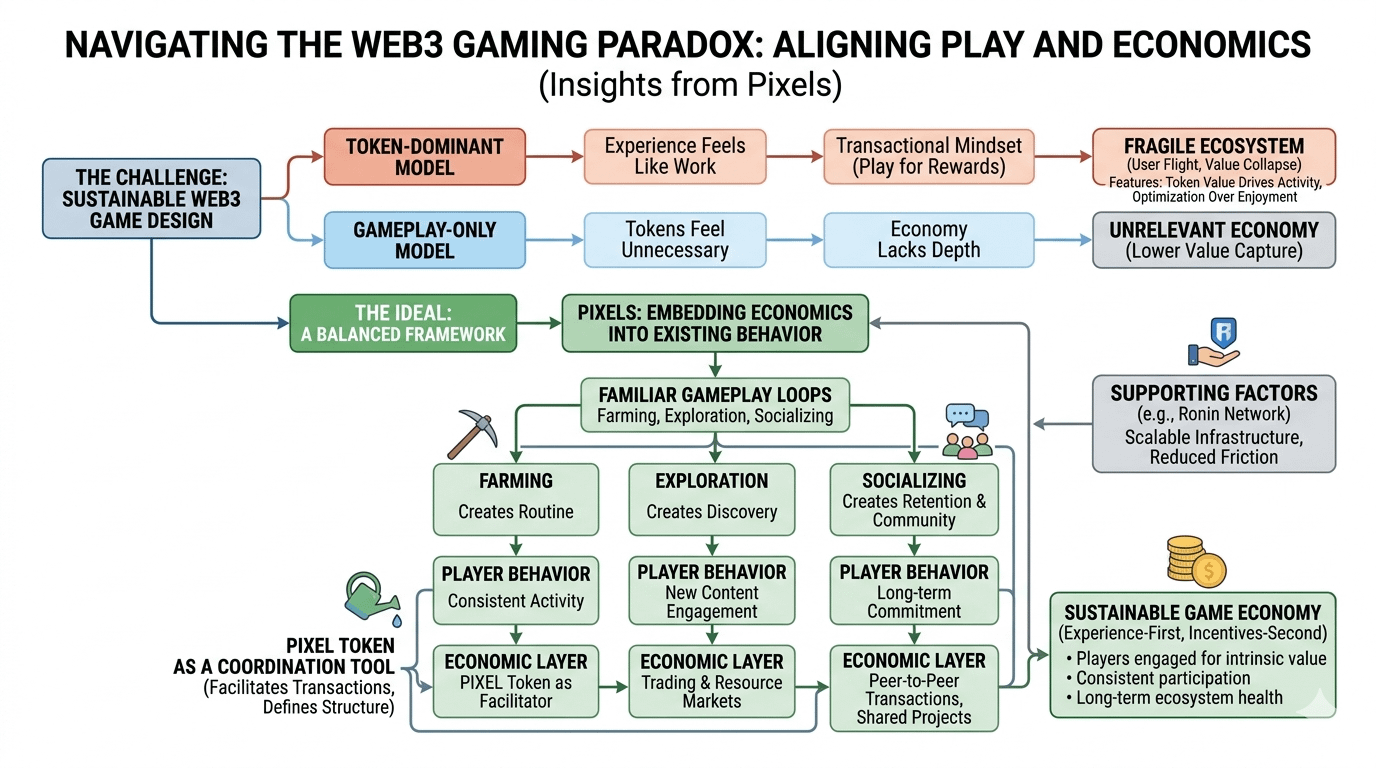
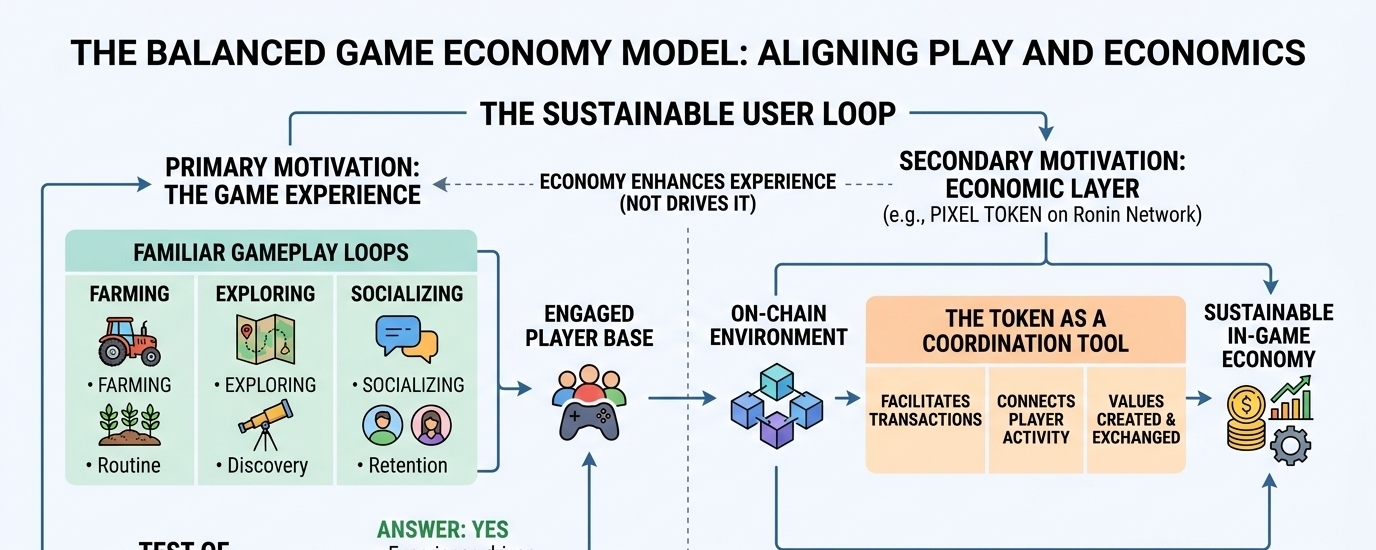
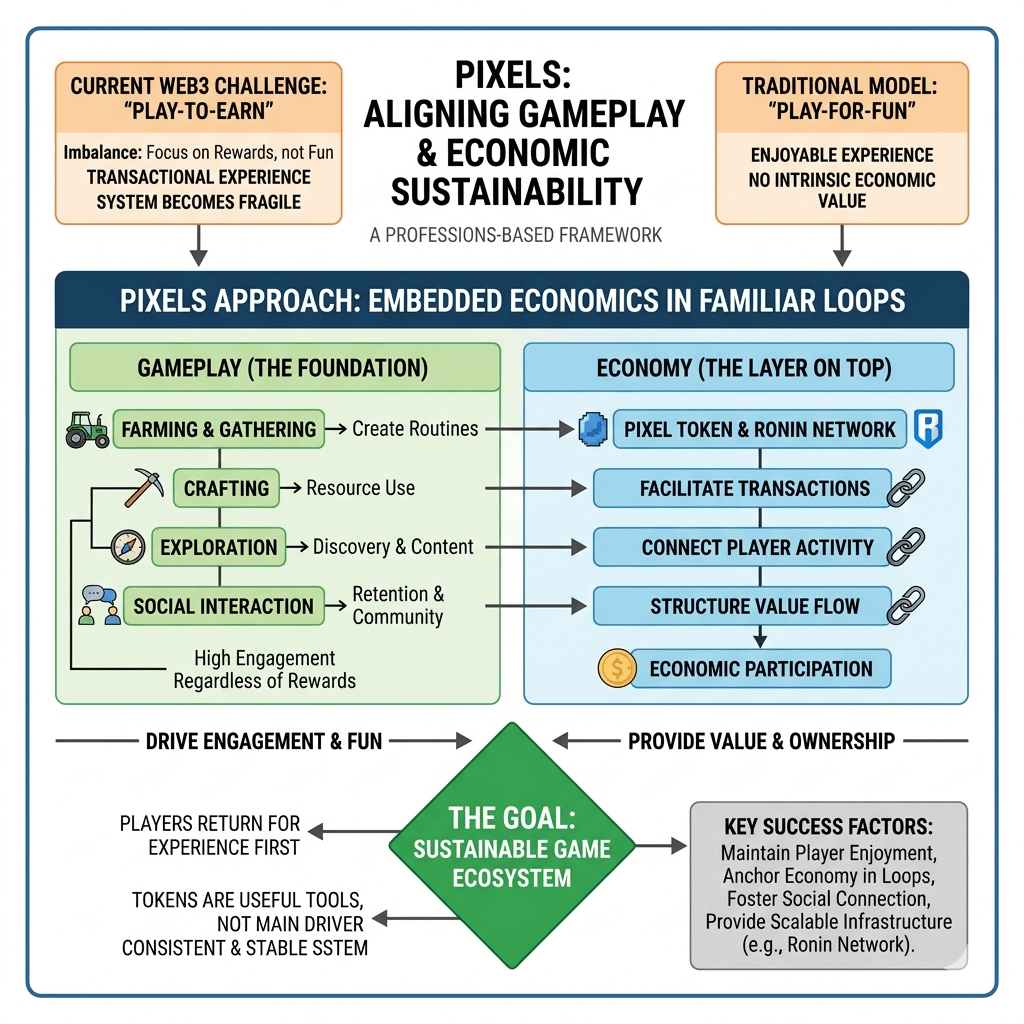
And that’s where PIXEL fits in—not as a goal, but as a layer. It doesn’t tell you what to do. It responds to what you choose to do. The value comes from how you engage, not from completing a predefined path.
That creates a very different feeling.
You’re not progressing through content.
You’re discovering your role inside a system.
And that discovery takes time.
The interesting part is how this design changes behavior.
When players are told what to do, they follow.
When they aren’t, they think.
Pixels leans into that second category.
It creates a space where confusion comes before clarity, and experimentation comes before efficiency. That’s not always comfortable—but it’s what makes the experience feel less scripted.
More personal.
The real question is whether players stay long enough to reach that point.
Because the game doesn’t reward you immediately.
It reveals itself gradually.
And in a space driven by speed and instant results, that’s a bold choice.
Pixels isn’t trying to lead players.
It’s testing whether players are willing to lead themselves.