

Most players see $PIXEL as the natural center of the @Pixels economy now. But if you look one layer deeper, the shift from BERRY to PIXEL was not just a token swap. It was a redesign of how value moves through the game. And in Web3 gaming, that usually happens when the original economic structure starts showing pressure.
“BERRY Era vs PIXEL Era”
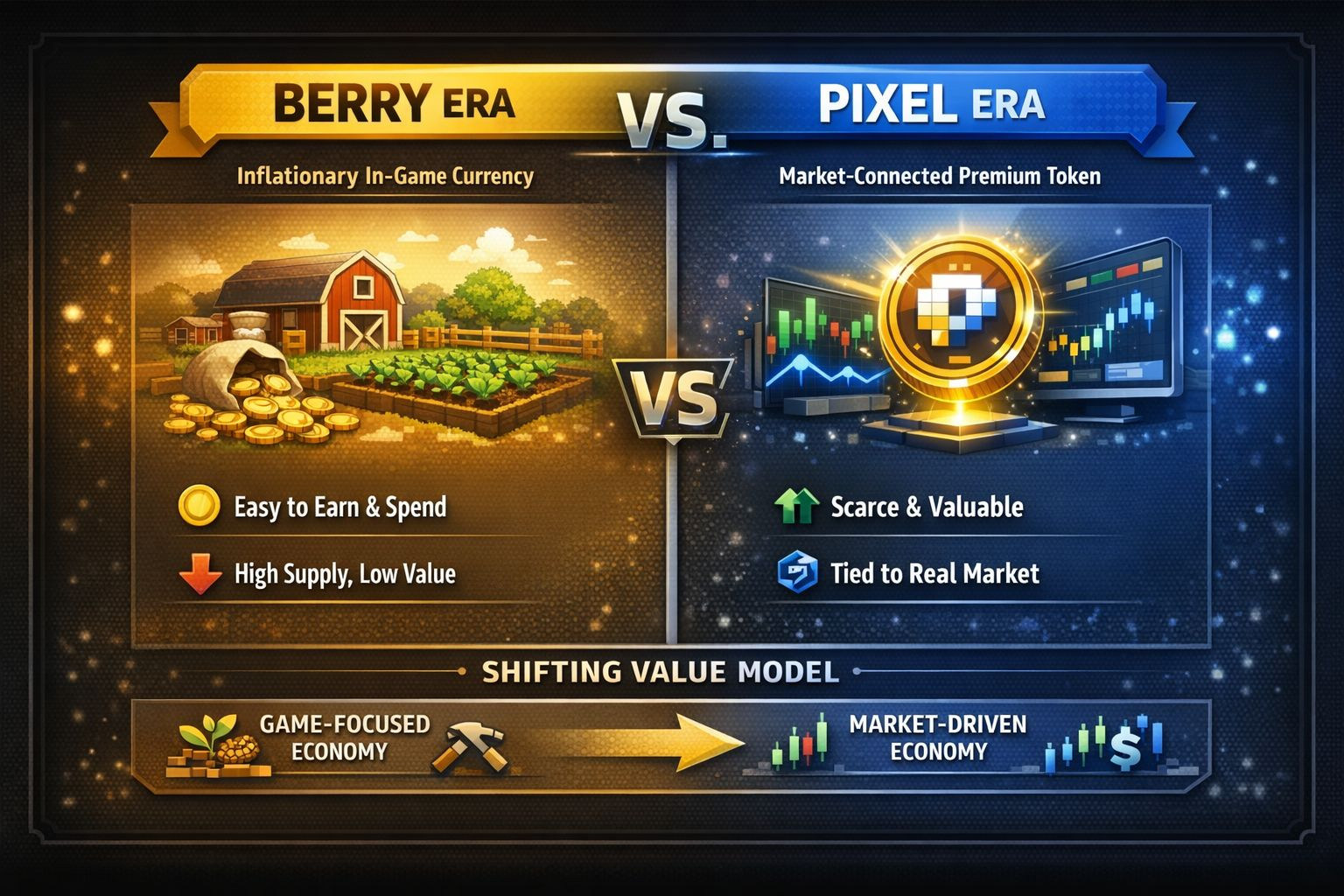
BERRY was the original soft currency in Pixels. It was designed for everyday gameplay: farming, crafting, upgrades, and the regular loop that keeps players active. That kind of currency is supposed to move fast. It should be easy to earn, easy to spend, and constantly circulating. In theory, that makes the system feel alive and rewarding.
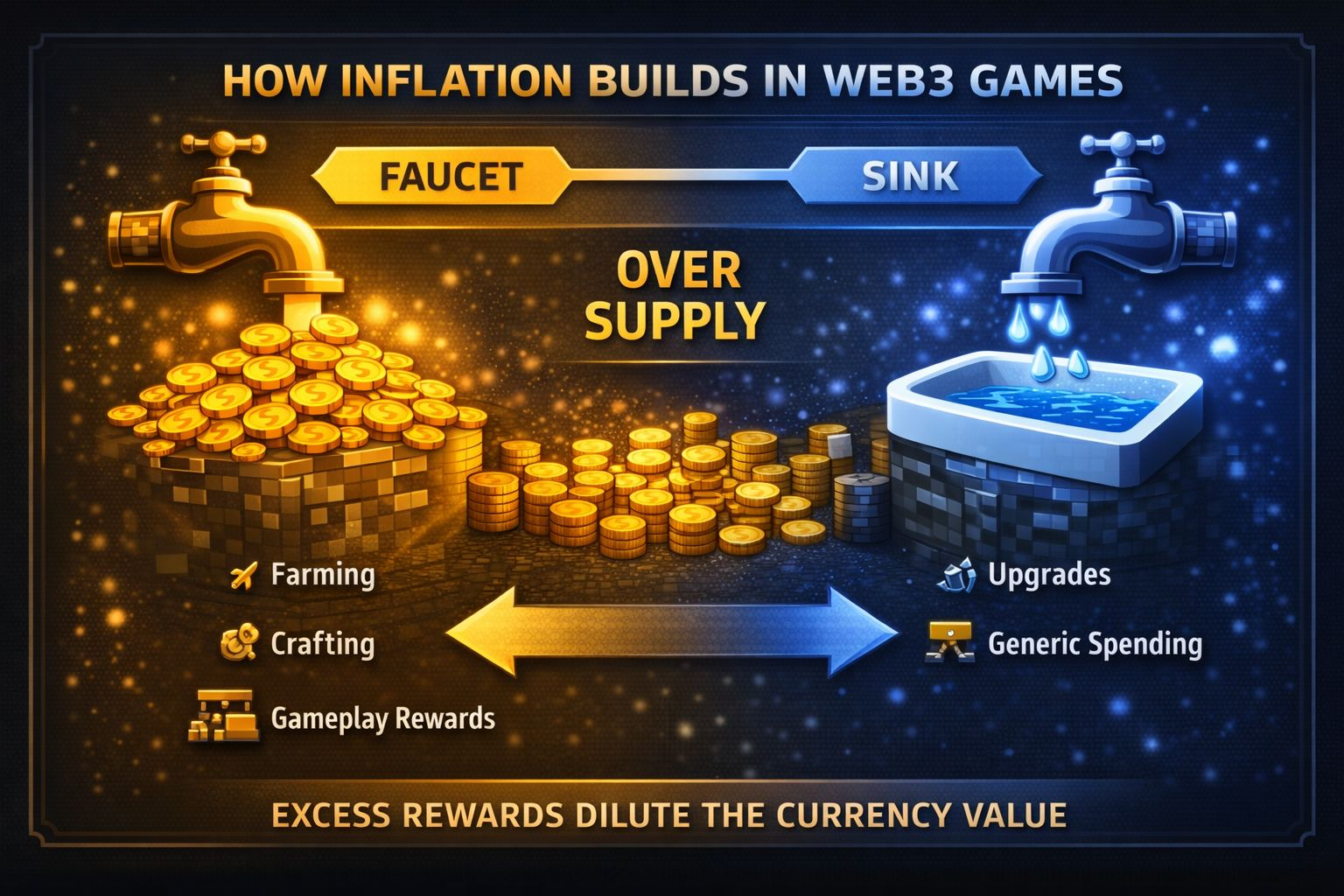
But soft currencies have a weakness. They accumulate fast. The more players grind, the more supply builds up. And when sinks do not remove enough of that supply, the currency starts losing meaning. It still exists, it still flows, but it no longer feels powerful. That is the point where an in-game economy begins to feel inflated rather than balanced.
“How Inflation Builds in Web3 Games”
That is where PIXEL changed everything. Instead of leaving the center of the economy inside an endlessly produced gameplay currency, Pixels shifted toward a harder token with real market visibility, exchange exposure, and external pricing. This was not just a cosmetic update. It changed what players were actually working toward.
BERRY did not fully disappear, but it stopped being the core unit of value. And that changes player behavior immediately.
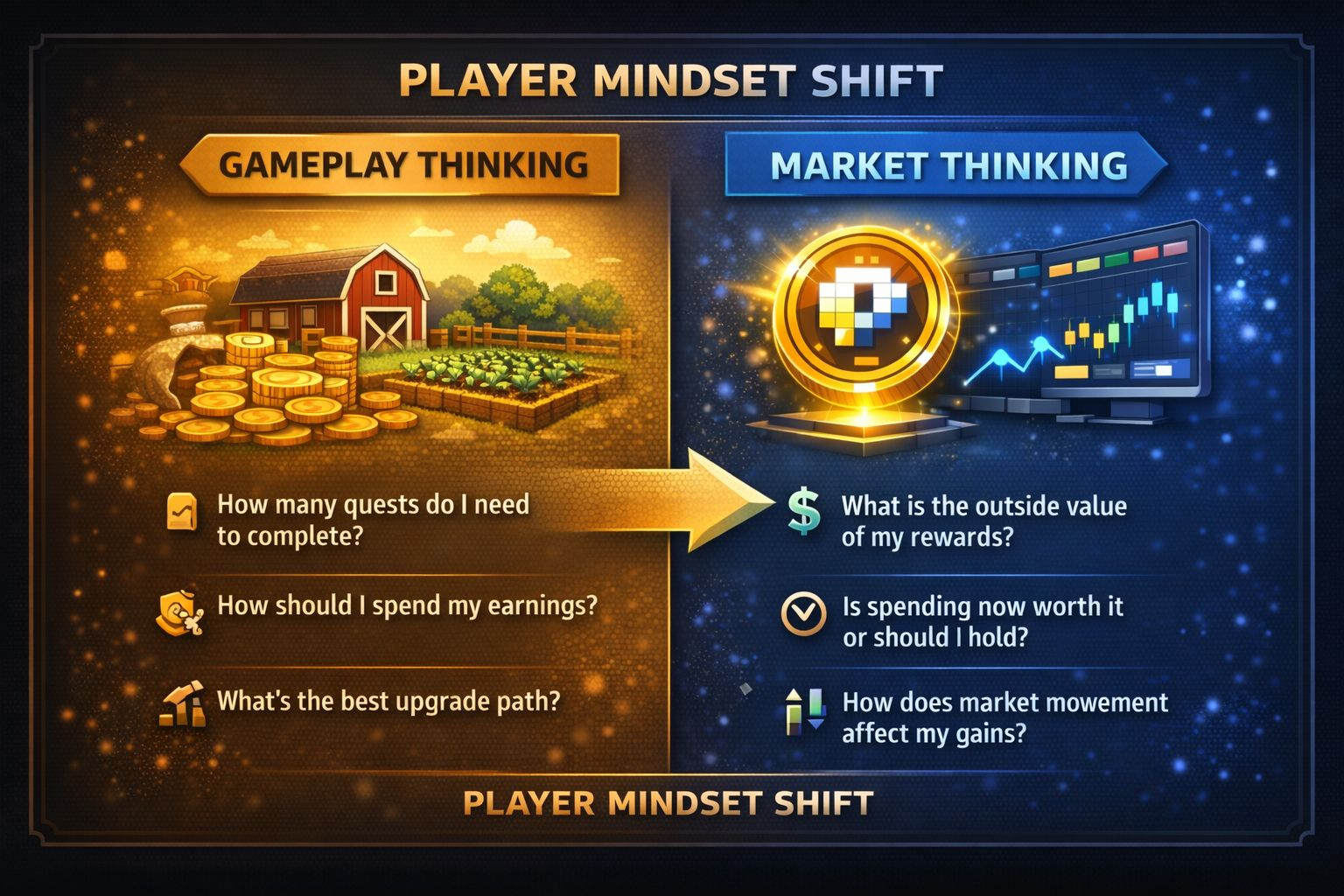
Before, most players were thinking in simple game terms: how much do I need to farm to unlock the next upgrade? After PIXEL central, the question changed: is this reward worth spending now, or is it better to hold because it has outside market value too? That is a major psychological shift. The economy stops being purely game-based and starts feeling financial.
“Player Mindset Shift”
This is why the BERRY-to-$PIXEL transition matters so much. It tells us what kind of project Pixels chose to become. During the BERRY era, the system felt more like a game economy that used blockchain elements. In the pixels more like a blockchain economy expressed through gameplay. Those are two very different identities.
One model prioritizes internal loop stability. The other brings the player into a broader value system where in-game actions connect directly to external token markets. That adds opportunity, but it also adds pressure. Now spending decisions are not just about game progress. They are also about token value, timing, and market conditions.
“Game Economy → Blockchain Economy”
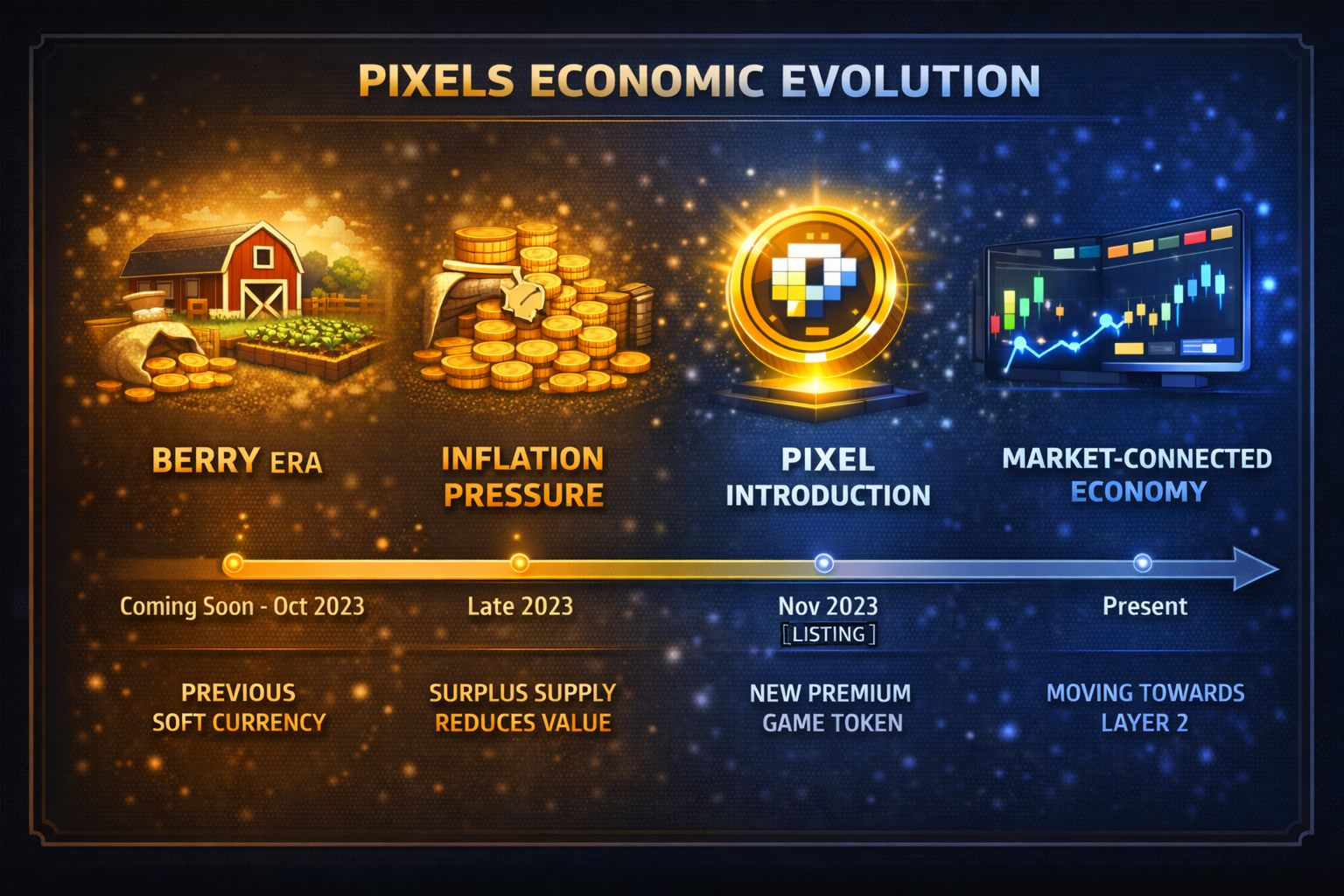
That does not automatically make the new system better or worse. It depends on what kind of player you are. If you came for a farming game with ownership benefits, BERRY probably felt simpler and more natural. If you came for ecosystem upside and real exposure to growth, then PIXEL sense. But either way, the redesign reveals something important: Pixels was not only changing its token layer. It was redefining what value means inside the game.
And that is the part many newer players never fully see. They enter @Pixels with PIXEL already eastablished, so they assume this was always the intended center of gravity. But it was not. There was an earlier economy, an earlier structure, and likely an earlier set of limitations that pushed the system toward redesign.
That context matters because it helps explain why this transition happened at all.
Pixels did not just replace BERRY with $PIXEL. It moved from a soft, inflation-heavy gameplay economy toward a more controlled, market-linked structure where value carries more weight, but also more tension. That decision still shapes how players farm, spend, progress, and think about rewards today.
@Pixels did not simply introduce a token. It introduced a different philosophy of value. And once you understand that, the whole economy looks different. @Pixels #pixel $PIXEL
