
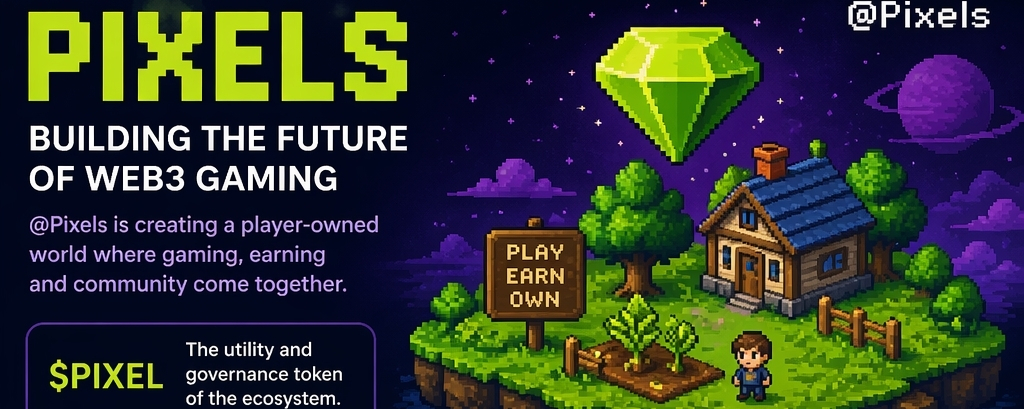
Pojawienie się gier Web3 wprowadziło nowe paradygmaty ekonomiczne, a @Pixels wyróżnia się jako projekt, który stara się zbudować zrównoważony, oparty na graczach ekosystem. W przeciwieństwie do wielu wczesnych modeli play-to-earn, które zmagały się z inflacyjną tokenomiką, Pixels wykorzystuje bardziej strukturalny i warstwowy („stackowany”) ekosystem, aby zrównoważyć zachęty użytkowników i długoterminowe tworzenie wartości.
W sercu tego projektu leży token $PIXEL , który pełni funkcję zarówno mechanizmu użyteczności, jak i zachęty. Umożliwia transakcje w grze, dystrybucję nagród i ma pełnić rolę w zarządzaniu, gdy ekosystem dojrzewa. To wielofunkcyjne podejście wzmacnia popyt na tokeny, jednocześnie dostosowując uczestnictwo użytkowników do wzrostu ekosystemu.
Model ekosystemu warstwowego integruje wiele warstw ekonomicznych—takich jak farming, produkcja zasobów, crafting i trading—pozwalając wartości cyrkulować wewnętrznie, zamiast polegać wyłącznie na zewnętrznych wpływach kapitałowych. Taki design zmniejsza ryzyko szybkiego załamania ekonomicznego, co jest powszechnym problemem w wcześniejszych grach Web3.
Ponadto, @Pixels podkreśla ciągły rozwój i zaangażowanie społeczności, które są kluczowe dla utrzymania retencji użytkowników w zdecentralizowanych środowiskach gier. Regularne aktualizacje, rozszerzenia funkcji i partnerstwa w ekosystemie wskazują na długoterminową wizję strategiczną.
Z analitycznego punktu widzenia, Pixels reprezentuje przesunięcie w kierunku bardziej odpornych tokenowych gospodarek w grach Web3. Jeśli wykonanie pozostanie konsekwentne, może stać się punktem odniesienia dla przyszłych gier opartych na blockchainie, które dążą do skalowalności i zrównoważonego rozwoju.