
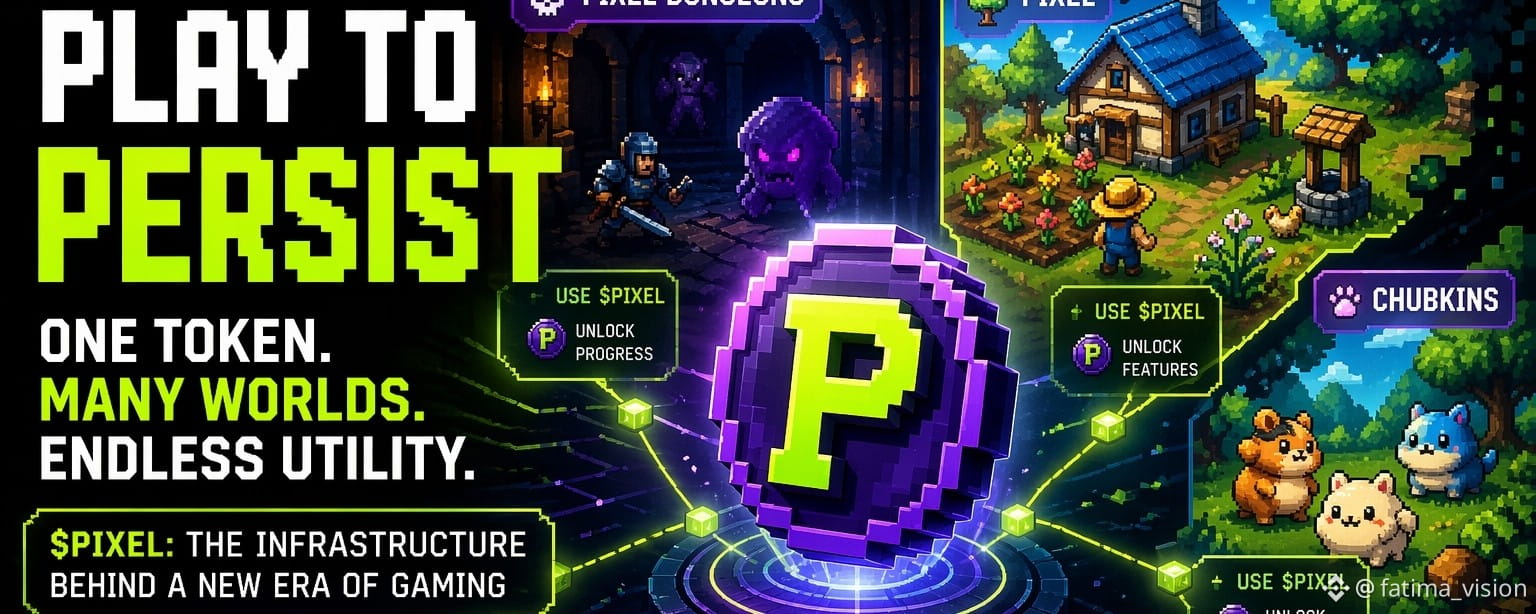
I keep noticing a shift in how we define utility for gaming tokens. For a long time, we treated them as localized sinks, little more than premium fuel for a single engine. If the engine stopped, the fuel became inert. But the logic is becoming more fluid. We are moving away from fixed economies toward programmable demand surfaces where a token functions as a coordination layer across multiple environments. It is no longer about one game; it is about how many different schemas can interact with the same asset.
The difference is subtle, but it changes the entire infrastructure of play.
When we look at $PIXEL, the expansion into titles like Pixel Dungeons or Chubkins reveals a shipping reality that most people miss. It is easy to write a whitepaper about "interoperability," but actually shipping functional code that allows a token to gate progress or unlock features across disparate codebases is a massive technical hurdle. I see a lot of projects talk about the metaverse while failing to build a simple bridge. Here, the shipping is quiet. They are building a stack that treats the token as a persistent logic gate.
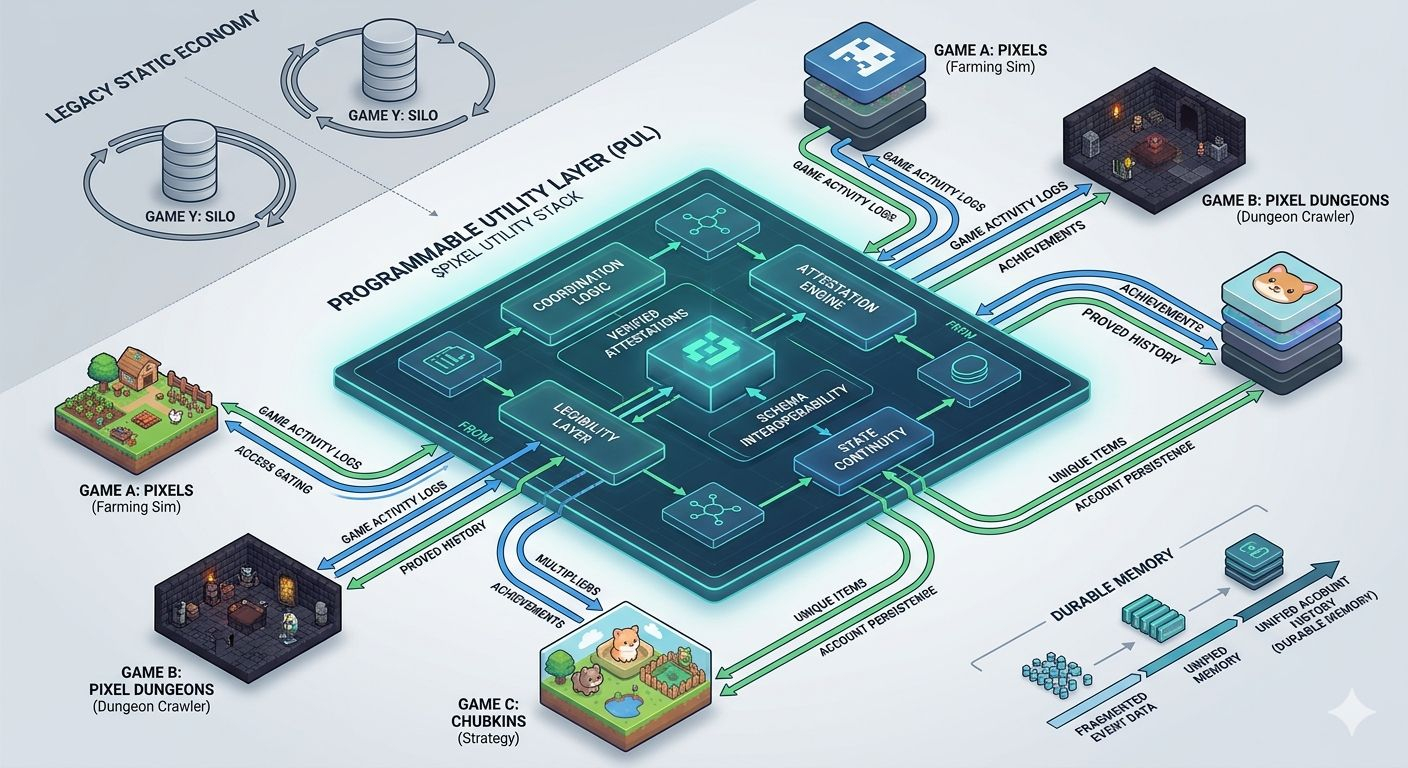
If you can use the same utility in three different places, the token stops being a reward and starts being a tool.
That gap between hype and shipping is larger than it looks. Most gaming ecosystems are held together by "vibes" and marketing spend. They lack the unsexy plumbing required to make cross-game utility feel seamless. When you actually test these systems under pressure, you realize that most arent ready for high-throughput coordination. The ones that survive are those focusing on the unglamorous work of making sure a transaction in one game is legible in another without breaking the economic balance.
The memory of the system is where things usually fall apart.
Data is useless unless it preserves its meaning and proof over time. In a multi-game ecosystem, the durable memory of an account becomes the primary product. If I do something in one game, that attestation needs to carry weight in the next. Without that continuity, you just have a series of isolated events. $PIXEL seems to be aiming for a type of on-chain memory where your history in the ecosystem creates a durable record of value that doesnt reset when you switch apps.
We are seeing the move from "play-to-earn" to "play-to-persist."
Most people are watching the price action, but the real work is happening in the integration layers. If a token can reliably coordinate behavior across five different games, it creates a demand surface that is much harder to collapse than a single-game economy. It moves the conversation from speculative volatility to operational predictability. That is how you build infrastructure that actually lasts.
The infrastructure is becoming the game.