
The shift isn’t subtle anymore. AI is no longer sitting on the sidelines analyzing charts or predicting trends it’s actively participating, making decisions, and executing them directly on-chain. That changes the rhythm of the market in a way that feels almost invisible at first, but becomes obvious once you look at how activity behaves over time.
Traditionally, markets moved in waves driven by human emotion. Excitement pushed volume up, fear pulled it down, and quiet periods meant inactivity. That pattern is starting to flatten. AI agents don’t get tired, they don’t hesitate, and they don’t wait for confirmation the way humans do. They operate continuously, following predefined logic, deploying capital, routing liquidity, and interacting with smart contracts without pause.
This is why transaction flow is beginning to look more stable rather than sharply cyclical. Instead of spikes followed by silence, there’s a steady baseline forming underneath everything. Data tied to Binance suggests that a large majority of AI-driven interactions are no longer about analysis but execution. That distinction matters. Execution means real activity transactions that move value, consume gas, and keep networks alive even when human traders step away.
That constant presence starts to reshape expectations. Quiet markets don’t feel as empty anymore because machines are still operating in the background. Gas usage doesn’t drop off as dramatically, and liquidity doesn’t disappear as quickly. It creates the sense that something is always happening, even when price barely moves.
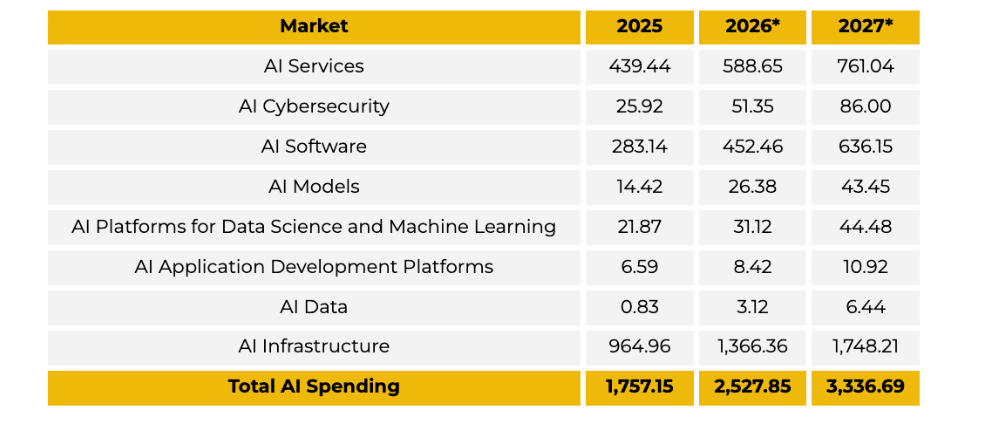
At the same time, the scale of investment flowing into AI makes this shift feel less like a trend and more like a structural transition. Trillions are being poured into building the systems that power these agents, with infrastructure taking the largest share early on. That makes sense before AI can act at scale, it needs the computing power and frameworks to support it. As that base expands, everything above it starts accelerating: services, applications, and the data layers that feed decision-making.
What’s important here is how that capital translates into behavior. When AI moves from research into deployment, it stops being experimental and starts becoming operational. These systems aren’t just testing strategies anymore; they’re actively participating in markets, shaping flows, and influencing how liquidity moves. Over time, that creates an environment where activity is less reactive and more continuous.
This is also where the structure of blockchain networks begins to evolve in a noticeable way. Different networks are starting to specialize, not because one dominates the other, but because AI agents require different capabilities depending on the task. Solana, for example, is naturally suited for speed. High throughput and low latency make it ideal for rapid execution, where agents need to act instantly and frequently. A significant portion of trading activity on the network is already driven by automated systems, which shows how well it fits that role.
On the other side, Ethereum continues to act as a settlement layer. It holds deep liquidity, supports a massive share of stablecoin supply, and provides the kind of security and finality that larger flows require. When value needs to be stored, coordinated, or settled with confidence, it tends to move there.
What’s emerging is not a competition, but a split in responsibility. Execution happens where speed is optimized, while settlement happens where trust and depth are strongest. AI agents move between these layers seamlessly, using each network for what it does best. That dynamic is one of the clearest signs that the ecosystem is maturing into something more structured.
Stablecoin volume reinforces this idea. When monthly flows climb toward multi-trillion levels, it reflects not just human trading but continuous machine-driven movement. These flows don’t rely on hype cycles; they rely on systems running in the background, maintaining liquidity and enabling transactions at scale.
All of this points toward a broader shift in how markets function. As AI continues to integrate deeper, volatility may start to behave differently. Not necessarily disappearing, but becoming less dependent on emotional swings and more influenced by system-driven flows. Liquidity could become more evenly distributed, and activity could feel more consistent over time.
The bigger picture is that AI is turning into an operational layer across blockchain networks. It’s not replacing human participation, but it is redefining the baseline. Markets are no longer only active when people decide to engage they’re active because machines are always running.
That changes the nature of everything built on top. When activity becomes continuous and infrastructure scales alongside it, networks begin to look less like experimental platforms and more like foundational systems. The result isn’t just faster markets, but more persistent ones, where capital moves steadily, decisions happen instantly, and the line between “active” and “inactive” starts to disappear.