

cut—is also the one that should make you stop and think. That’s what they delivered in Chapter 2.5: daily token emissions slashed by almost 84%. The team calls this discipline. They talk about maturity. But let’s be real, you don’t chop off 84% unless things were bleeding badly to begin with. That’s not just a fix. That’s a whole new roof patched over a crumbling house.
Here’s what really happened: the game was handing out token rewards so fast that the secondary market couldn’t handle it. Everyone playing through 2023 and early 2024 was basically getting paid just to show up. It looked great. Wallets buzzing, daily users shooting past a million, the token’s FDV soaring past $2 billion. But none of that was actual demand—it was raw supply painted up to look like growth.
So, the team yanked the wheel. They rolled out vPIXEL, a locked-up token matched 1:1 with PIXEL but only good inside the game. They slapped fees on PIXEL withdrawals and funneled those fees back to stakers. Game balances started to auto-stake. They put VIP status behind real money. All of it was designed to make leaving expensive and sticking around more rewarding. It’s a smarter system, honestly, and a lot more transparent than most Web3 games bother to be.
But there’s an assumption baked in: that players who came for free rewards will happily turn into long-term, paying, staking participants. That’s a stretch. These weren’t DeFi veterans. They were gamers who gritted their teeth through crypto nonsense because the rewards made it worth it. Take away the freebies, throw up a VIP wall, and the big question isn’t whether the economics make sense. The question is whether enough people stick around for any of it to matter.
There’s one number you should pay more attention to: in May 2025, for the first time, more PIXEL flowed into the game than was paid out. That’s real—proof the model can actually work, at least on a small scale. But right around the corner, 91 million PIXEL—over 15% of the supply—is set to unlock in August 2025. Can this “net positive” system survive a huge unlock, especially if the daily user count has dropped? That’s a whole different risk profile.
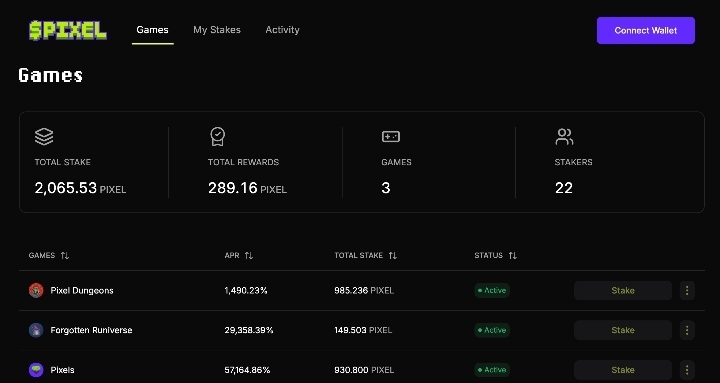
The best-case scenario? Chapter 4’s PvP mechanics bring in a new wave of players willing to spend and stake, vPIXEL flows nicely inside the game, and Pixels becomes the first Web3 title to actually nail retention at scale. The plan to add more games increases what you can do with PIXEL, and the whole thing starts to feed itself.
But if it doesn’t land? Then the old casual crowd that pumped up those million-user numbers just doesn’t come back. VIP feels like a paywall. PvP might not even fit in this farming game context. Unlocks keep flooding supply, and the shiny new economy only works for 50,000 users, not half a million.
Nobody on the team has come out and said what percentage of their free-to-play crowd actually moves up to VIP now that there’s a gate. Everything else flows from that number. If enough free users go VIP and start paying, the system locks in real demand for the token. If they don’t, that 84% inflation cut just means the bleeding slows down—instead of stops.