
I didn’t notice it at first. Pixels looked simple, almost disarmingly so. A soft farming world, light social play, a bit of exploration. But the longer I sat with it, the more something felt slightly off. Not wrong just unfamiliar. It doesn’t behave like a normal game. It feels like something that keeps adjusting itself while you’re inside it.
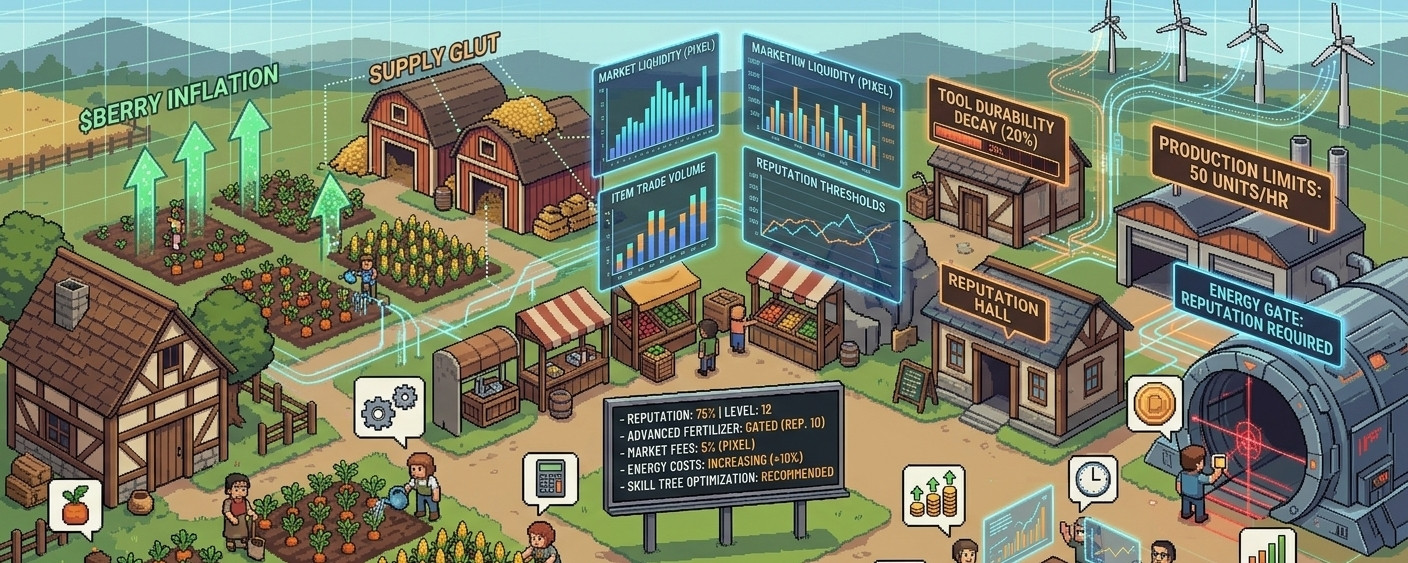
For a while, Pixels followed a path that most Web3 games have already walked. Easy entry, generous rewards, and a system that quietly leaned on inflation to keep things moving. The old $BERRY model made participation feel open and fluid, but it also carried a hidden tension. When rewards are easy to generate and hard to absorb back into the system, the economy starts stretching in ways that don’t show immediately. Players keep earning, but the meaning of those earnings slowly fades. It becomes less about playing well and more about extracting efficiently.
Then came the shift. The move to $PIXEL wasn’t just a token replacement it felt more like a reset in intent. Alongside it came reputation systems, tighter production limits, higher costs, and more deliberate progression. At a surface level, it looked like balancing. But underneath, it was something else. The game stopped asking how much players could earn and started asking what kind of participation it actually values.
And that changed behavior in ways that aren’t immediately obvious. Players don’t just log in to farm anymore. They think about positioning. About timing. About how their actions affect access, reputation, and long-term advantage. There’s a quiet shift from playing the game to understanding the system. Some people lean into optimization, others step back because it starts to feel less like play and more like management.
The mechanics themselves tell the story. Rewards still exist, but they’re gated by friction. Energy costs, tool durability, production limits, reputation requirements these aren’t just features, they’re filters. They slow things down just enough to force decisions. Earn, spend, upgrade repeat but with resistance at every step. Even social systems start to matter more, not just for fun but for access and efficiency. The game isn’t just giving you loops, it’s shaping how you move through them.
And maybe that’s the part that’s hardest to ignore. Pixels doesn’t just reward activity it sorts behavior. It quietly distinguishes between players who adapt and those who don’t. Time in the game isn’t equal anymore. It’s structured, evaluated, sometimes even restricted. In a strange way, it feels less like a sandbox and more like an environment that’s learning what kind of player you are.
That’s where the trade-offs start to show. A tighter system is more sustainable. It avoids the collapse that comes from unchecked inflation and empty rewards. It gives the world weight. But it also narrows the space for randomness. When everything starts to have a “right” way to play, the freedom that made the game feel alive can shrink. Some players will enjoy the depth. Others will feel like they’re being gently pushed into efficiency.
So the bigger question lingers. Is this still a game in the traditional sense, or is it slowly becoming something closer to a managed economy with game-like surfaces. And maybe that’s not a bad thing. Or maybe it depends on what players actually want from it.
Pixels isn’t static. It keeps shifting, reacting, refining itself. It’s trying to find a balance between play and structure, between freedom and sustainability. Whether that balance holds isn’t clear yet.
What is clear is this. The real experience of Pixels isn’t just in farming or building. It’s in how naturally you adapt to the rules it keeps rewriting.
