
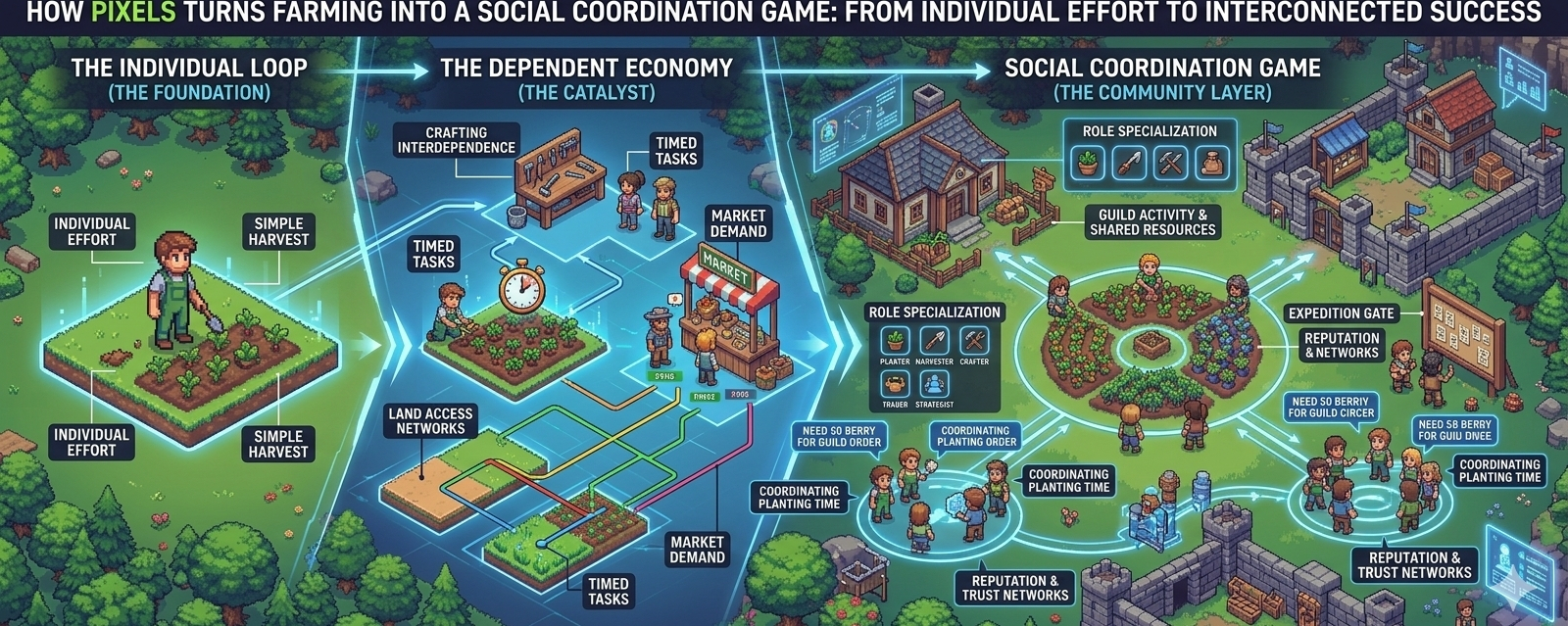
Na pierwszy rzut oka, Pixels wygląda jak gra rolnicza z dołączoną gospodarką tokenów. Sadzenie, zbieranie, wykonywanie zadań i utrzymywanie rutyny. Ale im dłużej na to patrzysz, tym bardziej oczywiste staje się, że rolnictwo to nie do końca cała historia. Prawdziwa gra to koordynacja.
Co Pixels wydaje się rozumieć, to fakt, że rolnictwo staje się interesujące tylko wtedy, gdy tworzy zależność między ludźmi. Plon sam w sobie to tylko zasób. Ale gdy ten plon łączy się z rzemiosłem, dostępem do ziemi, zadaniami czasowymi, handlem i aktywnością gildii, zaczyna przypominać część żywego systemu. Nie tylko uprawiasz coś, ponieważ gra ci to kazała. Reagujesz na to, czego potrzebuje gospodarka, co pozwala twoja pozycja i jak szybko możesz zareagować.
To jest miejsce, w którym Pixels oddziela się od wielu starszych gier Web3. Wiele z nich opierało się na prostej idei: nagradzaj gracza, a on zostanie. Ale same nagrody nigdy nie zbudowały prawdziwej lojalności. Zbudowały krótkoterminowe zachowanie. Ludzie przychodzili dla wydobycia, a nie dla przywiązania. Gdy tylko ekonomika osłabła, gra wydawała się pusta.
Pixels podąża mądrzejszą ścieżką. Używa farmingu jako wspólnej aktywności, ale prawdziwa wartość pochodzi z tego, jak ta aktywność wciąga graczy w szersze systemy. Ziemia ma znaczenie, ale dostęp też ma znaczenie. Wynik ma znaczenie, ale timing jest równie ważny. A gdy gildie, role i reputacja wchodzą do gry, sukces zaczyna zależeć od czegoś więcej niż tylko osobistego wysiłku. Zależy od tego, jak dobrze gracz pasuje do sieci.
Dlatego ta gra wydaje się bardziej społeczna niż przeciętny tokenizowany świat. Nie jest społeczna w płytkim sensie, że po prostu stawia graczy obok siebie. Jest społeczna, ponieważ postęp staje się łatwiejszy, gdy ludzie są połączeni, zorganizowani i zaufani. Farma to nie tylko miejsce do produkcji. To staje się przestrzenią, w której odbywa się koordynacja.
Myślę, że to jest głębszy problem, który Pixels stara się rozwiązać. Gry Web3 miały problemy przez lata, ponieważ myliły zachęty z społecznością. Pixels stara się zbudować warstwę społeczności wewnątrz samej pętli ekonomicznej. To nie rozwiązuje wszystkiego. Silniejsi gracze nadal będą mieli lepszy dostęp, lepszą pozycję i lepszą efektywność. Ale ten model jest nadal zdrowszy niż system, który nagradza tylko powtarzalne grindowanie.
Na koniec, Pixels sprawia, że farming ma znaczenie, czyniąc go relacyjnym. Nie chodzi tylko o to, co uprawiasz. Chodzi o to, jak Twoja aktywność pasuje do szerszej sieci ludzi, ról i możliwości. Ta zmiana wydaje się mała, ale zmienia całe odczucie gry. Farming przestaje być samotną pętlą i zaczyna być grą społecznej koordynacji. To o wiele silniejsza podstawa niż większość projektów Web3 kiedykolwiek zdołała zbudować.