
I didn’t expect much when I first stepped into Pixels. On the surface, it looked like just another cozy farming game—plant crops, gather resources, explore a colorful world. But the longer I stayed, the more I realized this isn’t just a game… it’s a living, evolving economy—and possibly a glimpse into the future of GameFi.
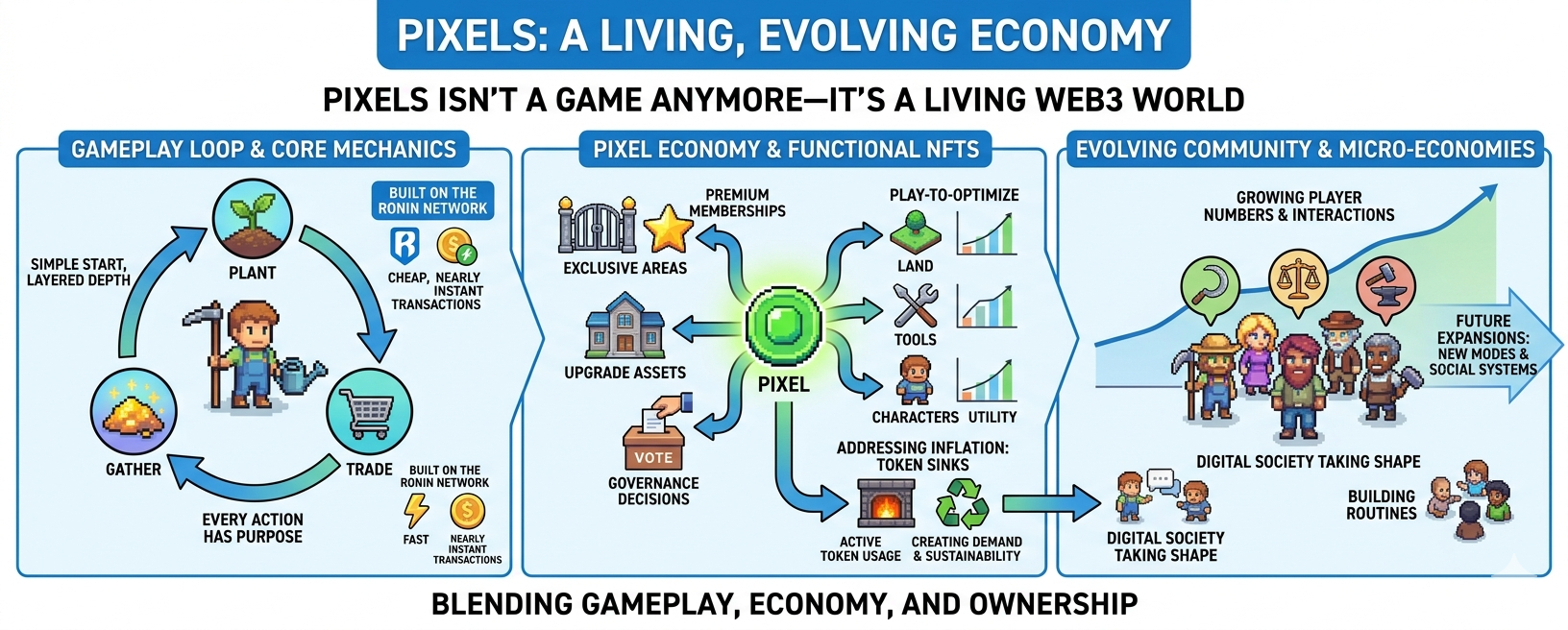
What hooked me first was the gameplay loop. It’s simple enough for anyone to start, but layered in a way that keeps pulling you back. I found myself planning harvest cycles, optimizing land usage, trading with other players, and exploring new areas not just for fun—but for opportunity. Every action felt like it had purpose, and that’s where Pixels separates itself from traditional games.
Built on the Ronin Network, the experience is smooth and fast. Transactions are cheap, nearly instant, and most importantly—they don’t interrupt gameplay. I didn’t feel like I was “using blockchain.” I just felt like I was playing a game that actually respected my time and ownership. That’s a big deal, because most Web3 games still struggle with this balance.
Then comes the ecosystem—and this is where things get interesting.
The PIXEL token isn’t just there for speculation. I actually use it. Whether it’s unlocking premium memberships, accessing exclusive areas, upgrading assets, or participating in governance decisions, the token has real utility inside the world. It creates a loop where players aren’t just spending—they’re participating in something bigger.
NFTs also aren’t just collectibles here. They’re functional. Land, tools, characters—they all contribute to how efficiently I can play and earn. It’s not pay-to-win, but it is play-to-optimize. And that subtle difference matters.
What really impressed me is how the game is addressing one of the biggest problems in GameFi: inflation. Instead of endlessly printing rewards, Pixels is actively building sinks—ways for tokens to be used, spent, and recycled back into the ecosystem. That creates demand. That creates sustainability. And honestly, that’s rare.
But the most powerful part? The community.
I’ve seen player numbers grow, interactions increase, and entire micro-economies form inside the game. People aren’t just logging in—they’re building routines. Some farm, some trade, some specialize in crafting. It feels like a digital society taking shape, not just a player base.
And it’s only getting started.
With upcoming expansions, new game modes, deeper social systems, and more ways to collaborate and compete, I can already see where this is heading. Pixels isn’t trying to be just another GameFi project—it’s trying to become a platform. A world where gameplay, economy, and ownership blend seamlessly.
For the first time in a long while, I’m not just playing a Web3 game.
participating in one.
