
There’s a quiet gap in crypto that doesn’t get talked about enough. It’s not about whether people have digital identities anymore. That part is largely solved. Wallets exist, tokens sit on-chain, and ownership is verifiable. The real issue is what happens next. Ownership without meaningful usage is just passive state. The bridge between holding something and actually using it in real economic activity is still fragile.
That’s where liquidity design starts to matter more than most people realize.
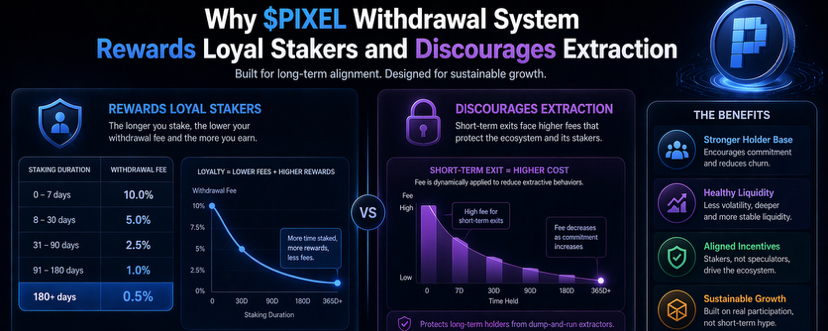
The idea behind a system like PIXEL’s withdrawal and liquidity fee model is simple on the surface, but the implications go deeper. Instead of treating liquidity as something to be exploited in short bursts, it reframes it as something that should reward time, consistency, and participation. In other words, it tries to align financial incentives with actual usage rather than pure speculation.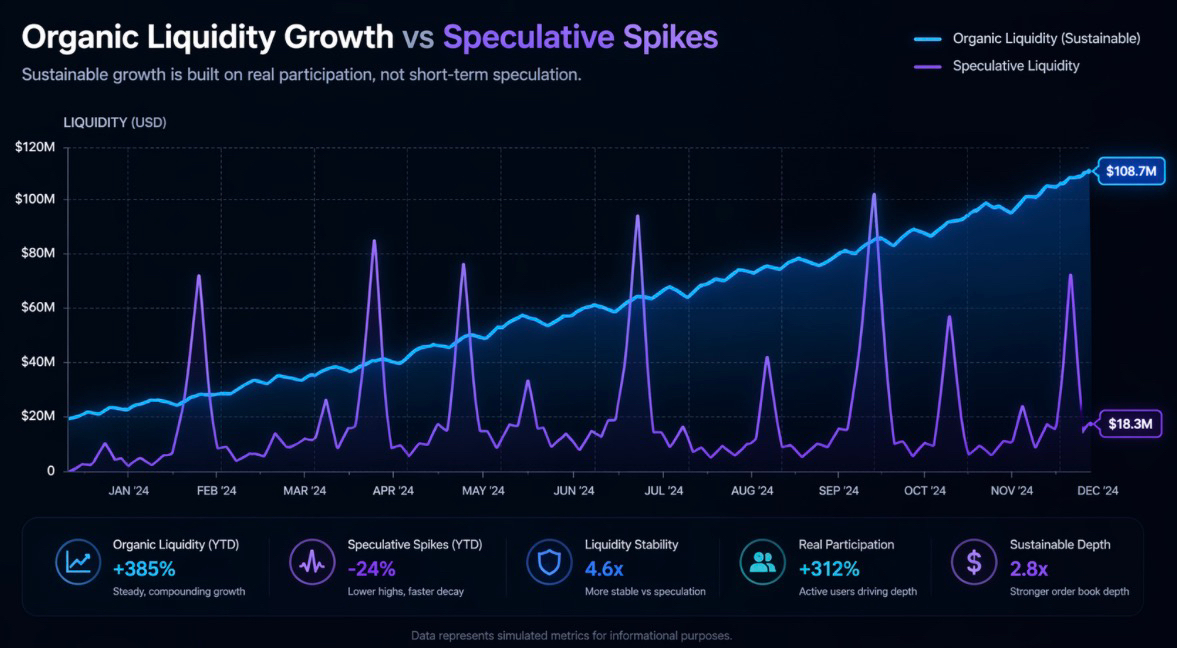
If you look at most token ecosystems, the pattern repeats. Early inflows create sharp liquidity spikes. Price follows. Then comes extraction. Large holders exit, liquidity thins out, and what’s left is a hollow structure that never really built real demand. The missing piece in that cycle is commitment. There’s rarely a mechanism that distinguishes between someone contributing to the network and someone just passing through it.
Liquidity fees, when designed properly, introduce that distinction.
By adding friction to short-term exits and reducing it for longer-term participants, the system subtly changes behavior. It doesn’t block movement, but it makes intent visible. Are you here to build, use, and stay engaged, or just rotate capital quickly? Over time, that difference shows up clearly in the data.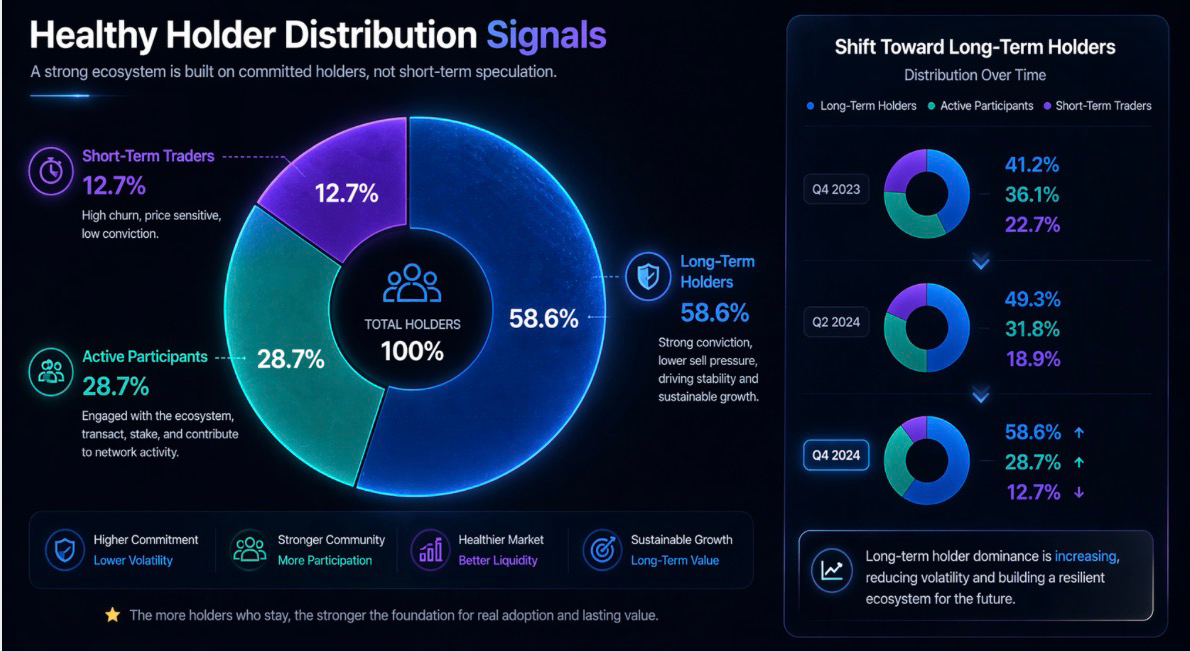
You start to see smoother liquidity curves instead of violent spikes. Holder distribution becomes less top-heavy. The ratio of active users to passive holders improves. These are not just cosmetic metrics. They’re signals of whether a network is developing real economic gravity or just cycling speculative interest.
The connection to digital identity is important here. Having a wallet or a token is one layer. But when that identity starts interacting with systems that reward consistent participation, it becomes something more dynamic. It starts to represent behavior, not just ownership. That’s the bridge most projects miss.
Without that bridge, identity is static. With it, identity becomes economic presence.
There’s also a broader market implication. Organic demand is slower, less exciting in the short term, but far more durable. It comes from users who actually need the system, not traders looking for momentum. A liquidity model that filters for that kind of demand doesn’t just stabilize price action, it builds a foundation that can support real applications over time.
Of course, no system is perfect. Liquidity fees can be misunderstood or even seen as restrictive if the design isn’t transparent. There’s always a balance between encouraging long-term behavior and maintaining enough flexibility for users. Push too hard in one direction and you risk reducing participation altogether. But when done right, it creates a healthier environment where capital isn’t constantly draining out at the first sign of volatility.
What stands out in this approach is that it treats liquidity not as a given, but as something that needs to be earned and maintained. That mindset shift is subtle but powerful. It moves the conversation away from short-term price action and toward long-term network quality.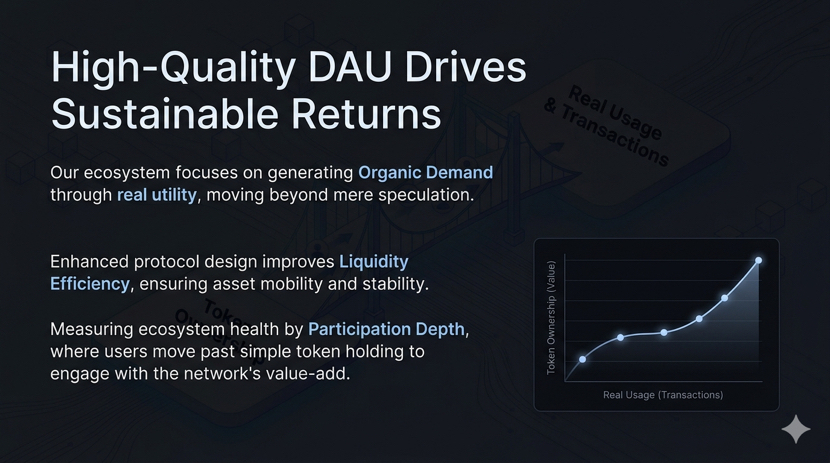
In a space where attention is often driven by hype cycles, that kind of design thinking feels necessary. It doesn’t promise explosive growth overnight. Instead, it builds conditions where growth, when it happens, has a reason to last.
