
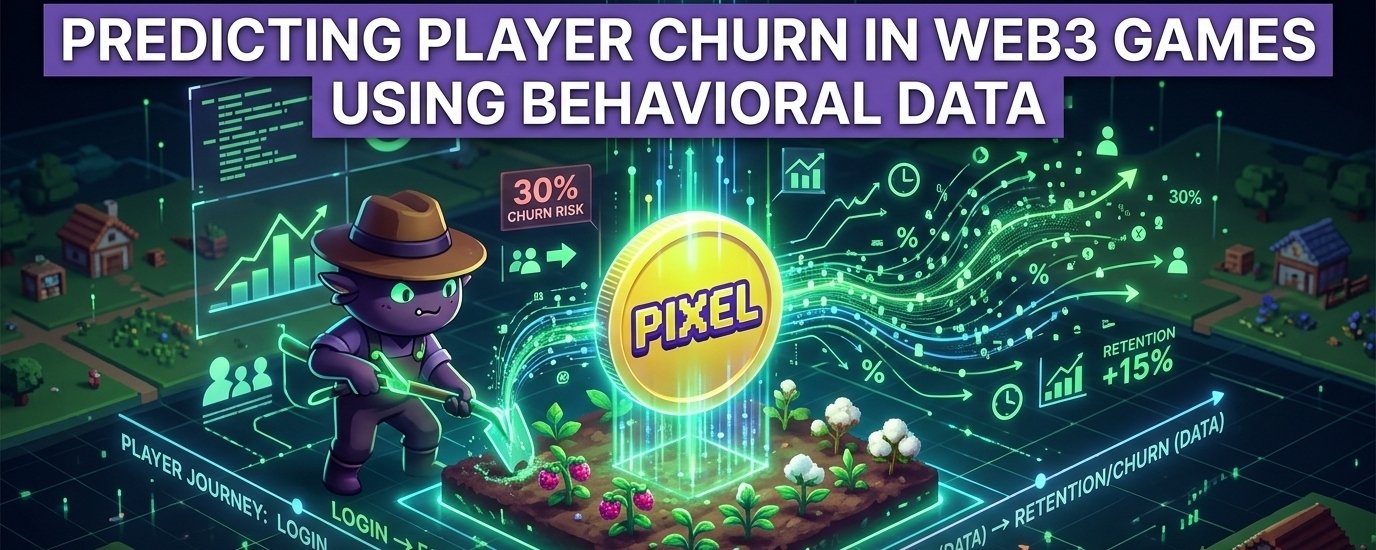
I keep noticing a shift in the way we view digital assets within the Ronin ecosystem. We are moving away from seeing the $PIXEL token as a static reward and toward treating it as a programmable unit of behavioral infrastructure.
The logic here is simple but the execution is increasingly complex. Most web3 games fail because they treat players as a monolithic block of yield-seekers rather than a fluid stream of data points. In the current 2026 landscape, the difference is subtle but the gap between projects that ship games and projects that ship economies is larger than it looks.
Pixels has managed to hit over 1 million daily active users by focusing on the shipping reality rather than the speculative hype. While many competitors are still debating tokenomics on paper, this project is using the Pixels Events API to turn every crop harvested and every VIP membership purchased into a verifiable signal.
The coordination of these signals allows for a level of verification that was impossible in the early days of play-to-earn. I keep seeing teams struggle with the "Farmer Fee" and withdrawal penalties, yet these are the very tools that prevent the inflationary death spirals we saw in 2024.
When a player with Level 35 Farming logs in, the system isn't just looking at a wallet address. It is looking for continuity. It is checking for a history of in-game labor that serves as an attestation of their value to the network.
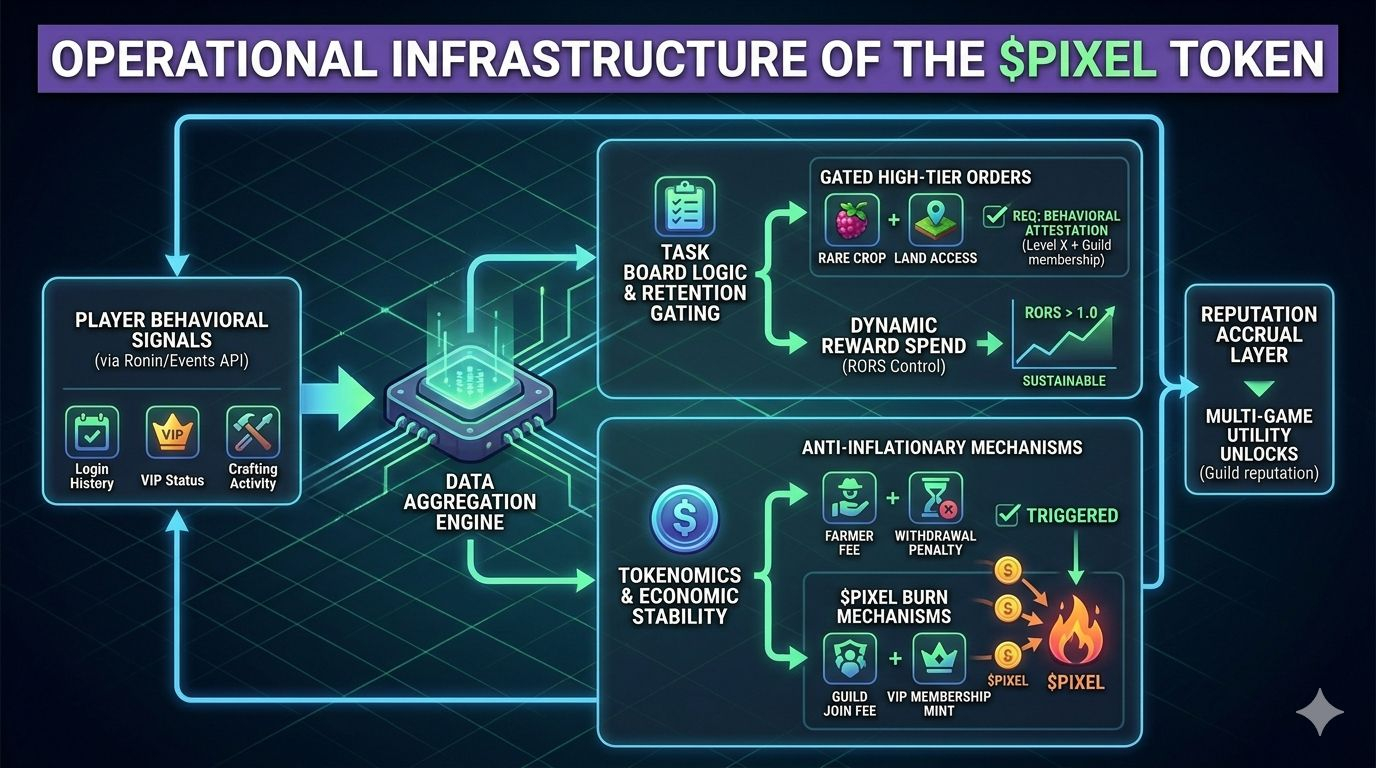
Predicting churn in a game like this requires more than just watching the PIXEL price chart. You have to look at the infrastructure of the task board and the RORS metric. If the Return on Reward Spend stays above 1.0, the logic of the ecosystem remains sound regardless of market volatility.
The memory gap in web3 gaming is usually measured in weeks. Players forget a game the moment the rewards dry up. But by using behavioral data to gate high-tier orders and guild access, Pixels creates a form of digital legibility that rewards the long-term holder over the short-term extractor.
I keep noticing that the most successful players are those who treat the game as a data driven occupation. They understand that their behavior is being mapped to a multi game staking model where their reputation in one title unlocks utility in the next.
That gap is larger than it looks when you compare it to traditional mobile games. Standard iOS retention for games in 2026 sits around 35% on day one. Web3 games that rely on pure speculation often see that number drop to near zero once the token rewards are adjusted.
Pixels is attempting to solve this by making the token an entry fee for social-fi features. When you have to pay PIXEL to join a guild or mint a pet, the token stops being something you just sell and starts being something you use to maintain your standing.
The logistics of managing a million active users on Ronin requires a level of technical coordination that most teams underestimate. Every transaction is a data point that helps the machine learning layer identify patterns of sustainable growth versus short-term extraction.
Ultimately, the shift toward behavioral analytics means the game is no longer just a product. It is a feedback loop where the $PIXEL token acts as the primary incentive for a decentralized publishing hub.
This is how we turn a single farming sim into a scalable infrastructure for the next generation of digital labor.
Verifiable behavior is the only metric that scales.