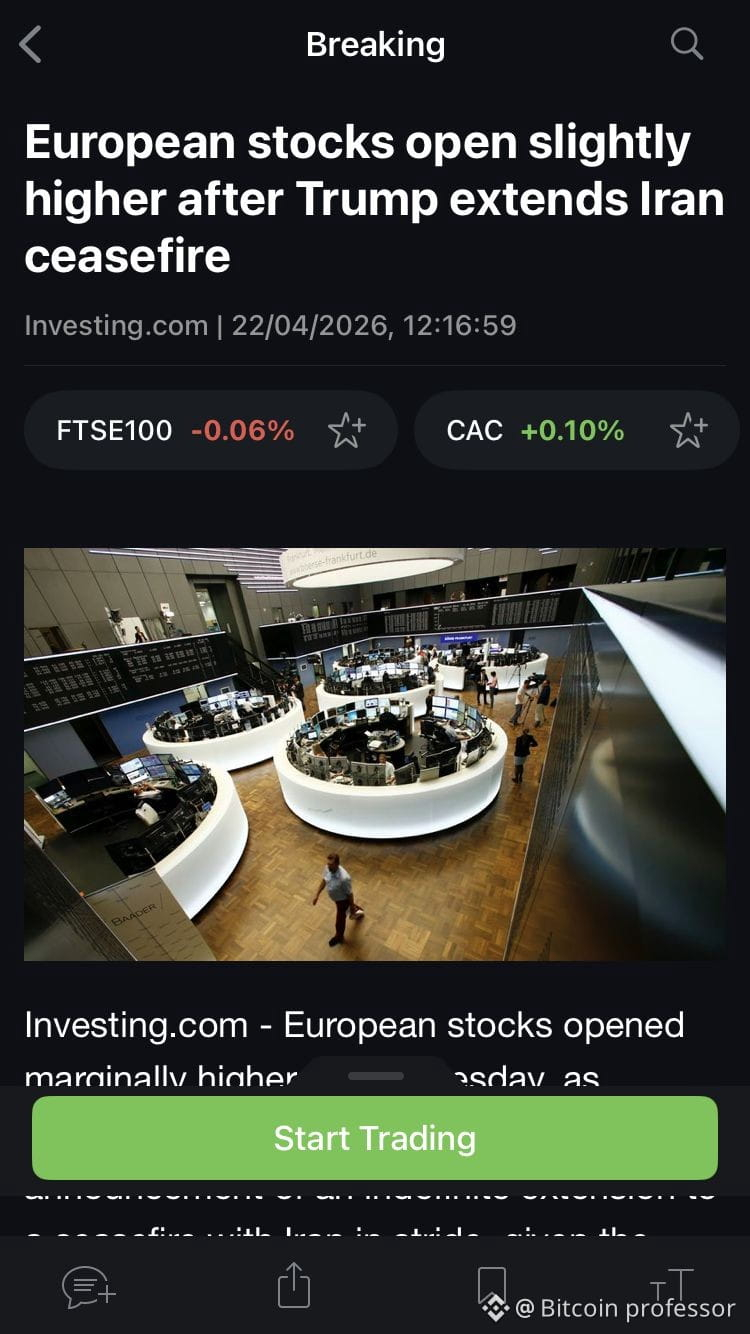
By 03:08 ET (07:08 GMT), the pan-European Stoxx 600 had ticked up by 0.3%, the Dax in Germany had inched higher by 0.4%, the CAC40 in France had added 0.2%, and the FTSE 100 in the U.K. was mostly unchanged.
In a social media post after the close of U.S. markets on Tuesday, Trump said a ceasefire deal with Iran had been extended just hours before it was reportedly due to expire. Trump said the move came at the request of Pakistan, a frequent mediator between Washington and Tehran. The president added that the truce would be in effect "until such time as" Iranian officials present a "unified proposal" for peace.
Yet the extension was unveiled unilaterally by Trump, leaving the stance of both Iran and U.S.-ally Israel unclear.
An anticipated trip to Pakistan for a fresh round of negotiations with Iran by U.S. Vice President JD Vance was put on hold as well, following an announcement from Iranian state media that its delegation deemed the talks to be a "waste of time because the U.S. prevents reaching any suitable agreement."
“While there is still a bit of skepticism and cynicism in the market about Iran, most are of the view that Operation Epic Fury is past its peak, with an agreement of some sort more likely than not,” analysts at Vital Knowledge said in a note to clients, referring to the U.S. name for its campaign against Iran.
At the same time, an ongoing U.S. blockade of Iranian ports and coastline remains in place and tanker traffic through the vital Strait of Hormuz is still all but closed.
Disruptions in the narrow waterway off of Iran’s southern coast, through which roughly a fifth of the world’s oil passes, have sparked worries over an energy-powered inflation surge that could force central banks to hike interest rates.
Underlining these fears on Wednesday was data showing that U.K. inflation accelerated to 3.3% in March due largely to a sharpest uptick in fuel costs in three years.
"[W]ith very little shipping traffic passing through the Strait of Hormuz, our view is that the likes of diesel, other refined products and other commodities, will continue to reman elevated which leaves us cautious on the growth outlook,” said Patrick O’Donnell, Chief Investment Strategist at Omnis Investments.
Brent crude prices, the global oil benchmark, edged down slightly to sit at around $98.03 a barrel and has eased back from an initial spike following the outbreak of the conflict in late February. However, Brent continues to hover well above pre-war levels.
Along with exposure to the energy shock, Europe has also been grappling with damage from strikes to natural gas production facilities in the Middle East, particularly Qatar. Benchmark natural gas prices are also above levels before the start of the joint U.S.-Israeli assault on Iran.
Earnings flood
Along with diplomatic developments, traders were also keeping tabs on a series of European corporate earnings as they attempt to gauge the fallout from the war on businesses.
Swiss engineering company ABB lifted its full-year sales guidance, citing resilient demand despite uncertainties around the conflict. Shares in the firm climbed by more than 5%.
Dutch group AkzoNobel posted a shallower-than-anticipated fall in first-quarter core profit thanks to better pricing and cost cutting, sending shares of the Dulux paint maker higher as well.
In Sweden, telecom operator Tele2 rose on 11% organic growth in underlying core profit and a 3% jump in revenue in the first quarter.