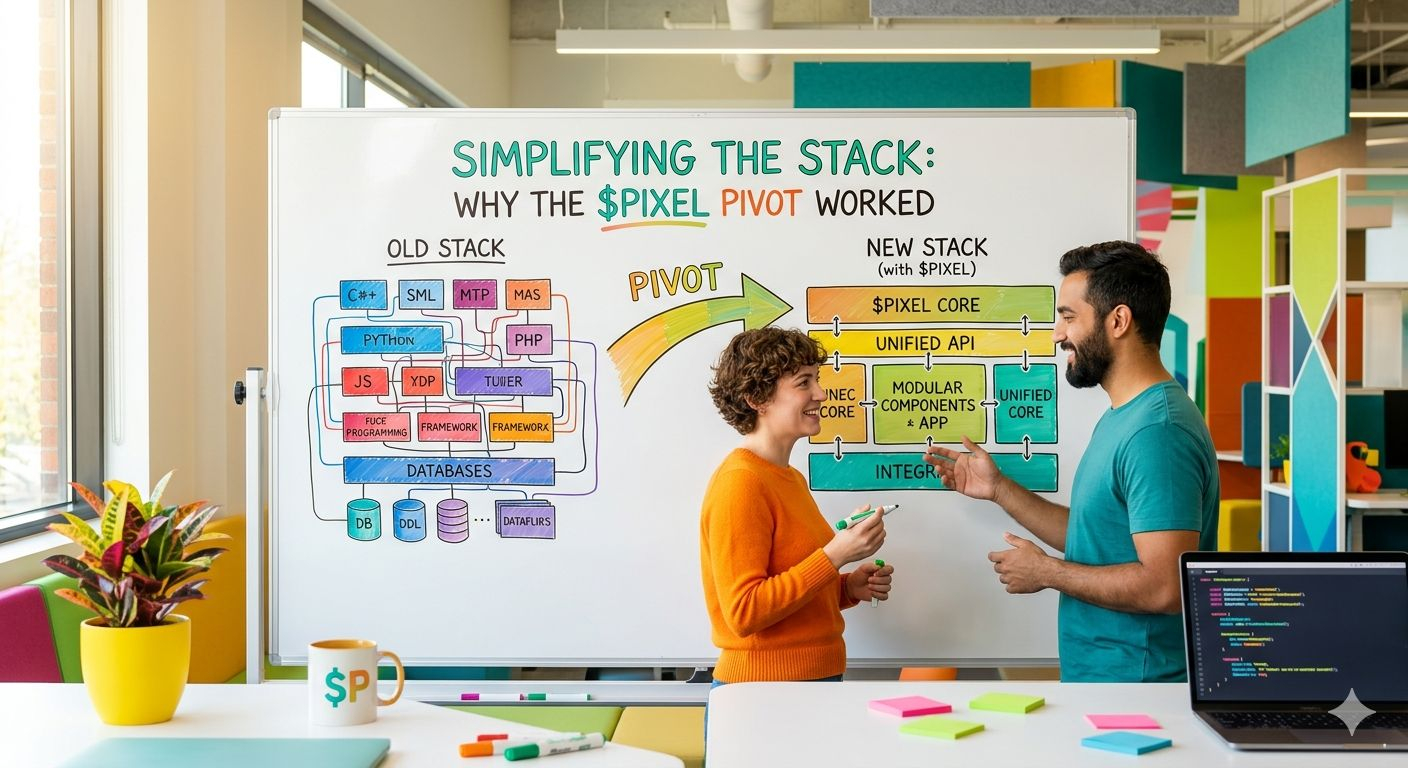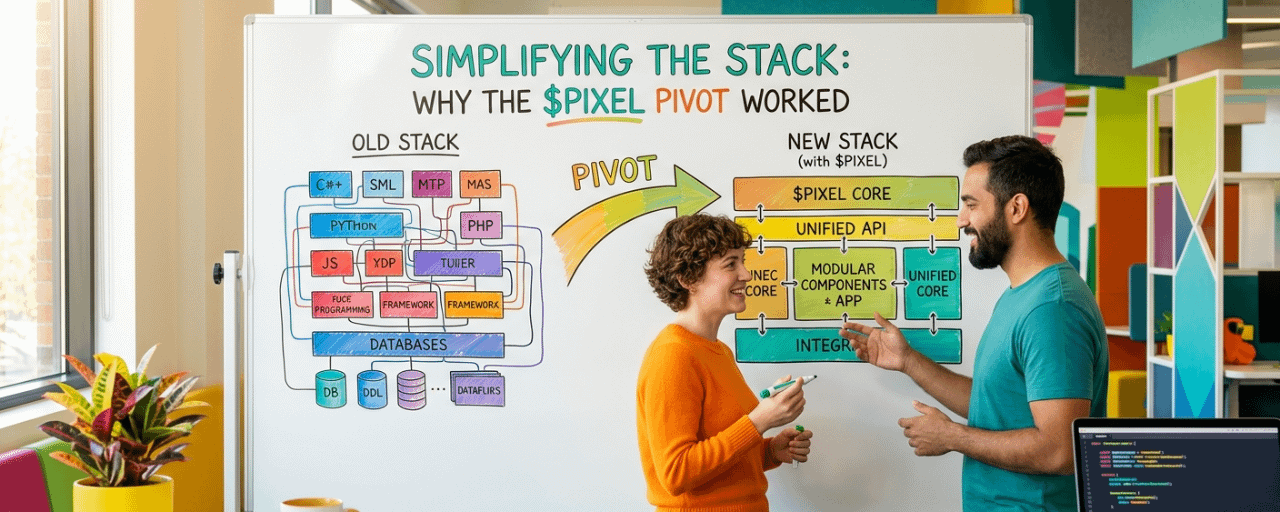
Most projects don’t fail because of bad ideas—they fail because of messy systems. And if you’re still defending dual-token models like $BERRY + $PIXEL as “flexible,” you’re ignoring the core issue: fragmented value is diluted value.
Let’s break this down.
The Problem With $BERRY
$BERRY wasn’t just a secondary token—it was a liability masquerading as utility. Inflationary emissions, weak sinks, and unclear long-term purpose turned it into a classic grind currency. Users earned it, dumped it, and repeated the cycle. That’s not an economy. That’s a leak.
If your token:
Has no meaningful burn pressure
Exists primarily as a reward
And isn’t required for high-value actions
Then it’s not supporting your ecosystem—it’s extracting from it.
$BERRY created a split economy:
One token ($PIXEL) with perceived long-term value
Another ($BERRY) acting as short-term noise
That division doesn’t create balance—it creates arbitrage behavior. Users optimize for extraction, not participation.
The Pivot to $PIXEL: Forced Discipline
Moving to a single premium currency wasn’t just a simplification—it was a constraint. And constraints are what force better design.
With $P$PIXEL the unified asset:
Every action now has economic weight
Every reward has real cost
Every sink actually matters
You can’t hide inflation behind a secondary token anymore. If emissions are too high, you’ll feel it immediately in price pressure. That forces tighter control over issuance and stronger utility design.
In other words: the system becomes honest.
Deflationary Mechanics: Real vs Cosmetic
Most projects claim “deflationary mechanics,” but let’s be blunt—burning a fraction of transaction fees isn’t enough. It’s cosmetic unless paired with sustained demand.
The $PIX$PIXEL t works because it aligns three things:
Utility sinks – Upgrades, access, boosts, and premium actions all require $PIXEL. This isn’t optional usage; it’s embedded into core gameplay or platform interaction.
Circulatory pressure – Tokens don’t just leave wallets—they move through the system before being burned or locked. That creates velocity before reduction.
Emission discipline – Without $BERRY as a buffer, over-rewarding users directly damages the ecosystem. That forces smarter reward structures (skill-based, time-gated, or value-backed).
If your burn mechanism isn’t paired with unavoidable demand, it’s irrelevant. The PIXEL avoids that trap.
Why Single-Currency Systems Win Long-Term
You might think dual-token systems provide flexibility. They don’t. They provide excuses.
A single-token economy:
Forces clear value hierarchy
Eliminates internal competition between assets
Simplifies user understanding (which is massively underrated)
Aligns incentives across all participants
Most importantly, it removes the illusion of sustainability. You either manage your token properly, or the system breaks—fast.
That’s a feature, not a flaw.
The Real Takeaway
The success of the PIXEL isn’t about branding or token consolidation. It’s about removing inefficiency and forcing accountability.
If your project still relies on a “soft currency” like $BERRY to absorb inflation, you’re not solving tokenomics—you’re postponing the consequences.
And markets eventually collect.
So the real question isn’t whether a single premium currency works.
It’s whether your system is strong enough to survive without hiding behind a second token. @Pixels