

The decentralized finance sector is once again under the spotlight after reports that KelpDAO moved to freeze parts of its operations following an exploit incident. The response, aimed at limiting potential losses and protecting remaining user assets, has quickly become one of the most discussed developments in the DeFi ecosystem. While emergency freezes are often viewed as a necessary defensive measure, they also reopen an important conversation about decentralization, trust, and the real risks users face when interacting with smart contract platforms.
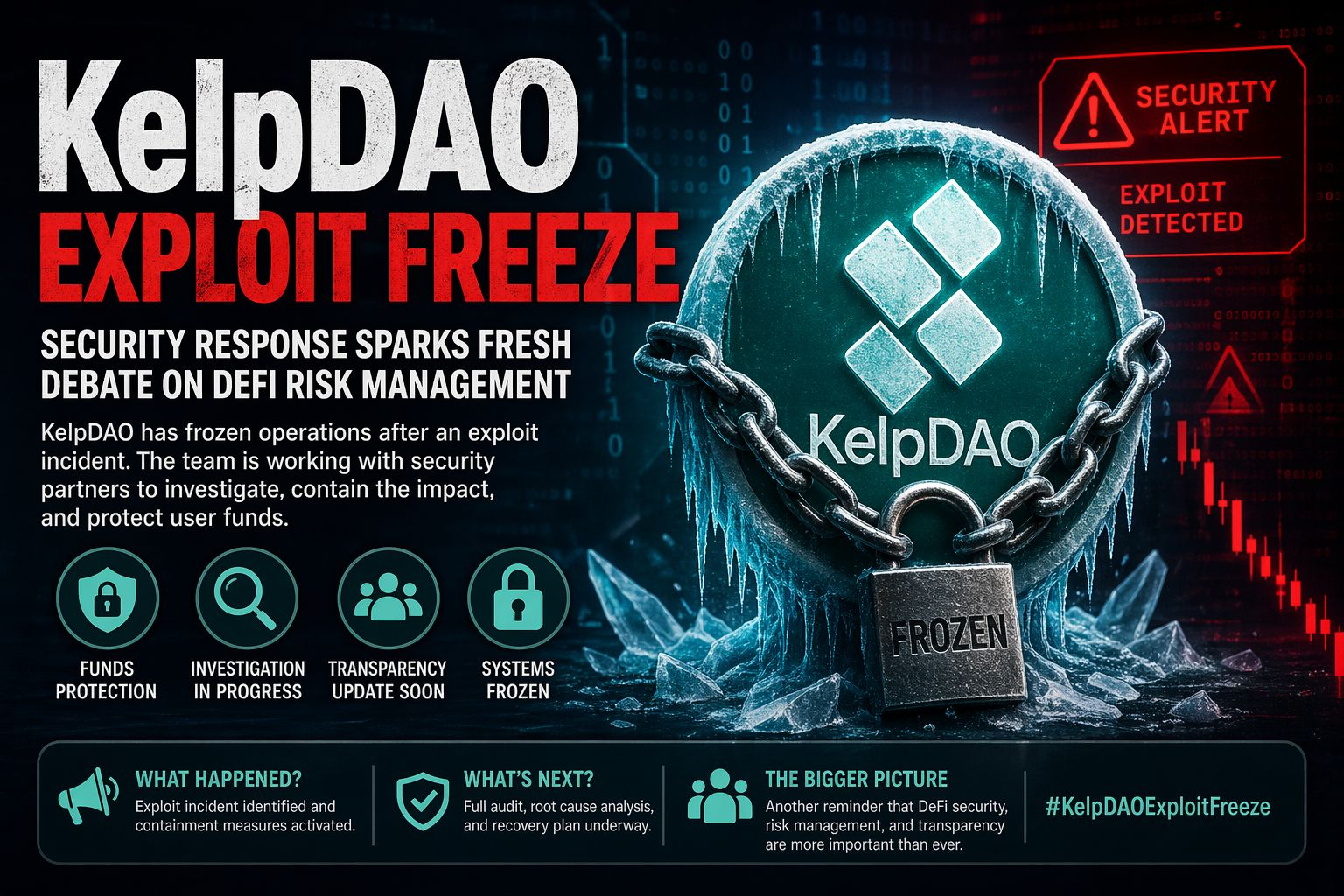
KelpDAO’s swift reaction shows how modern DeFi projects are increasingly prioritizing damage control when vulnerabilities appear. In previous market cycles, delayed responses often led to significantly larger losses, prolonged uncertainty, and severe reputational damage. By acting quickly, projects can isolate compromised systems, investigate attack vectors, and prevent cascading problems across interconnected protocols. In fast-moving blockchain environments, every minute matters.
However, incidents like this also highlight one of the biggest contradictions in decentralized finance: many protocols market themselves as trustless and decentralized, yet in emergencies they still rely on centralized decision-making to pause systems or restrict activity. Supporters argue that such controls are essential for user safety, especially when millions of dollars may be at risk. Critics, on the other hand, say it proves many DeFi platforms are more centralized than advertised.
The exploit freeze has also renewed concerns around smart contract security. Even audited platforms remain vulnerable to coding errors, governance loopholes, oracle manipulation, bridge weaknesses, or unexpected interactions between multiple protocols. As DeFi products become more complex, the attack surface expands. Yield strategies, liquid staking systems, restaking layers, and cross-chain integrations create opportunities for innovation—but also more room for failure.
For users, events like this are a reminder that high yields often come with hidden technical risk. Many retail participants focus on APY, token incentives, or airdrop opportunities without fully understanding contract architecture or protocol dependencies. When an exploit occurs, confidence can evaporate quickly, leading to withdrawals, token price pressure, and reduced ecosystem participation.
From an industry perspective, the KelpDAO situation may accelerate calls for stronger standards across DeFi. This could include more rigorous audits, bug bounty programs, real-time monitoring systems, formal verification, insurance mechanisms, and clearer emergency governance frameworks. Transparency after an exploit is equally important. Users typically want fast communication, clear explanations, recovery timelines, and honest disclosure of losses.
Market reaction to such incidents often depends less on the exploit itself and more on how the team handles the aftermath. If communication is strong and funds are largely protected, confidence can recover faster. If updates are delayed or vague, fear tends to grow. In crypto, trust can disappear faster than liquidity.
There is also a broader regulatory angle. Each major DeFi exploit adds fuel to arguments that the sector needs tighter oversight and stronger consumer protections. While many in crypto resist heavy regulation, repeated security failures make it easier for policymakers to justify intervention. That creates a delicate balance between preserving innovation and protecting users.
In the long run, DeFi’s future may depend on how well protocols adapt to these recurring lessons. Security can no longer be treated as a secondary feature—it must be core infrastructure. Users are becoming more selective, capital is becoming smarter, and trust is becoming harder to earn.
KelpDAO’s freeze after the exploit may be a short-term crisis, but it reflects a long-term truth for decentralized finance: growth without security is fragile. The next phase of DeFi will likely belong not just to the projects with the highest yields, but to those with the strongest resilience.#KelpDAOExploitFreeze