
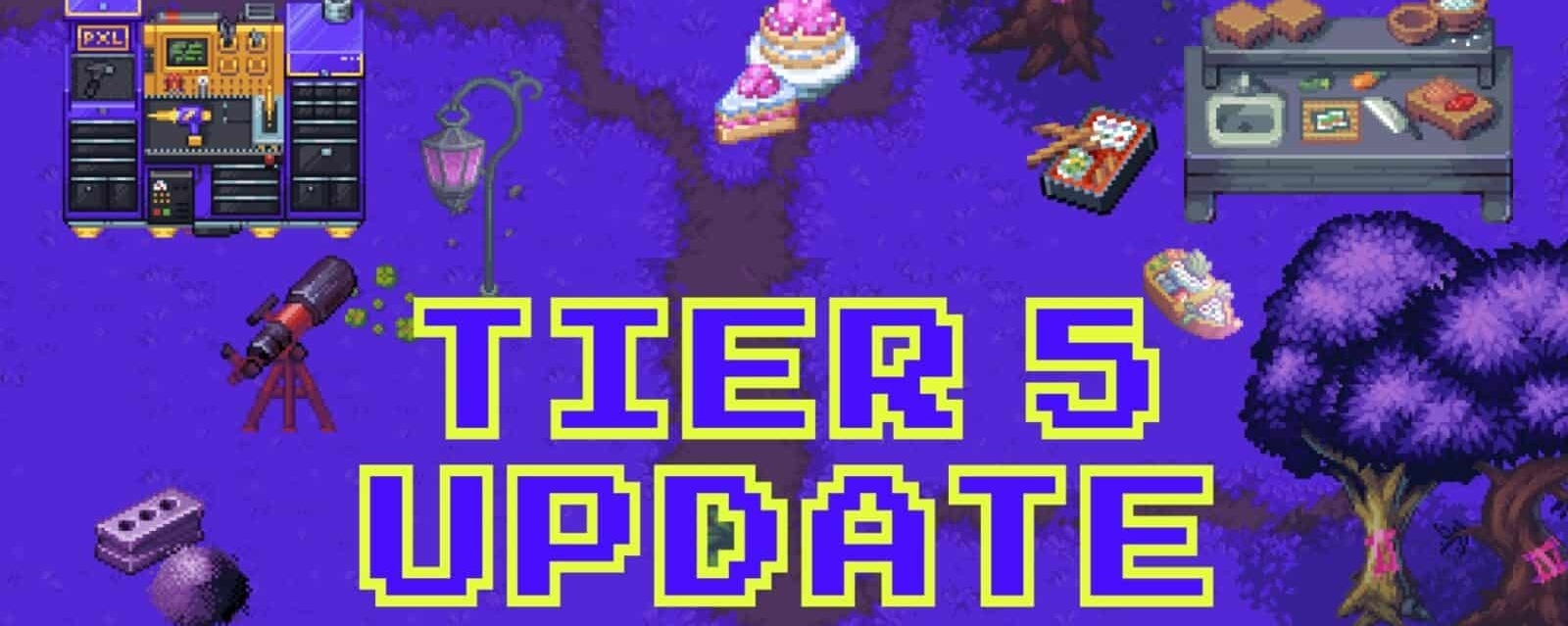

In the evolving world of Pixels updates are expected. New mechanics
new tiers new opportunities. But not every update lands the same way for every player. The recent Tier 5 update has sparked a quiet concern across the community:
New players might feel lost before they even get started.
At first glance, Tier 5 looks like progress. More depth more complexity more room for advanced strategies. For experienced players this is exciting. It adds layers to optimize systems to master and new ways to gain an edge.
But for some one just entering the game?
It can feel over whelming.
The Hidden Gap Between New and Existing Players
Every game has a learning curve. But the issue isn’t difficulty—it’s accessibility.
New players typically rely on:
* Simple goals
* Clear direction
* Fast feedback
These elements create early momentum. They make players feel like they understand the game even if they don’t fully master it yet.
With Tier 5 that clarity begins to blur.
Instead of a smooth onboarding experience new players are suddenly exposed to:
* Multiple layers of decisions
* Advanced resource management
* Strategy driven progression systems
Without proper guidance this doesn’t feel like depth—it feels like confusion.
And confusion is where drop-offs begin.
Complexity vs Clarity: A Delicate Balance
There’s nothing wrong with complexity. In fact complexity is what gives games longevity. It’s what keeps advanced players engaged over time.
But complexity must be introduced gradually.
If players encounter too many variables too early:
* They hesitate
* They second-guess decisions
* They lose confidence
And once confidence drops engagement follows.
The Tier 5 update unintentionally pushes players into a system they don’t yet understand. Instead of learning step-by-step they are expected to adapt instantly.
That’s a big ask for someone still figuring out the basics.
The Psychological Impact of Feeling Lost
When players feel lost it’s not just about mechanics—it’s about emotion.
They start asking:
* Am I doing this right?
* Why am I not progressing?
* What am I missing?
And without clear answers frustration builds.
In Web3 games especially, where time and rewards are closely connected, confusion feels more costly. Players don’t just feel stuck—they feel like they’re falling behind.
That perception is dangerous.
Because once a player believes they’re behind they’re more likely to quit than catch up.
Why Experienced Players Don’t Notice the Problem
Interestingly many experienced players don’t see this issue at all.
Why?
Because they already understand the system.
They:
* Recognize patterns
* Understand mechanics
* Adapt quickly to changes
What feels complex to a beginner feels normal—even simple—to them.
This creates a blind spot.
The game becomes optimized for those already inside the system while unintentionally raising the barrier for those trying to enter.
Depth Is Good—But Direction Is Better
The Tier 5 update shows that Pixels is evolving beyond a casual farming game. It’s becoming a strategy driven ecosystem where decisions matter more than actions.
That’s a positive direction.
But depth without direction creates friction.
What new players need is not less complexity—but better guidance:
* Clear progression paths
* Simple early strategies
* Visual clarity in choices
* Feedback that builds confidence
Without these even the best designed systems can feel inaccessible.
The Risk of Losing the Next Wave
Web3 gaming is still early. Growth depends on new users entering learning and staying.
If updates unintentionally discourage beginners:
* Retention drops
* Community growth slows
* Ecosystem momentum weakens
Pixels has built a strong foundation with accessibility and simplicity. That’s what brought many players in.
The challenge now is maintaining that accessibility while expanding depth.
Turning the Problem Into an Opportunity
The Tier 5 update doesn’t have to be a setback. In fact it highlights an important opportunity:
Designing for both beginners and advanced players simultaneously.
This could include:
* Better onboarding systems
* Guided tutorials for new mechanics
* Clear explanations of advanced features
* Progressive unlocking instead of instant exposure
By doing this Pixels can keep its depth without losing its approachability.
A Glimpse Into the Bigger Picture
What’s happening in Pixels is not unique. It reflects a broader trend in Web3 gaming.
As games evolve:
* Systems become more complex
* Economies become deeper
* Strategies become more important
But with that evolution comes responsibility.
If games become too complex too fast they risk becoming exclusive instead of inclusive.
And Web3’s promise has always been about expanding access not limiting it.
Final Thoughts
The Tier 5 update is not inherently bad. It’s a sign of growth ambition and long term vision.
But it also reveals a critical truth:
Growth without accessibility creates friction.
Pixels is at a turning point.
It can either become:
• A deep system understood by a few
Or
• A powerful ecosystem accessible to many
The difference lies in how it supports new players.
Because in the end a game doesn’t grow by how complex it becomes.
It grows by how many people can understand it enjoy it and stay.
And right now the biggest question isn’t whether Pixels can evolve.
It’s whether new players can keep up.