
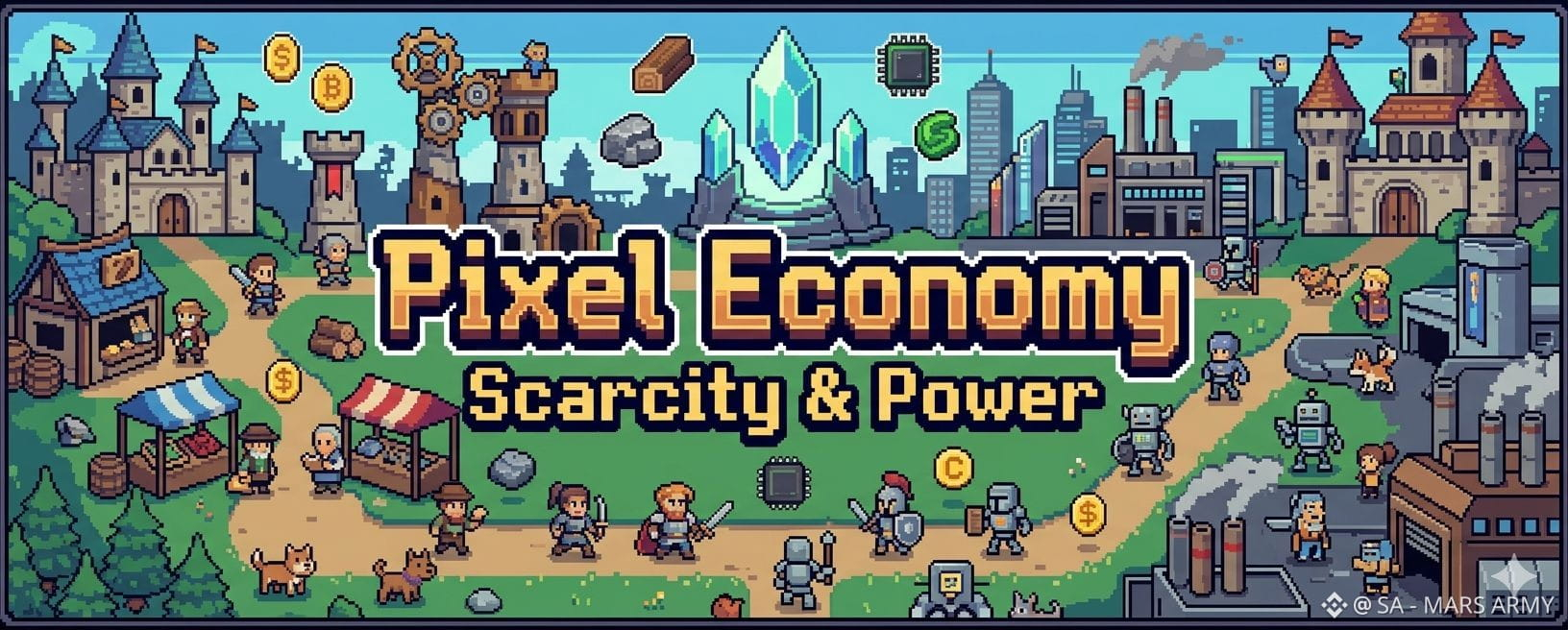
When I first looked at @Pixels gathering system, it didn’t feel like just another crafting loop. It felt quieter than that, almost like an economy trying to grow roots before anyone notices. Most games throw resources at you as a means to an end. Here, the way resources are distributed is the end, or at least the foundation everything else leans on.
On the surface, it’s simple enough. You gather soil, crops, wood, water, stone, metal, even power. Eight resource types, each tied to different industries. That sounds familiar if you’ve played anything in the farming or survival genre.
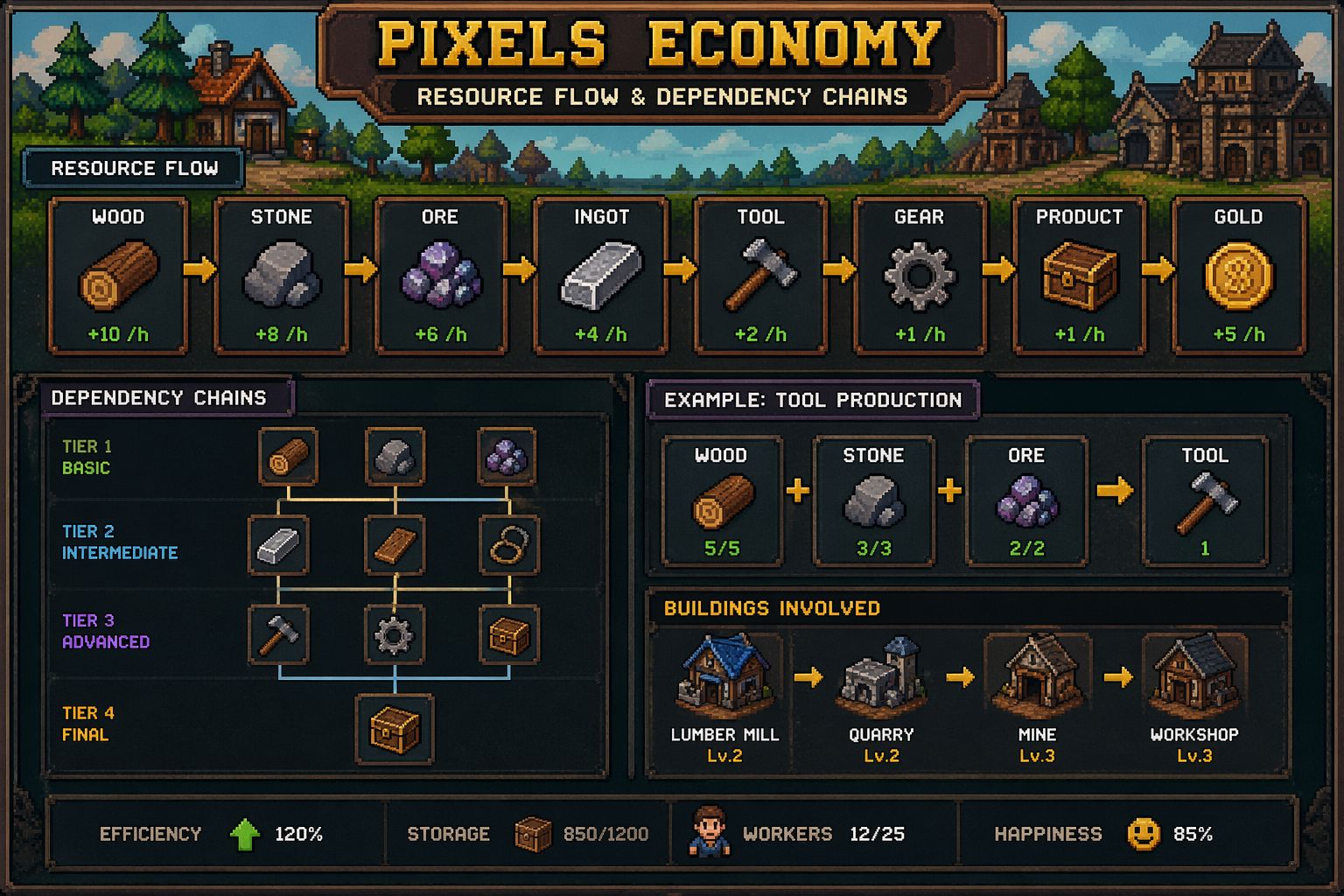
But underneath that, there’s a constraint system forming. Not every player can access everything, and more importantly, not every piece of land can produce the same output. That one design choice quietly reshapes the entire player experience.
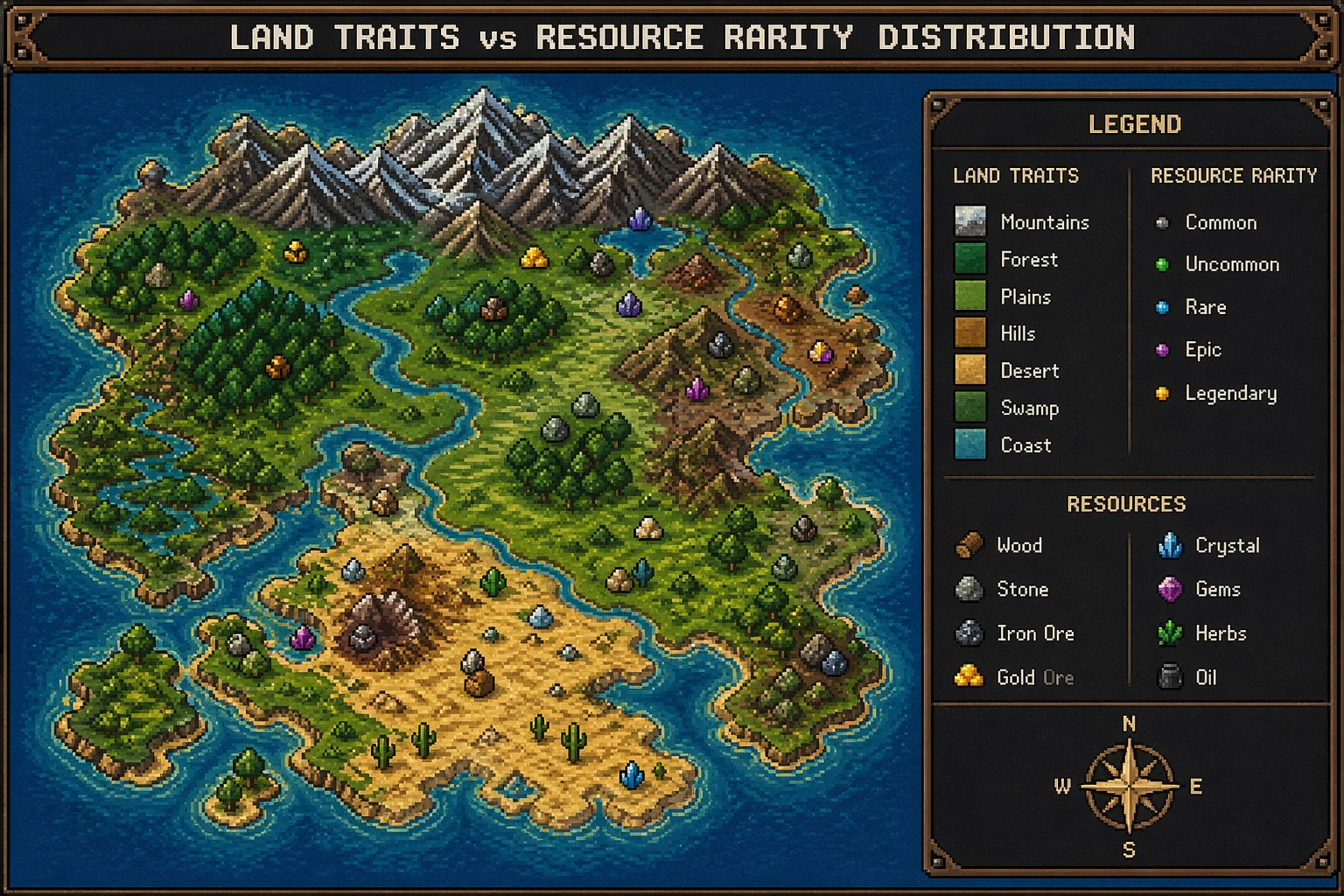
The rarity system makes that clearer. Five tiers, from common to legendary. It’s easy to read that as a standard progression ladder, but it’s not really about progression in the usual sense. A level 5 legendary resource isn’t just stronger, it’s geographically restricted. It only exists on certain land types with specific traits. That means scarcity isn’t artificial, it’s spatial and once scarcity becomes spatial, behavior changes.
Players aren’t just grinding anymore. They’re searching. They’re choosing industries based on what their land can support, not what they personally prefer. That creates friction, but it’s productive friction. You can’t optimize everything alone, which nudges players toward trade, collaboration, or even competition over territory.
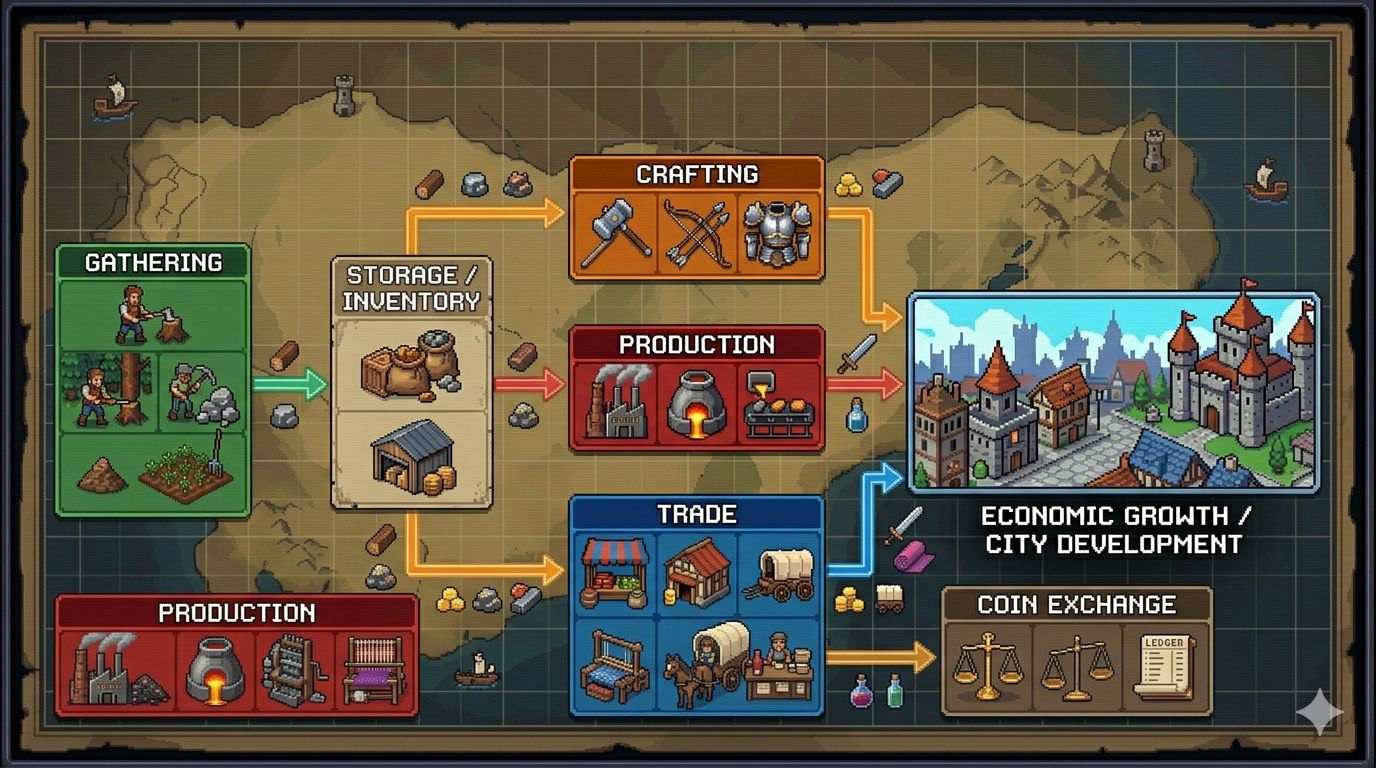
That momentum creates another effect. Land itself becomes more than a cosmetic or passive asset. If a plot can generate rare resources, it’s not just valuable because it exists, it’s valuable because of what it unlocks downstream. Recipes, crafting chains, production cycles. One rare input can bottleneck an entire system.
To put numbers around it, eight resource categories multiplied across five rarity tiers already creates 40 distinct resource states. But since each is tied to land traits, the actual combinations expand further depending on how those traits are distributed. Even if only a fraction of those combinations are viable, you’re still looking at dozens of meaningful economic roles players can occupy.
Understanding that helps explain why this system feels different from traditional farming mechanics. In most games, resource gathering scales linearly. You gather more, you craft more, you progress faster. Here, scaling depends on access, not just effort. A player with average land can grind for hours and still miss a key ingredient that someone else finds in minutes simply because of location.
There’s an obvious counterpoint. Systems like this risk centralizing power. If a small group controls rare land, they could dominate supply chains. That’s a real concern, especially in a market where players are already sensitive to asset concentration. But it also creates opportunity. If trading systems are fluid and transportation costs matter, then intermediaries emerge. Logistics becomes a role. Market makers appear. The economy thickens.
Meanwhile, the broader market context makes this more interesting. Right now, most Web3 games are still struggling with retention. Daily active users often spike at launch and then drop sharply. The ones that hold attention tend to have either strong social loops or persistent economies. Pixels seems to be leaning into the latter, but in a way that feels earned rather than forced.
Early signs suggest players are spending more time exploring than optimizing, which is unusual. Exploration is usually a phase, not a loop. If that holds, it could mean the gathering system is doing more than feeding crafting. It’s shaping how players move through the world.
What this really reveals is a shift in design philosophy. Instead of giving players everything and asking them to optimize, Pixels is limiting access and asking them to adapt. That creates a different kind of engagement. Slower, maybe. Less explosive. But more grounded.
And if you zoom out, it mirrors where the space is heading. Less focus on token emissions, more on resource flow. Less on instant rewards, more on steady accumulation. It’s not as loud, but it’s more sustainable if done right.
The interesting part is that none of this depends on complexity alone. It depends on whether scarcity feels real to the player. Because once it does, gathering stops being a task and starts becoming a decision. And that’s where games quietly turn into economies.
