
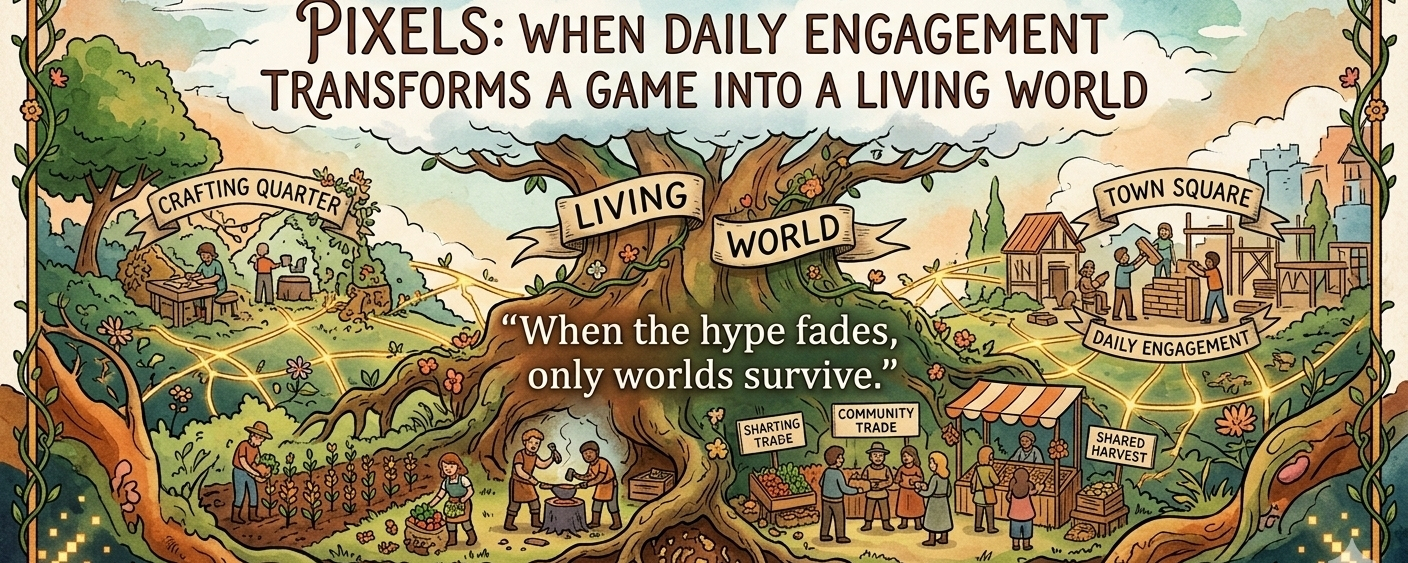
"When the hype fades, only worlds survive and most games never reach that point.”
For years, Web3 games followed the same formula launch fast, promise big rewards, and hope momentum carried the project forward. Initially, it worked. Charts moved, communities formed and activity looked impressive. But beneath the surface, something crucial was missing staying power.
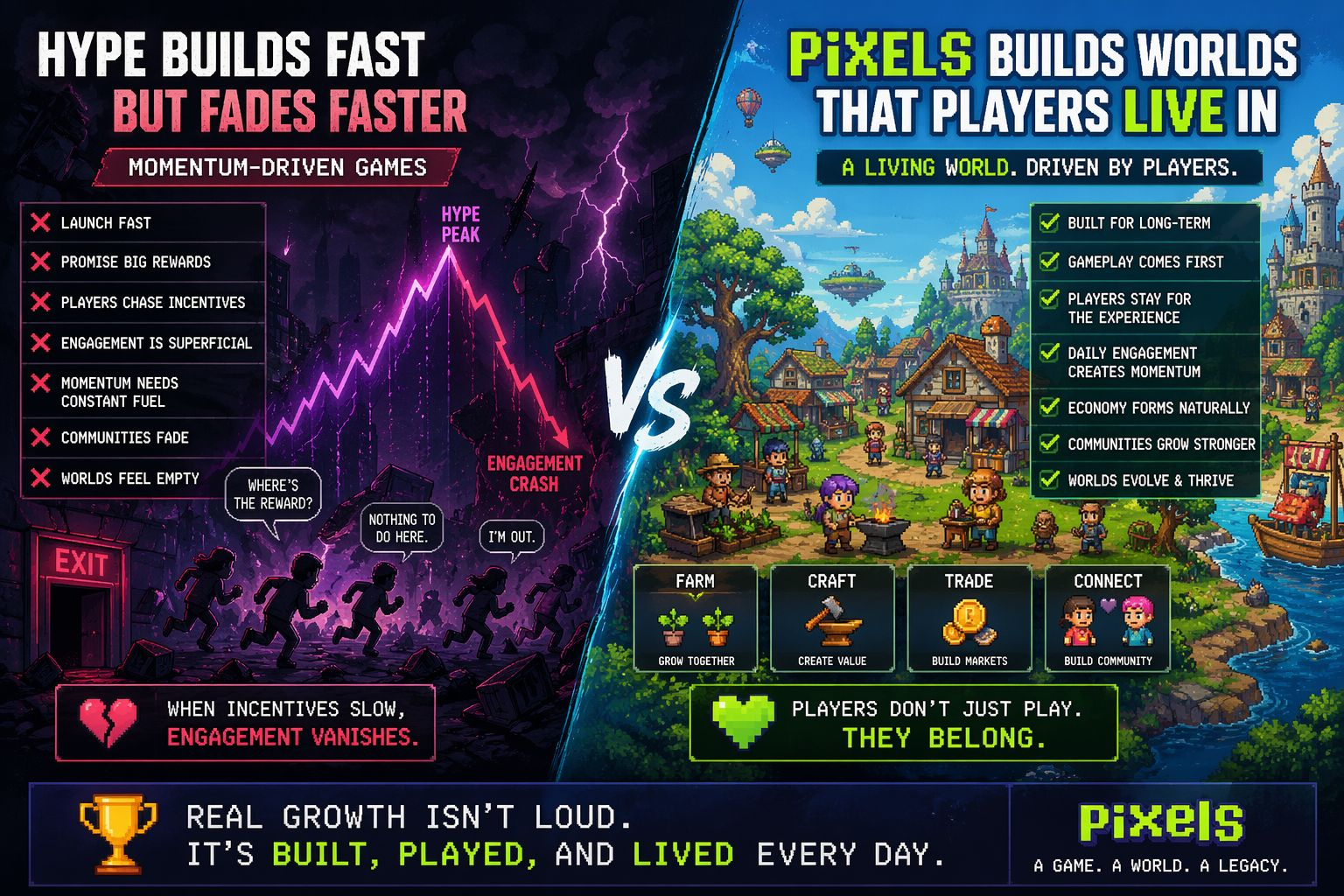
Players arrived for rewards, not the experience. When incentives slowed, engagement quietly vanished. Momentum can grab attention but it cannot hold it.
Pixels took a different path. Instead of chasing hype, it built a living world. Farming, crafting, trading, and social interaction became the entry point. Progress felt personal, not transactional. Gradually, players stopped logging in for rewards they returned because the world itself mattered.
Unlike momentum driven projects that rely on constant announcements Pixels thrives quietly. Its ecosystem evolve even when headlines fade because activity is driven by players not marketing.
Markets form naturally as players trade. Communities strengthen as cooperation become beneficial. Progression feels earned because it grow from daily engagement not distributed tokens. This is the difference between fleeting hype and a lasting ecosystem.
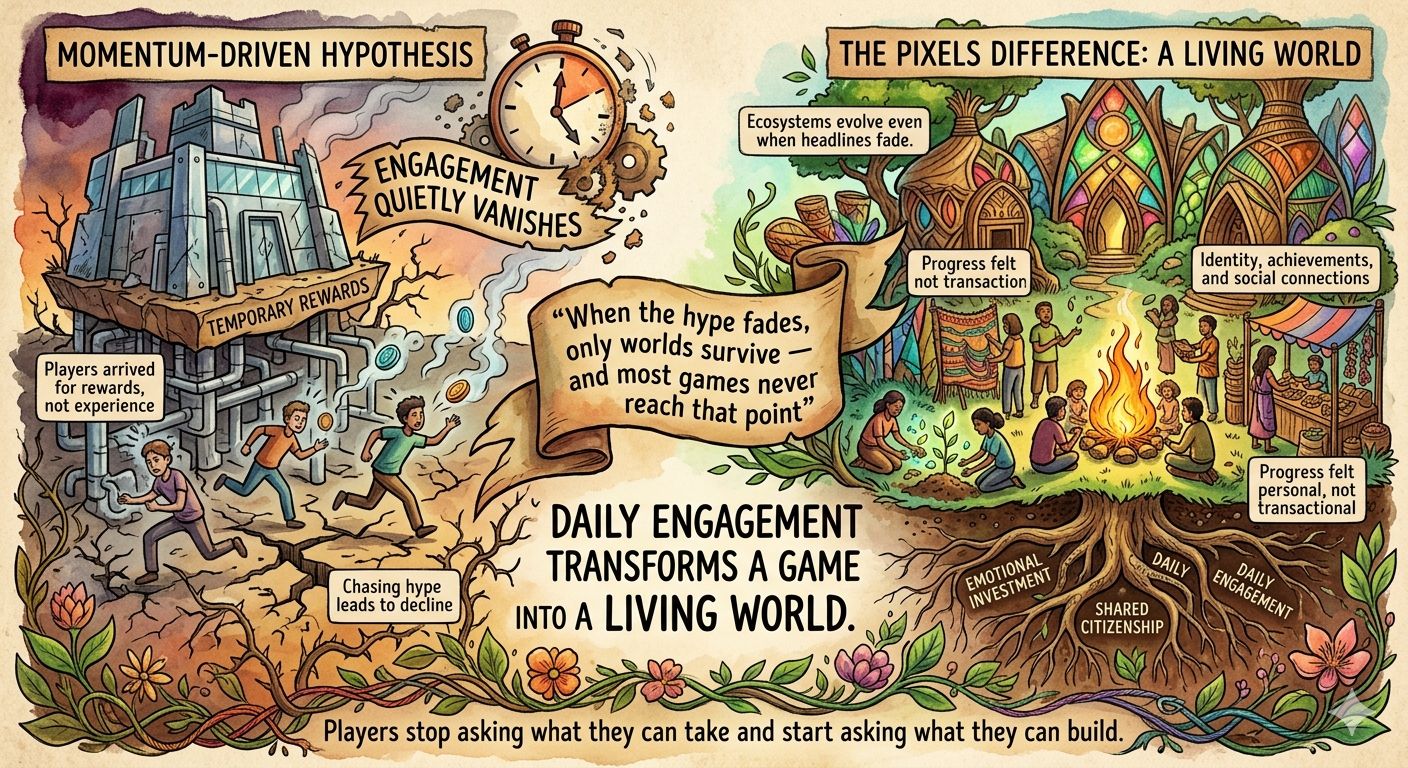
Engagement in Pixels run deeper. Identity, achievements and social connections creates emotional investment. Players act less like investors chasing gains and more like citizens of a share digital world. That’s a foundation momentum driven projects rarely achieve.
The future of Web3 gaming may not belong to the loudest launch or fastest trend but to worlds that feel alive even when no one is watching.
Pixels proves that real growth starts when players stop asking what they can take from a game and start asking what they can build within it.
