
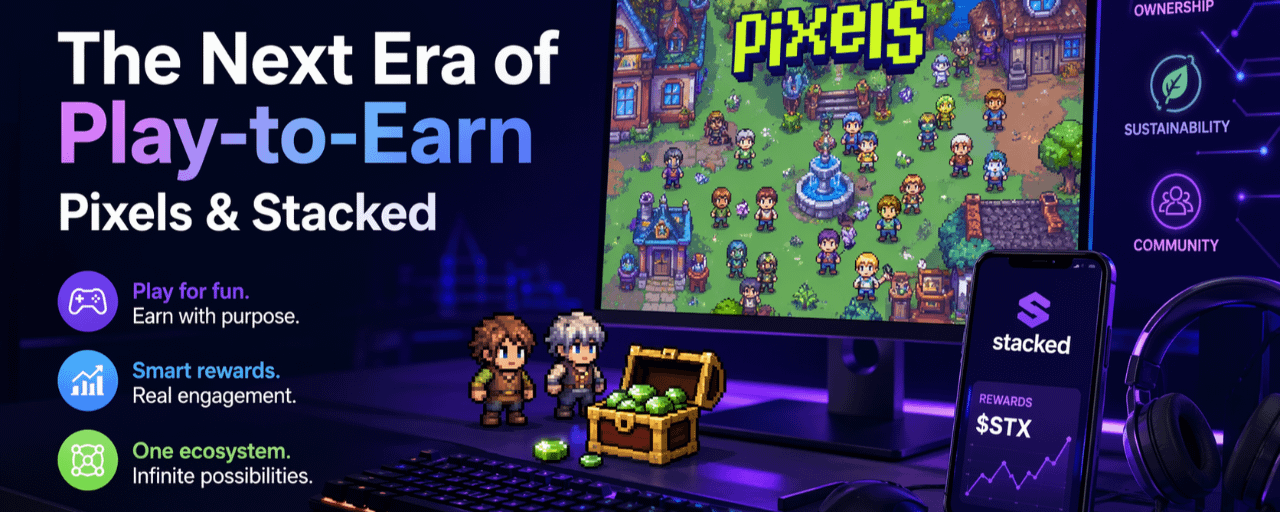
Play-to-earn kiedyś wydawało się przyszłością gier. Wielu graczy dołączyło z myślą, że czas spędzony w grach może zamienić się w prawdziwe przychody. Na początku to działało. Nagrody były atrakcyjne, a wzrost szybki. Ale z biegiem czasu zaczęły się pojawiać pęknięcia. Zarobki spadły. Inflacja tokenów wzrosła. Większość gier zaczęła przypominać monotonny grind zamiast prawdziwej zabawy. Skupienie przesunęło się z grania na wydobywanie wartości. To tam model zaczął się psuć.
Teraz pojawia się inny kierunek dzięki Pixels. Zamiast na siłę pchać nagrody, koncentruje się na tworzeniu gry, którą ludzie naprawdę chcą grać. Ta prosta zmiana zmienia wiele. Kiedy gracze lubią się bawić, zostają dłużej. Zaangażowanie staje się ziołem, a nie presją. Zarabianie będzie punktem na szczycie rozgrywki, teraz nie jest najprostszym powodem do udziału.
Jedna ważna różnica dotyczy sposobu, w jaki obsługiwane są nagrody. Pixels wykorzystuje doskonały system, w którym nagrody są powiązane z znaczącymi ruchami. Zamiast dawać tokeny wszystkim po równo, system patrzy na zachowanie graczy. Ci, którzy wnoszą wartość do gry, są nagradzani skuteczniej.
Stacked: Budowanie warstwy infrastruktury
Jeśli Pixels jest dowodem koncepcji, Stacked jest większą ambicją.
Stacked to silnik nagród stworzony przez zespół Pixels — zaprojektowany, aby malować nie tylko w ramach hobby, ale w całym środowisku gier wideo. Centralna koncepcja jest prosta: każda gra ma własny unikalny system finansowy tokenów, który żyje lub umiera samodzielnie w nietypowym systemie nagród. To tworzy stabilność. Redukuje bezsensowną inflację i w miarę upływu czasu tworzy bardziej solidny budżet na rozrywkę.

Z jego ewoluującą formą, aktorzy nie są ograniczeni do niezamężnej pętli rozszerzenia rolnictwa. Udział w grach i misjach tworzy wiele sposobów na zarabianie. Ten tryb łączy grę z kulturą i inspiruje graczy do aktywnego życia. Czuje się to znacznie mniej jak marka rolnicza, bardziej jak coś zbudowanego przez lata.
Jeśli spojrzymy na turnieje takie jak Axie Infinity, luka została wypełniona. Poprzednie reżimy polegały w dużej mierze na ciągłym wzroście i nowych graczach wchodzących do ekonomii. Gdy to osłabło, cała forma osłabła. Nowa technika jest bardziej skoncentrowana na zrównoważonym rozwoju, z zaangażowaniem i inteligentnymi zachętami napędzającymi maszynę do przodu zamiast naturalnych wniosków.
Gra o przychody nie zawsze znika. Ona się rozwija. Następnym krokiem często nie jest dążenie do nagród, ale raczej projektowanie struktur, w których opłaty pochodzą z rzeczywistego uczestnictwa. Pixels sugeruje, że podczas grania, zachęty i zachowanie uczestników ładnie się zgrywają, a gaming Web3 może dominować nie tylko dzięki hype'owi.
