

The idea of a spend-only ERC-20 layer like PIXEL isn’t just a token design tweak, it’s an attempt to fix something deeper that most Web3 ecosystems still haven’t solved properly. There’s a clear gap between owning a digital identity and actually using that identity in meaningful, repeat transactions. Wallets are full, profiles exist, NFTs sit there but real economic activity often stops at speculation.
That gap is where systems like a spend-only token start to make sense.
At a technical level, ERC-20 tokens were always designed to be flexible and interoperable across applications, which is why they became the backbone of gaming economies and virtual worlds (Blockchain Council). But flexibility alone didn’t guarantee usage. In practice, most tokens ended up trapped in a loop:
Earn → Withdraw → Sell
Ownership existed, but application was weak.
The spend-only PIXEL model flips that loop.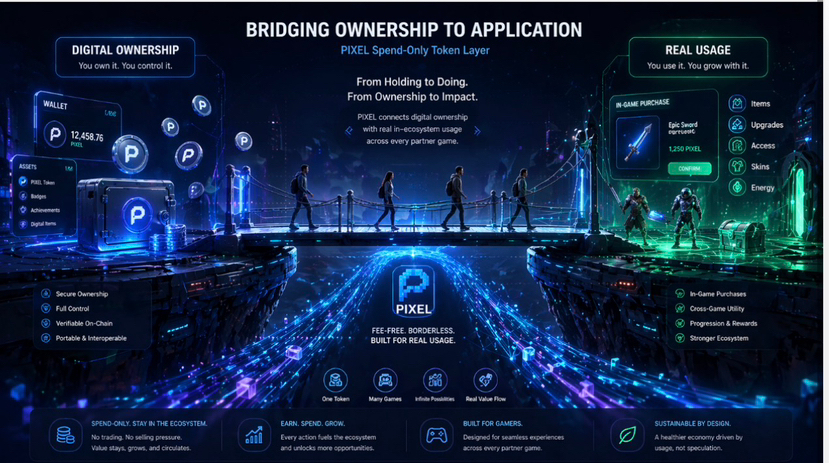
Instead of pushing users toward immediate liquidity, it introduces a parallel path where tokens can move freely across games, be spent without fees, and still retain staking power. According to its design, users can withdraw a non-tradable version of the token with zero fees and use it across partner games, while spending triggers a recycling mechanism that unlocks underlying value back into the system (Pixel Litepaper). That’s not just a UX improvement, it’s a structural shift in how value circulates.
And that shift matters when you look at market signals.
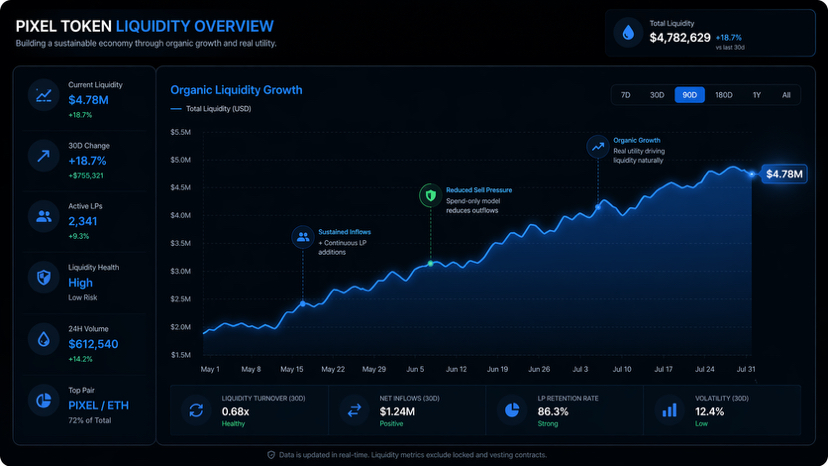 Liquidity, for example, is often misunderstood. A token can technically exist on-chain, but if liquidity is thin or fragmented, it becomes fragile. In the case of PIXEL, available liquidity data has shown relatively low depth and limited pool activity, which naturally increases volatility and sensitivity to large holders (Velithon). That’s where spend-only mechanics become relevant. Instead of constantly feeding sell pressure into shallow liquidity pools, value is redirected into usage.
The same logic applies to holder distribution. When ownership is concentrated or unclear, price movements become less about adoption and more about positioning. Weak distribution combined with low organic demand usually leads to artificial cycles brief spikes followed by long stagnation. A system that encourages continuous in-ecosystem spending can soften that effect by shifting behavior away from passive holding toward active participation.
This is where the idea of organic demand becomes critical.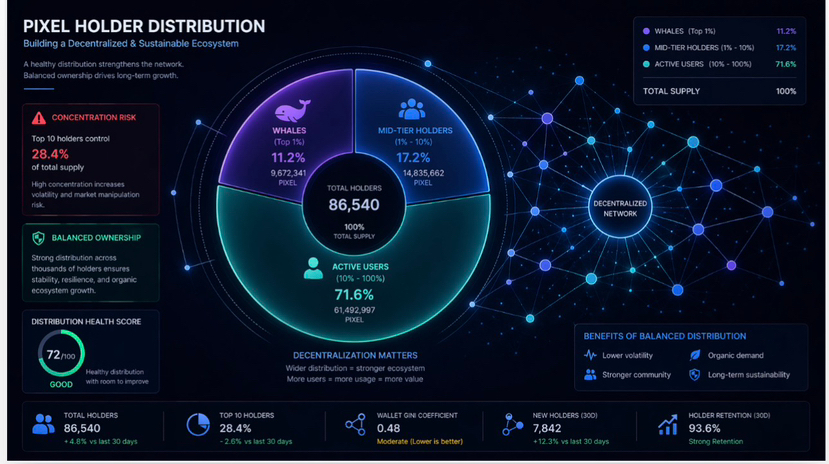
Organic demand doesn’t come from listings or hype cycles. It comes from people needing the token to do something. In gaming ecosystems, that “something” is often small but frequent: upgrades, items, access, progression. ERC-20 tokens already support this kind of cross-application utility, enabling the same currency to function across multiple environments (Immutable Docs). The problem was never capability. It was incentive design.
A spend-only layer realigns that incentive.
When users are no longer penalized for staying inside the ecosystem and when spending actually unlocks value rather than destroying it you start to see a different type of economy forming. Less extraction, more circulation. Less dependence on external liquidity, more reliance on internal activity.
That said, it’s not a perfect solution.
There’s a risk that non-tradable tokens create a perceived separation between “real value” and “in-game value,” especially if users still anchor their expectations to market prices. If the bridge between spend-only usage and underlying asset value isn’t clearly understood, adoption can stall. Also, while reducing sell pressure sounds positive, it doesn’t automatically guarantee demand. If the ecosystem itself isn’t compelling, no token model can fix that.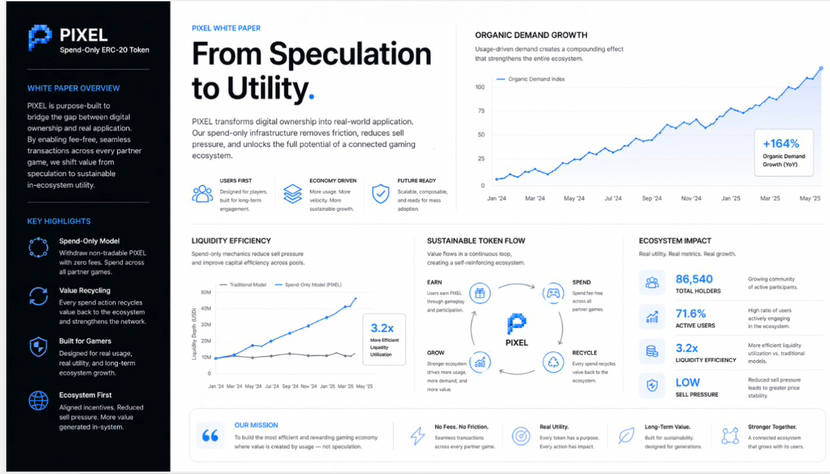
Still, the direction is meaningful.
What this approach gets right is recognizing that ownership alone isn’t enough. A wallet address, a token balance, even a verified identity none of it matters if it doesn’t translate into consistent, real usage. The future of these ecosystems depends less on how many users hold assets and more on how often they use them.
That’s the real bridge being built here.