
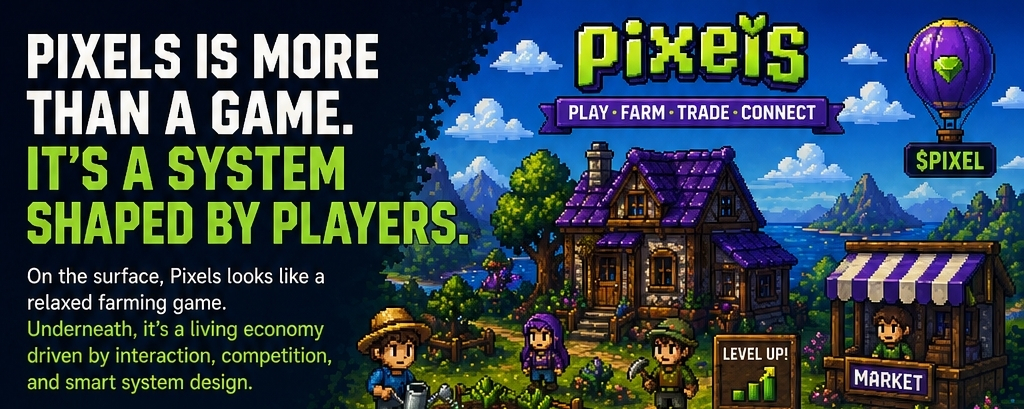


I’ve spent a fair amount of time inside @Pixels lately, not just playing, but observing how people behave within it. At first glance, it feels like a relaxed farming game—light mechanics, simple loops, nothing overly demanding. But the longer I stayed, the more I realized that what keeps the system active isn’t just gameplay… it’s interaction.
What pulled me back wasn’t the rewards or progression speed. It was the presence of other players.
You log in and immediately see movement farms being worked, trades happening, upgrades on display. There’s a constant sense that something is unfolding, even if you’re not directly involved. And without realizing it, that visibility starts to shape your behavior. You don’t just want to play you want to be part of that ongoing activity.
That’s where I think $PIXEL quietly stands out. Retention here doesn’t feel forced. It’s not driven by aggressive incentives or pressure mechanics. It’s reinforced socially. When others are active, progressing, or showcasing their progress, it creates a subtle pull to stay engaged.
But beneath that calm surface, there’s another layer forming.
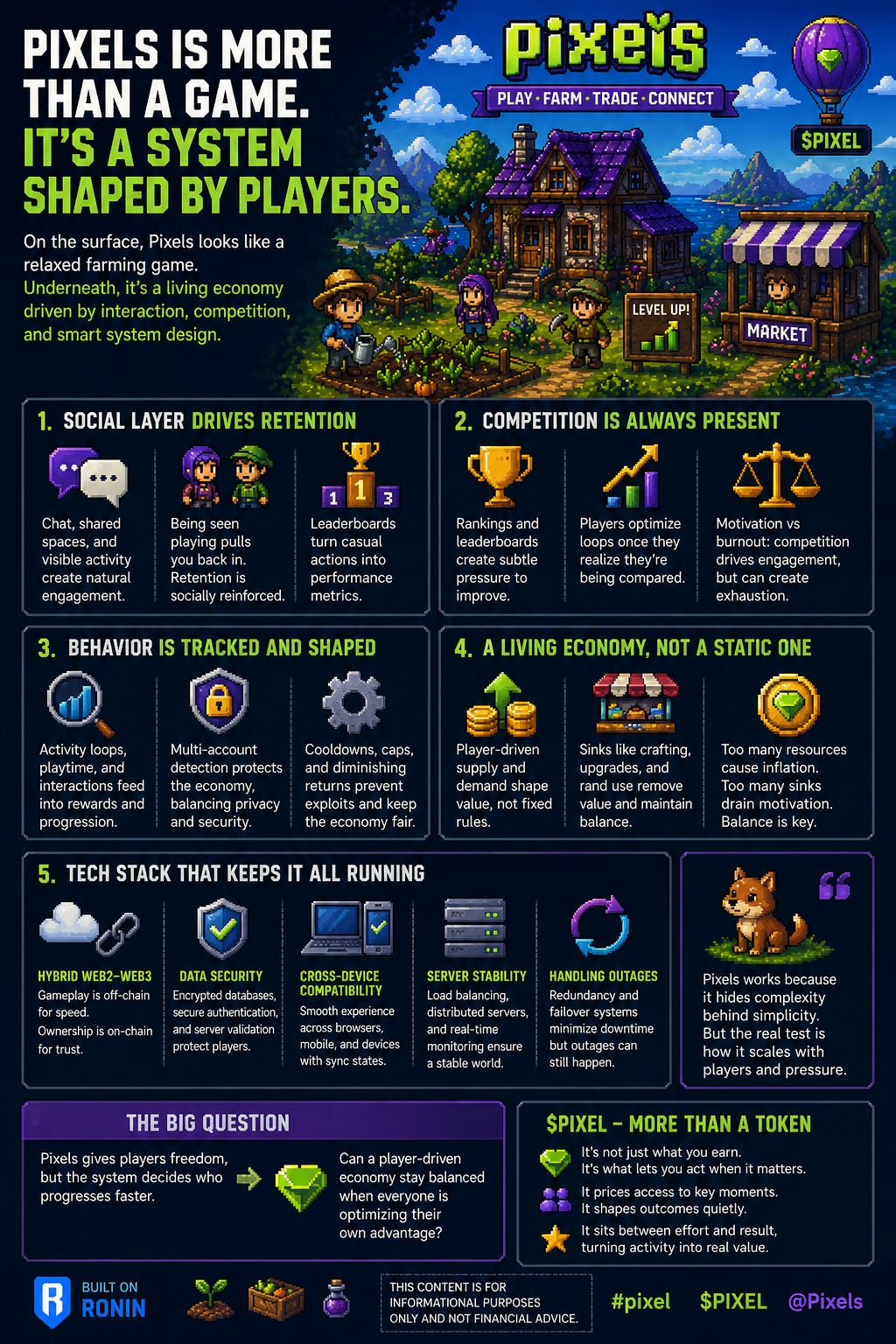
What looks casual quickly starts to feel competitive.
Leaderboards, rankings, and visible outputs turn even simple actions into benchmarks. At some point, “just farming” stops being casual and starts becoming optimized. You begin to notice where you stand relative to others, and naturally, your approach shifts. Efficiency starts replacing experimentation.
I caught myself doing this without even intending to.
That’s where the tension begins. The system invites you to play at your own pace, but at the same time, it quietly rewards those who approach it more strategically. Casual players keep the world alive, but competitive players start shaping the economy itself.
And over time, that balance becomes harder to maintain.
Because in most systems, once optimization enters the picture, it doesn’t stay contained. It spreads. Players adapt, refine, and push toward whatever yields the best results. What started as a relaxed environment gradually leans toward performance-driven behavior.
At that point, the question changes.
Is it still casual… or just casually competitive?
The more I thought about it, the more I realized that this shift isn’t accidental. It’s connected to how the system tracks and responds to behavior.
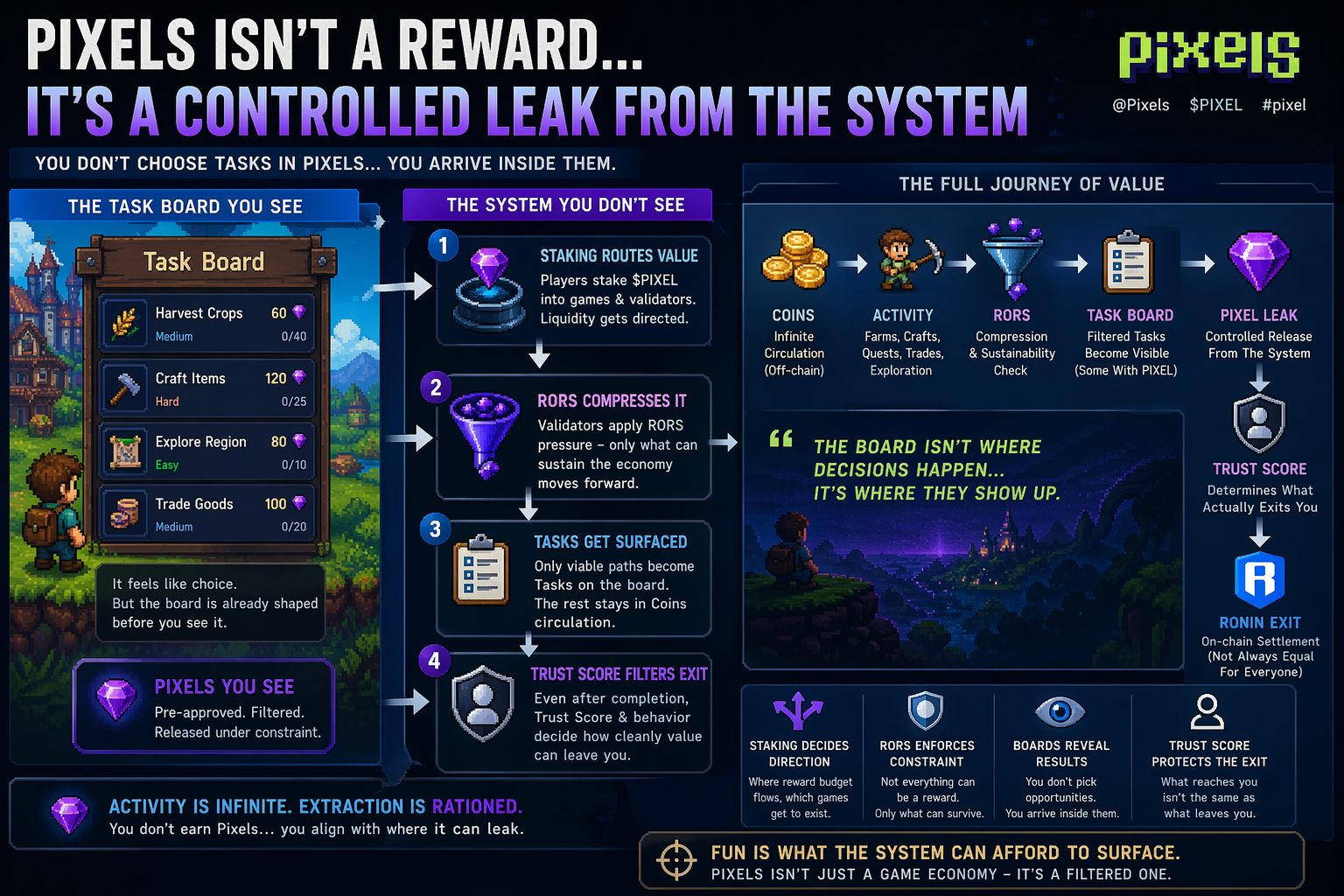
Every action logging in, farming, trading, crafting feeds into a feedback loop. The system doesn’t just record what you do; it adjusts around it. Progression, rewards, and pacing aren’t static. They evolve based on how players interact with the environment.
That’s where Pixels starts to feel less like a simple game and more like a responsive system.
It doesn’t explicitly tell you how to play, but over time, it nudges you toward certain patterns. Some loops feel more rewarding the longer you stay in them. Others gradually lose efficiency. You don’t always notice it immediately, but the system is quietly shaping behavior.
And that introduces another layer of complexity control versus freedom.
On one hand, players have flexibility. You can explore, farm, trade, or just exist in the ecosystem. On the other hand, not all actions carry equal weight. Some paths naturally scale better than others, and over time, players gravitate toward those paths.
Then there’s the economic side, which adds even more pressure to the system.
Pixels operates like a living economy. Resources are generated, traded, and consumed in real time. But unlike controlled systems, player behavior drives most of the outcomes. And players don’t act randomly they optimize.
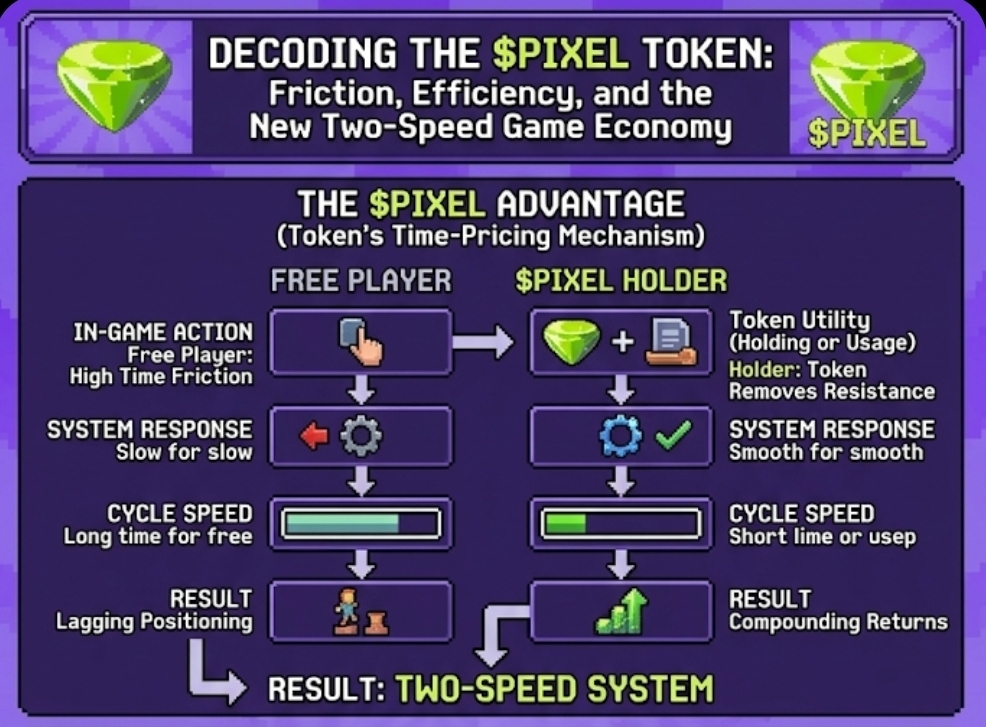
If a specific activity becomes more profitable, participation concentrates there. Supply increases, value shifts, and the entire balance adjusts. It’s not a sudden break it’s gradual distortion.
You don’t notice it immediately, but over time, it changes everything.
That’s why mechanisms like sinks and resource consumption become critical. Crafting, upgrades, land usage these aren’t just features; they’re stabilizers. They remove excess value from circulation and help maintain equilibrium.
But even that balance is fragile.
Too few sinks, and inflation creeps in. Too many, and players feel like their effort isn’t rewarded. The system has to constantly adjust, and those adjustments aren’t always visible.
What makes it more complex is that Pixels isn’t purely on-chain or off-chain it’s a hybrid.
Gameplay happens off-chain for speed and scale, while ownership and key assets live on-chain. It’s a practical design choice, but it introduces dependencies. If one layer lags or fails, the experience can feel inconsistent.
From the outside, everything looks smooth. But underneath, there’s a significant amount of coordination happening server stability, synchronization, data validation, and security layers all working together to maintain that illusion of simplicity.
And that’s what stood out to me the most.
Pixels feels simple because it hides complexity, not because it lacks it.
The real question is how that complexity behaves as the system grows.
As more players enter, as more behaviors emerge, and as more optimization takes place, the pressure on every layer increases social, economic, and technical. Each one has to remain balanced, or the system starts to drift.
And that brings me back to the core thought I’ve been sitting with.
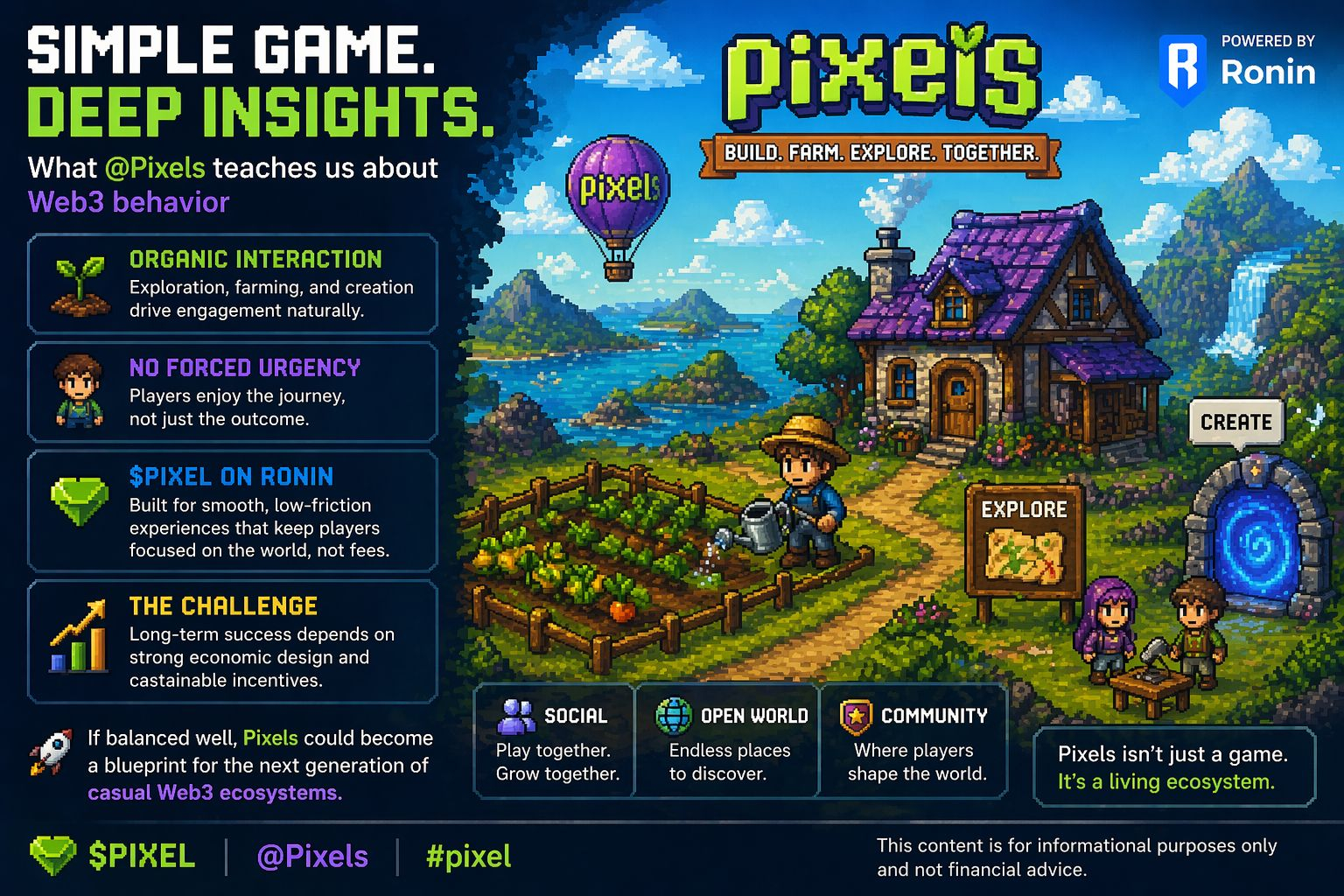
Pixels isn’t just a game where you play and earn. It’s a system where behavior, interaction, and structure are constantly influencing each other. Players shape the world, but the world also shapes how players act.
So the real question isn’t just whether the game works today.
It’s whether a system this responsive, this player-driven, can maintain balance over time… when every participant is naturally trying to maximize their own advantage.
Because if there’s one thing Web3 has shown repeatedly, it’s that users don’t just play systems.
They figure them out.
This content is for informational purposes only and not financial advice.
#pixel $PIXEL @Pixels #TetherFreezes$344MUSDTatUSLawEnforcementRequest