Zacząłem patrzeć na @Pixels z innej perspektywy.
Nie tylko jako gra farmingowa. Nie tylko jako ekosystem nagród. Nie tylko jako projekt próbujący dodać więcej gier wokół $PIXEL. Teraz dla mnie ważniejsze pytanie brzmi, czego Pixels mogą się nauczyć z tego, jak gracze poruszają się po jego świecie i co robią z tymi informacjami później.
To właśnie tam Stacked staje się poważniejsze.
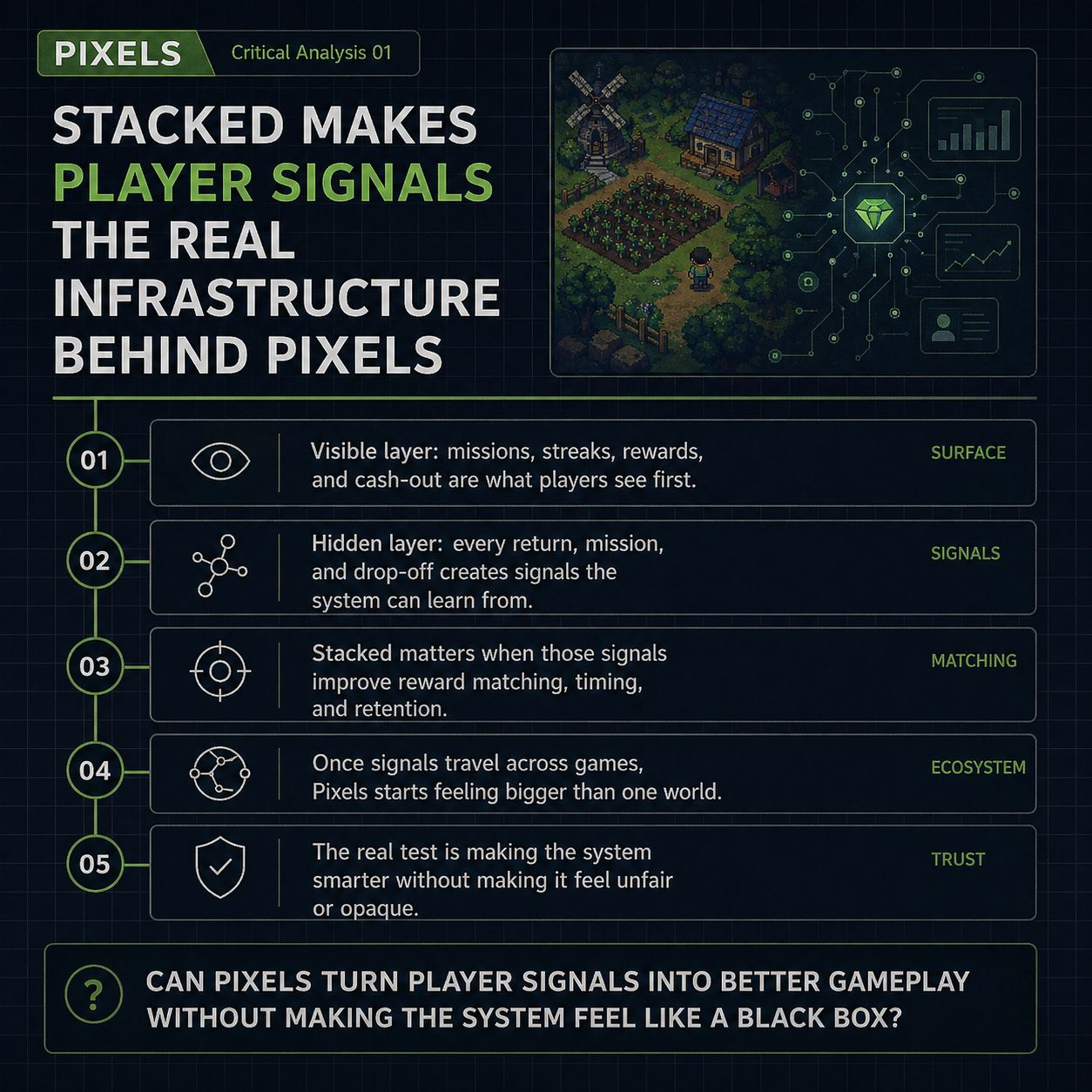
Na pierwszy rzut oka, Stacked jest łatwe do zrozumienia. Gracze wykonują misje, budują streaki, zdobywają nagrody i śledzą te nagrody w wielu grach. Ta część jest widoczna, prosta i łatwa do wyjaśnienia dla większości ludzi. Ronin opisał Stacked jako aplikację nagród stworzoną przez zespół Pixels, gdzie gracze mogą zdobywać i śledzić nagrody w wielu grach, podczas gdy studia mogą korzystać z insightów AI, aby analizować grupy, dostrzegać wzorce churnu i sugerować eksperymenty z nagrodami.
Ale nie sądzę, że prawdziwa wartość tkwi tylko w widocznej warstwie nagród.
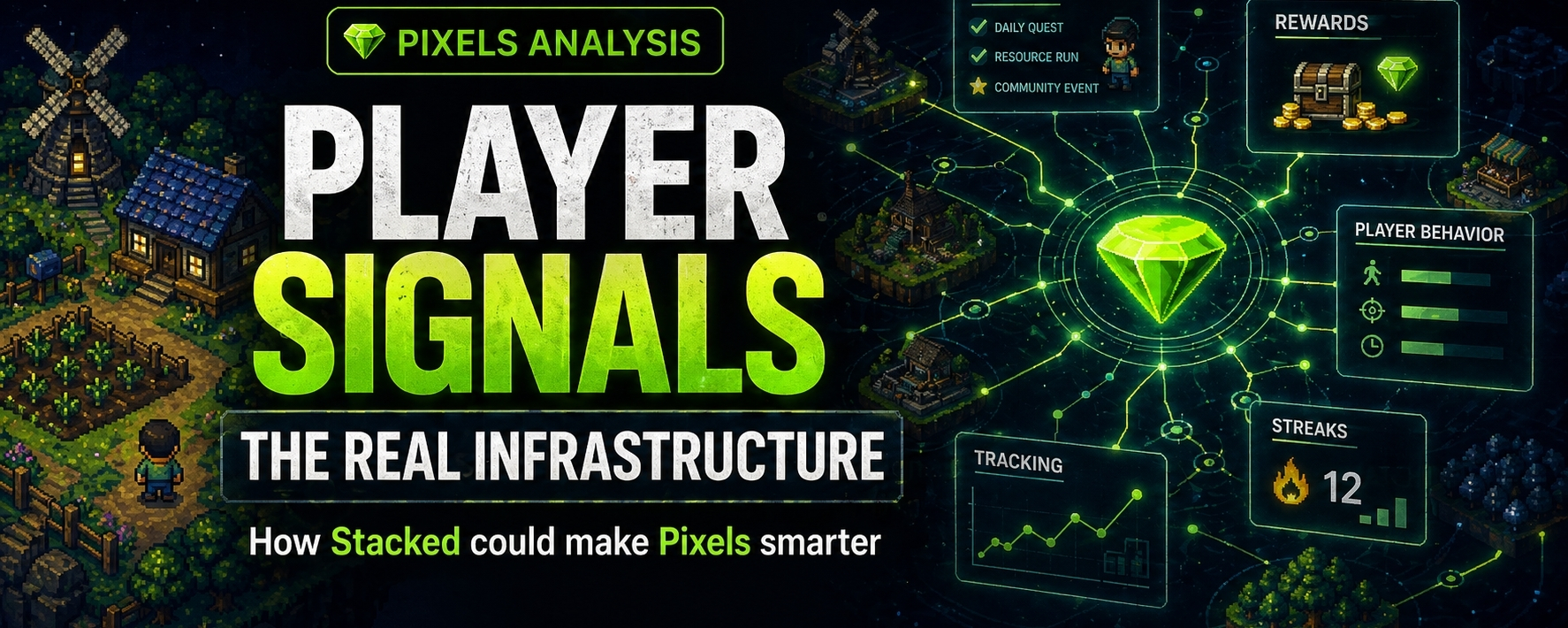
Głęboka wartość tkwi w sygnałach.
Każda akcja w grze coś mówi. Powrót gracza coś mówi. Ukończenie misji przez gracza coś mówi. Utrata zainteresowania przez gracza coś mówi. Przemieszczanie się gracza między grami coś mówi. Prawdziwe pytanie brzmi, czy system potrafi zrozumieć te sygnały na tyle dobrze, aby poprawić następne doświadczenie.
To jest część Pixels, którą teraz uważam za ważniejszą.
Ponieważ podstawowy system nagród płaci ludziom tylko za aktywność. Silniejszy system stara się zrozumieć, co ta aktywność oznacza. Nie traktuje każdej misji, każdego gracza i każdej akcji jako równej. Zadaje trudniejsze pytanie: które zachowania naprawdę warto wspierać?
Ta różnica ma znaczenie.
Wiele gier Web3 popełniło ten sam błąd. Stworzyły nagrody, zanim zrozumiały zachowania. Dawały użytkownikom powód do przybycia, ale nie zawsze powód, by zostać. Uczyniły aktywność widoczną, ale nie zawsze znaczącą. Przez jakiś czas może to wyglądać jak wzrost. Ale z czasem słabość staje się oczywista. Jeśli system nie rozumie gracza, nagroda powoli staje się szumem.
Dlatego Stacked zmienia sposób, w jaki postrzegam Pixels.
Biała księga już wskazuje na tę głębszą logikę. Pixels opisuje Smart Reward Targeting jako infrastrukturę opartą na danych, która wykorzystuje analizy danych na dużą skalę i uczenie maszynowe, aby zidentyfikować działania graczy, które rzeczywiście przynoszą długoterminową wartość, a następnie kieruje nagrody w stronę tych działań. To nie to samo, co po prostu dawanie większej liczby nagród. To system próbujący zdecydować, które działania naprawdę na nie zasługują.
To jest znacznie większa idea niż 'więcej misji'.
I szczerze mówiąc, to jest miejsce, w którym Pixels wydaje się bardziej profesjonalne jako projekt. Silniejsza historia nie polega na tym, że Stacked dodaje nową funkcję. Silniejsza historia polega na tym, że Stacked może pomóc Pixels w przekształceniu zachowań graczy w lepsze decyzje nagród w różnych grach.
W tym miejscu ekosystem zaczyna wydawać się inny.
Ponieważ gdy sygnały graczy mogą mieć znaczenie w więcej niż jednym tytule, Pixels staje się trudniejsze do odczytania jako jedna gra. Normalna gra pamięta, co zrobiłeś w jednym świecie. Silniejszy ekosystem zaczyna pytać, czy twoje zachowanie, nawyki i historia nagród mogą nieść znaczenie w różnych światach.
To tutaj pomysł platformy staje się bardziej realny.
Farma wciąż ma znaczenie. Daje Pixels punkt wyjścia. Daje ekosystemowi świat, który ludzie mogą szybko zrozumieć. Bez tego historia platformy wydawałaby się zbyt abstrakcyjna. Ale Stacked daje projektowi szerszą warstwę. Sprawia, że pytanie staje się większe niż tylko farma.
Farma pokazuje, gdzie zaczyna się gracz.
Stacked pyta, czego system może się nauczyć po tym, jak gracz zaczyna.
To jest zmiana, do której wciąż wracam.
Ale jest tu również wyzwanie.
Im mądrzejszy staje się system nagród, tym staranniejszy musi być zaprojektowany. Jeśli nagrody wydają się zbyt ogólne, gracze przestają się nimi interesować. Jeśli nagrody wydają się zbyt niejasne, gracze przestają ufać systemowi. Najlepsza wersja znajduje się pośrodku: na tyle mądra, aby poprawić doświadczenie, ale na tyle jasna, że gracze nadal rozumieją, dlaczego system pokazuje im określone misje i nagrody.
Ta równowaga jest ważna.
Ponieważ sygnały graczy są potężne, ale mają znaczenie tylko wtedy, gdy poprawiają doświadczenie. System nie powinien sprawiać wrażenia, że obserwuje graczy tylko po to, aby wydobyć od nich więcej. Powinien sprawiać wrażenie, że uczy się wystarczająco, aby gra była bardziej relevantna, bardziej efektywna i bardziej sprawiedliwa w nagrodach.
To jest prawdziwy test dla Stacked.
Nie chodzi o to, czy może stworzyć więcej zadań.
Nie chodzi o to, czy może stworzyć więcej nagród.
Nie chodzi o to, czy może połączyć więcej gier.
Prawdziwy test polega na tym, czy może wykorzystać sygnały graczy, aby uczynić cały ekosystem mądrzejszym, nie sprawiając, że doświadczenie wydaje się skomplikowane lub niesprawiedliwe.
To jest miejsce, w którym Pixels staje się dla mnie interesujące.
Słabszy system nagradza to, co widzi na powierzchni.
Silniejszy system uczy się, co te działania naprawdę oznaczają.
A jeśli Stacked potrafi przekształcić tę naukę w lepsze misje, lepsze nagrody i silniejsze zatrzymanie w ramach $PIXEL ekosystemu, to Pixels zaczyna wyglądać znacznie większe niż jeden świat farmy.
Zaczyna wyglądać jak system, który próbuje lepiej zrozumieć graczy z czasem.