
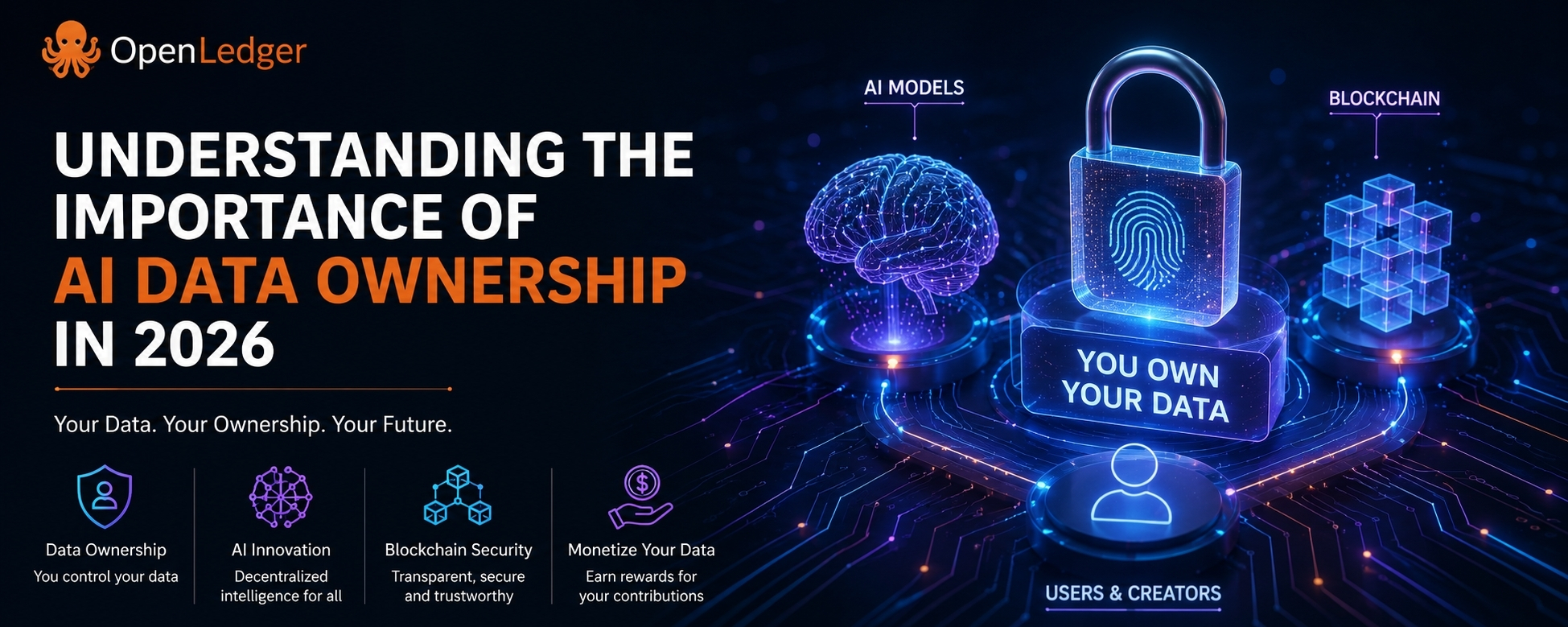
OpenLedger is helping bring attention to one of the most important discussions in modern technology — AI data ownership and decentralized digital intelligence. As artificial intelligence continues growing rapidly, users are becoming more aware of how valuable their data truly is in the AI economy.
Artificial Intelligence has become one of the most powerful technologies shaping the modern digital world. From content creation and automation to business analytics and virtual assistants, AI is now deeply connected to everyday life. However, as AI continues evolving in 2026, one major issue is becoming increasingly important — AI data ownership.
Data is the fuel that powers artificial intelligence. Every search, interaction, image, conversation, and online activity contributes to the training and improvement of AI systems. The problem is that most users generate valuable data daily without having control over how it is collected, stored, or monetized. This is why the conversation around AI data ownership is growing rapidly across the technology and Web3 industries.
What Is AI Data Ownership?
AI data ownership refers to the rights and control individuals or organizations have over the data they create and share online. In traditional systems, large centralized companies usually collect user data and use it to train AI models for commercial purposes. Most users do not receive compensation or transparency regarding how their information is being used.
In 2026, people are becoming more aware of the value of their digital contributions. As AI systems become more advanced, the data behind those systems becomes even more valuable. This has created demand for fairer and more transparent solutions where users can maintain ownership of their information.
Why AI Data Ownership Matters
1. Protecting User Privacy
One of the biggest concerns surrounding artificial intelligence is privacy. AI systems often require massive datasets to function effectively, but users rarely know how their data is being processed. AI data ownership gives individuals greater control over their personal information and reduces the risks associated with centralized data collection.
With stronger ownership systems, users can decide:
- What data they want to share
- How their data can be used
- Who has access to it
- Whether they want to monetize it
This creates a more ethical and transparent digital environment.
2. Fair Monetization Opportunities
Technology companies generate billions of dollars using user-generated data. Social media activity, online behavior, and digital interactions all contribute to the training of AI models. However, the individuals creating that value often receive nothing in return.
In 2026, decentralized AI ecosystems are introducing new monetization opportunities. Blockchain-based projects are exploring ways for users and creators to earn rewards from their data contributions, AI models, and digital assets.
Projects like OpenLedger are focusing on creating systems where:
- AI creators can monetize models
- Users can benefit from data contributions
- Communities can participate in AI economies
- Ownership remains transparent and decentralized
This approach could completely reshape the relationship between users and technology platforms.
3. Transparency and Trust
Trust is becoming one of the most valuable elements in the AI industry. Many people are concerned about how AI systems make decisions, how data is collected, and whether companies are using information responsibly.
Blockchain technology can help improve transparency by creating immutable and verifiable records. Decentralized systems allow activities to be tracked on-chain, making it easier for users to understand how their data is being used.
This combination of AI and blockchain could help:
- Improve accountability
- Reduce hidden manipulation
- Increase transparency
- Build user confidence
As trust becomes more important in 2026, decentralized AI projects are gaining attention for offering more open ecosystems.
Final Thoughts
AI data ownership is becoming one of the most important topics in the digital world. As artificial intelligence continues transforming industries worldwide, questions around privacy, transparency, and monetization are becoming impossible to ignore.
Projects like OpenLedger are exploring how decentralized AI and blockchain technology can create fairer ecosystems where users, creators, and developers can benefit directly from their contributions.
The future of AI may not only depend on intelligence itself, but also on who truly owns the data powering it.
