The market may still be optimizing for intelligence while quietly ignoring something more foundational.Everyone is asking how smart AI models can become, how fast they can respond, how human-like their output feels.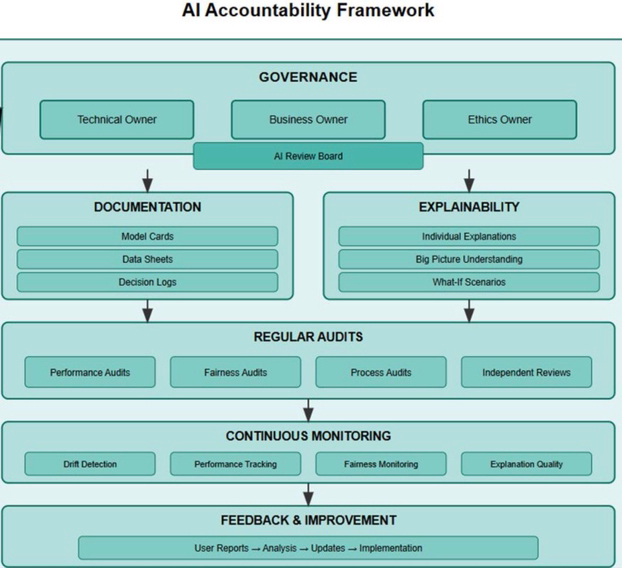
But very few are asking a harder question: when things go wrong, who is responsible?Most of the current narrative assumes intelligence is the bottleneck.If models improve, if data expands, if compute scales, then everything else naturally follows.
But what’s slowly becoming visible beneath that assumption is something more uncomfortable — intelligence without accountability doesn’t create systems that can be trusted at scale.The early internet didn’t fail because it lacked intelligence. It struggled because trust was external, not embedded.Crypto tried to solve that through verification layers, but even there, most attention went to speed, liquidity, and yield — not responsibility attribution.
Now AI is repeating a similar pattern, but at a larger surface area: systems that generate decisions without clearly defined accountability paths.What most people see today is a race between models, agents, and infrastructure stacks.What is less visible is the growing gap between decision-making power and liability clarity.
In traditional systems, accountability is slow but structured — courts, regulators, institutions. In AI-driven systems, decisions are instantaneous, but responsibility is diffused.This is where the deeper structural shift begins.
If AI systems become economic participants — executing trades, allocating capital, interacting with protocols — then intelligence alone is not the defining constraint. The real constraint becomes whether actions can be traced, audited, and meaningfully attributed.Markets tend to underprice infrastructure that doesn’t immediately affect user experience.
But accountability infrastructure is exactly that kind of layer. It doesn’t change what systems do on the surface — it changes what happens when something breaks underneath.Over time, this creates second-order effects. Institutions don’t simply ask “how accurate is the model,” but “who stands behind its actions when outcomes create risk?”
Governance stops being a community feature and becomes a financial requirement.Trust stops being assumed and starts being priced.In that environment, accountability layers quietly become monetizable infrastructure.
Not because they are visible or exciting, but because they reduce systemic uncertainty. And in capital markets, reducing uncertainty is often more valuable than increasing efficiency.Still, the idea is not without friction.
Accountability systems are hard to design without introducing friction into innovation. Too much oversight slows adoption. Too little creates systemic risk that only becomes visible after failure. Incentives also don’t naturally align — builders optimize for growth, not liability mapping. Users optimize for outcomes, not responsibility chains.And there is another uncomfortable truth: markets rarely price infrastructure correctly in real time.
They wait until failures accumulate, until coordination breaks, until trust becomes expensive — and only then do they re-evaluate what should have been foundational from the beginning.If intelligence was the first wave of AI, accountability may be the second — slower, less visible, but far more structurally important.
$OPEN
Because the real limitation of intelligent systems is not what they can do, but what they are allowed to do without breaking trust.And in the long arc of markets, trust is never optional. It is always eventually priced.The real bottleneck may not be intelligence. It may be accountability — and the systems that solve it will not look exciting at first, but they will quietly define what scales and what collapses.

Artykuł

“The Real AI Bottleneck May Not Be Intelligence . It May Be Accountability”
Zastrzeżenie: zawiera opinie stron trzecich. To nie jest porada finansowa. Może zawierać treści sponsorowane. Zobacz Regulamin