
Lately, I’ve been thinking about something that most active crypto users eventually run into — the whole on-chain experience feels a bit too scattered and exposed at the same time.
If you’re involved in DeFi or even just actively trading tokens, you probably know the routine. You open one platform for charts, another for swaps, maybe a wallet tracker in a separate tab, then a bot or alert system somewhere else. Before you even make a trade, you’ve already interacted with half a dozen tools.
It works, but it doesn’t feel smooth.
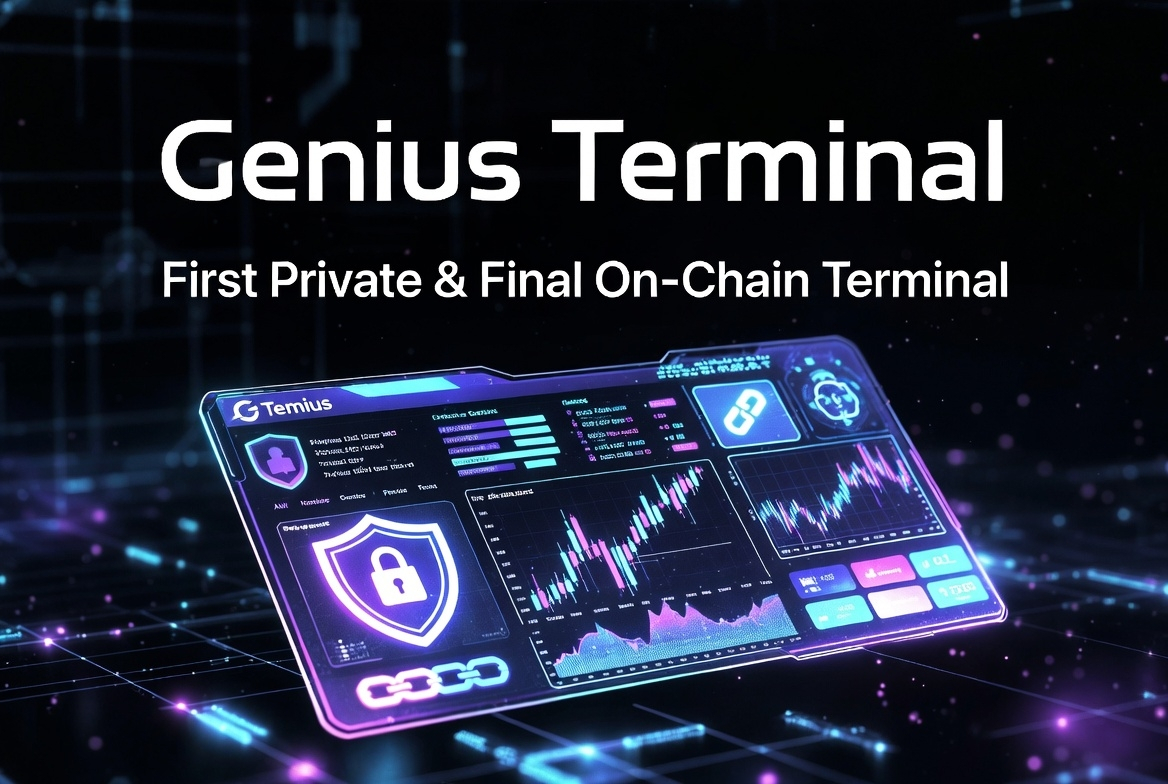
That’s actually what made me take a closer look at Genius Terminal, a project that describes itself as *“the first private and final on-chain terminal.”* At first, the phrase sounds a bit bold, but when you relate it to how real traders operate, it starts to connect with everyday frustrations.
In crypto, the biggest problem isn’t lack of tools. If anything, there are too many of them.
The real issue is that everything is disconnected.
One platform shows wallet movements, another focuses on liquidity data, another gives trading access, and another tracks smart money activity. Each one is useful, but none of them feel like they belong together.
So users end up stitching their own workflow manually.
And then there’s something even more overlooked — visibility.
Every action you take on-chain is public. That means your trades, your wallet activity, your timing, even your accumulation patterns can be analyzed by anyone who’s watching.
At first, most people don’t care. Transparency feels normal in crypto. But once you become more active, especially if you’re trying to build a strategy, it becomes clear that visibility isn’t always an advantage.
Bots track wallets. Copy traders replicate moves instantly. Sometimes even your “early positions” aren’t really early anymore once they’re detected.
It’s not necessarily a flaw in crypto — it’s just how the system works. But it does change how people behave.
From what I understand, Genius Terminal is trying to solve two problems at once: fragmentation and exposure.
Instead of forcing users to switch between multiple platforms, it aims to bring everything into a single on-chain environment. Trading, analytics, monitoring, and wallet interaction — all in one place.
That alone already makes sense from a usability perspective. Most traders don’t want more tools. They want fewer tools that actually work together properly.
But the part that stands out more is the privacy angle.
The idea isn’t just convenience — it’s about reducing unnecessary exposure while interacting with public blockchains. That’s a slightly different direction compared to most crypto dashboards we see today.
If you’ve been in crypto long enough, you probably noticed how your perspective on privacy changes over time.
At the beginning, transparency feels like a feature. Everything is open, everything is verifiable. It feels aligned with decentralization.
But as you get more involved, especially in trading, you start noticing the downside.
If a wallet becomes active and profitable, it gets watched. If someone builds a consistent strategy, it gets studied. If accumulation starts happening quietly, it eventually gets picked up through analytics tools.
Nothing is truly hidden on-chain.
And I think this is where many users shift their mindset. Not because they want secrecy, but because they want control over how their actions are interpreted and used by others.
That difference is subtle, but important.
If a platform like Genius Terminal works as intended, the benefits might not look flashy at first, but they could matter in daily use.
Not needing to jump between multiple tools just to complete a trade
Faster reactions during volatile market movements
Cleaner overview of wallet activity and positions
Less noise while tracking on-chain signals
Reduced exposure to bots and copy-trading behavior
A more structured overall trading workflow
None of these individually change the game, but together they can make trading feel less chaotic.
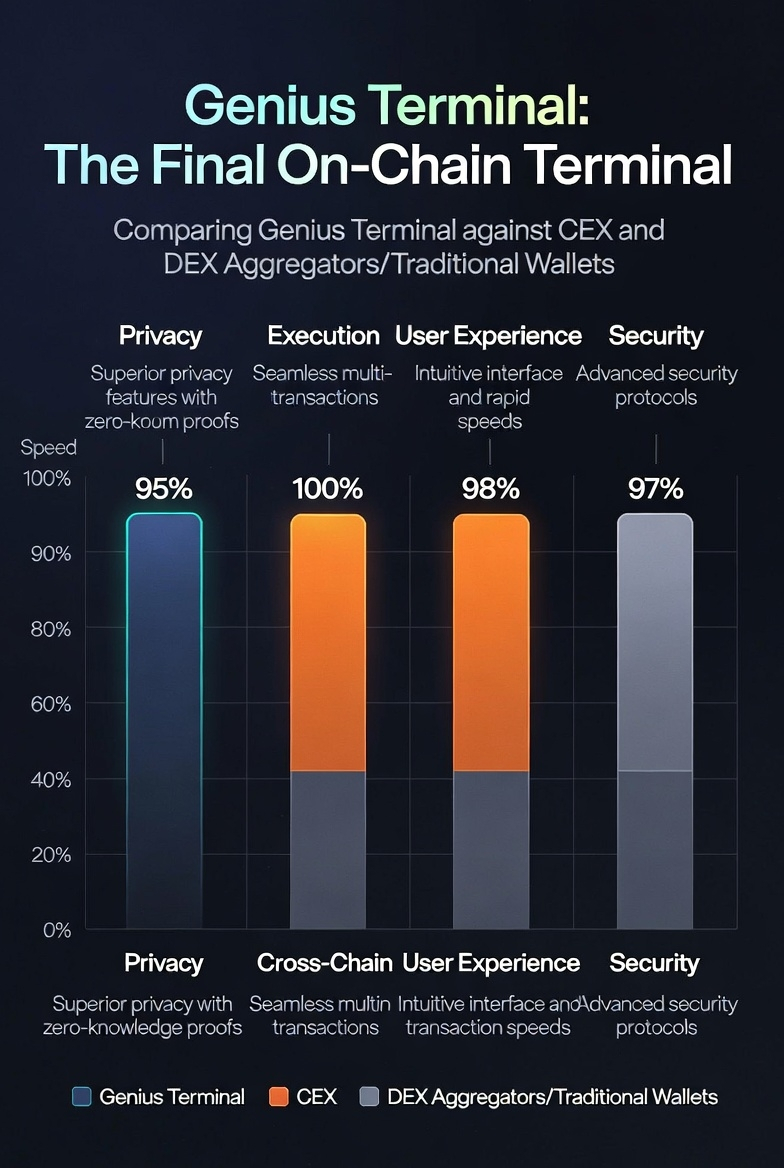
And in crypto, reducing chaos is already a big win.
I usually stay cautious with “all-in-one” crypto tools because many of them try to do too much and end up becoming complicated instead of helpful.
But Genius Terminal feels slightly different in concept. It’s not just adding features — it’s trying to simplify how users interact with existing systems.
That’s something the space actually needs right now.
Crypto has no shortage of data or tools. What it lacks is smooth integration between them.
And I also think timing matters here. As more users move deeper into on-chain trading, they start valuing efficiency and privacy more than just access to information.
It becomes less about “what can I see?” and more about “how can I operate better without exposing everything?”
If this trend continues, privacy-focused trading environments might become a normal part of how serious traders operate.
Not replacing everything, but acting as a central layer where users manage their on-chain activity more efficiently.
We’re already seeing a shift toward more structured trading setups, especially among active DeFi users. People want speed, clarity, and fewer distractions.
If Genius Terminal manages to deliver on that direction, it could easily find its place in that workflow.
Crypto tools are evolving fast, but the experience still feels fragmented in most cases. That gap between powerful tools and smooth usability is where new projects are trying to step in.
Genius Terminal is one of those ideas that reflects where the market might be heading — more integration, less friction, and a growing focus on privacy within on-chain activity.
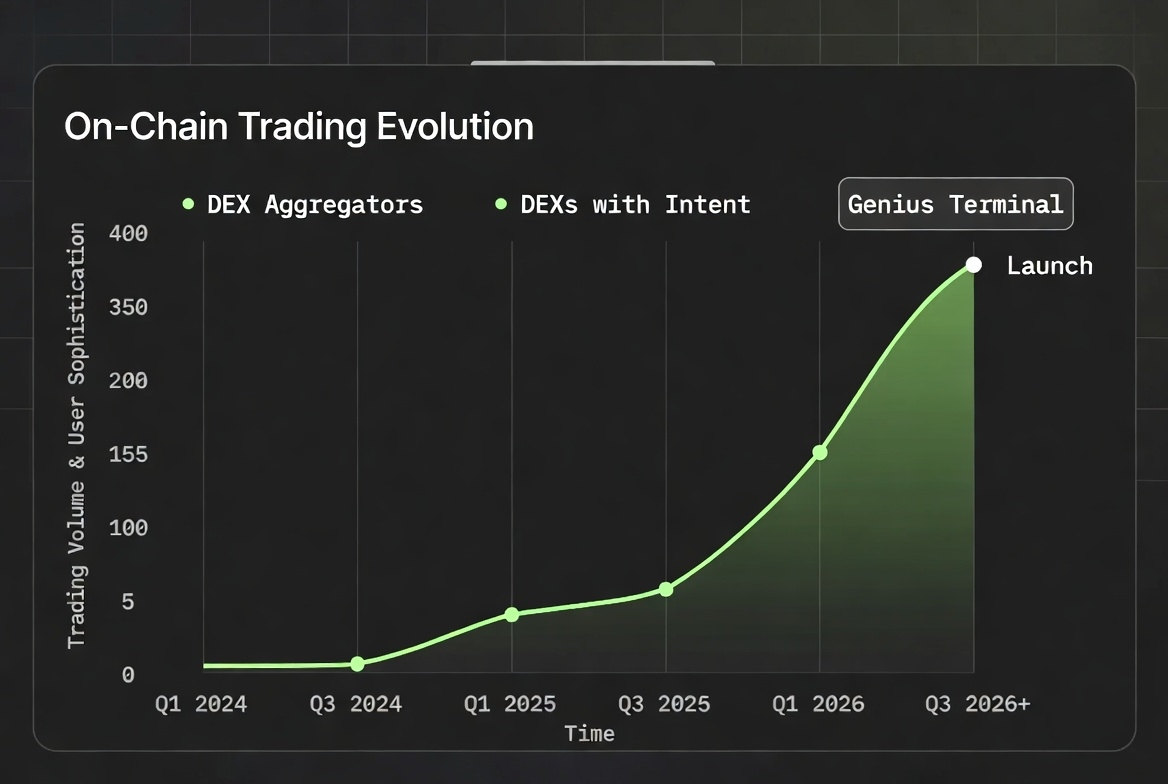
Whether it becomes widely adopted or not, it highlights something important: users are no longer just looking for more data. They’re looking for better ways to use it.