
Lately I’ve been spending more time exploring on-chain tools, and honestly, most of them start feeling very similar after a while. Same type of interface, same buzzwords, same promises about changing crypto forever. After seeing enough of those projects, you naturally become a little skeptical whenever something new appears.
That was pretty much my reaction when I first came across @GeniusOfficial .
At first glance, I assumed it was just another trading platform trying to stand out with strong branding. But after looking deeper into the idea behind $GENIUS , I realized the project is actually focused on a problem that many crypto users deal with every day but rarely talk about properly.
The on-chain experience is still messy.
Anyone active in crypto already understands this without needing a long explanation. Most of us are constantly switching between tabs and platforms just to manage normal daily activity. One window for charts, another for swaps, another for tracking wallets, maybe a portfolio dashboard somewhere else, plus alerts from Telegram or X constantly distracting you in the background.
Sometimes it honestly feels like using crypto requires operating a mini command center.
And the strange thing is, despite how advanced blockchain technology has become, the overall experience still feels unnecessarily complicated. You can tell the space is growing fast, but the tooling often feels fragmented.
That’s probably the first thing that made Genius Terminal interesting to me.
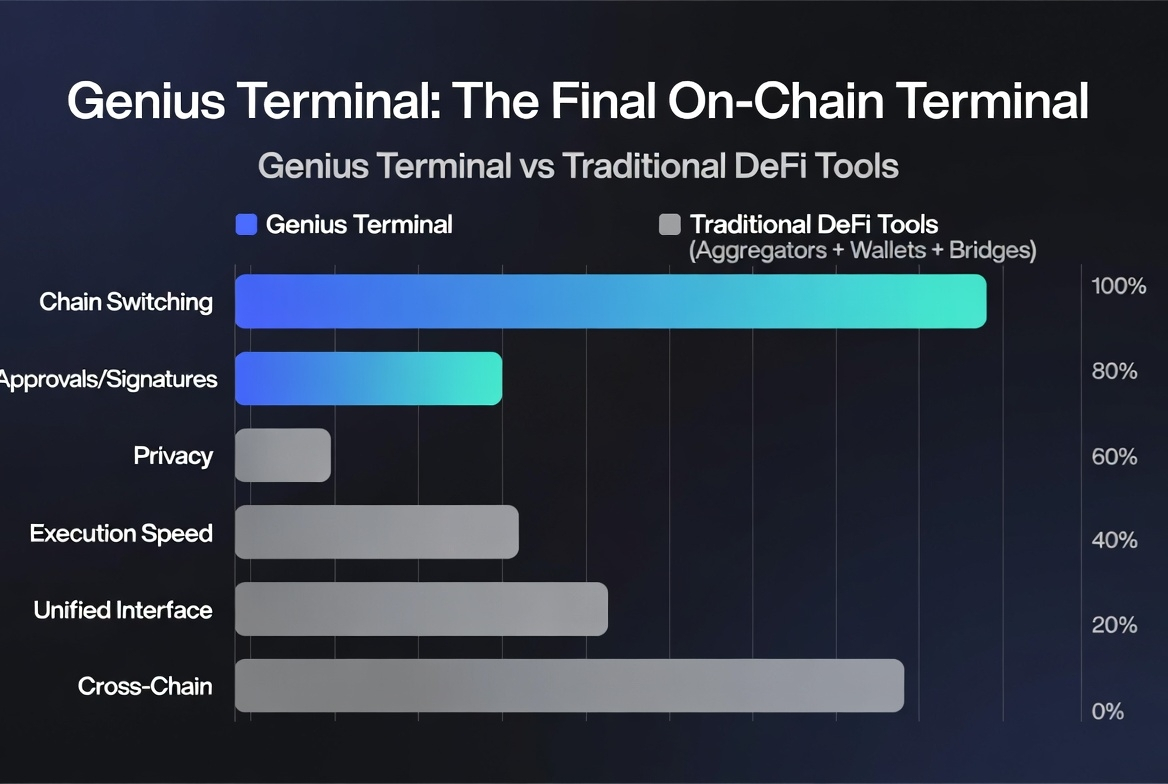
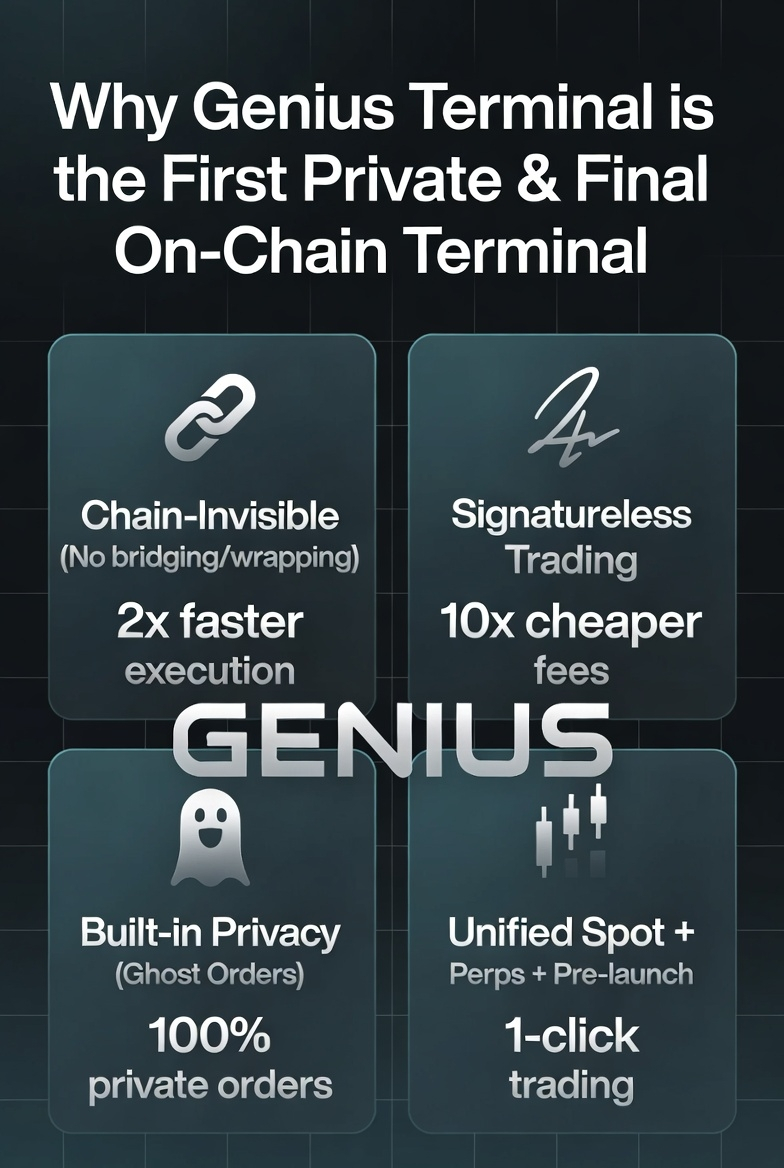
The project describes itself as the first private and final on-chain terminal. At first, the wording sounded ambitious, maybe even slightly dramatic. But after thinking about it more, the idea actually feels pretty straightforward.
Instead of forcing users to rely on multiple disconnected tools, Genius Terminal seems focused on creating one environment where people can manage most of their on-chain activity more efficiently and with greater privacy.
And honestly, that direction makes sense.
A lot of crypto projects focus on adding endless features, but very few focus on reducing friction for users. Sometimes newer platforms actually make things feel more complicated instead of simpler.
If you’ve spent enough time in DeFi, you already know how easy it is to make mistakes when everything is spread across different apps and websites. Connecting the wrong wallet, approving something too quickly, missing important information because ten tabs are open at once — these things happen more often than people admit.
That’s why the “all-in-one terminal” concept feels practical rather than overhyped.
The privacy angle also caught my attention pretty quickly.
People in crypto love talking about decentralization, but privacy doesn’t always get discussed enough. The reality is that blockchain activity is extremely transparent. Once someone links your identity to a wallet address, your trading behavior, holdings, transfers, and activity can become visible forever.
And if you’ve been around crypto long enough, you’ve probably seen how uncomfortable that can become.
Wallet trackers monitor large trades. Bots react instantly to on-chain movements. Scammers target active users. Sometimes even interacting with certain protocols leads to random phishing attempts afterward.
This is why I think privacy tools are becoming more important over time.
Privacy in crypto is not automatically about hiding something suspicious. In many cases, it’s simply about protecting your activity and having more control over your own digital footprint. Especially for active traders or users deeply involved in on-chain ecosystems, that matters a lot.
What I personally like about @GeniusOfficial is that the concept feels grounded in real user behavior. The team seems to understand how chaotic on-chain activity can become for people who are active every day.
And honestly, crypto users are getting tired of juggling too many tools.
Most people want faster workflows, cleaner interfaces, and less unnecessary noise. They want something efficient enough that they can focus on opportunities instead of constantly managing browser tabs and switching platforms every few minutes.
I can definitely see why experienced on-chain users may find something like Genius Terminal useful if the execution is handled properly. Having trading activity, monitoring, analytics, and wallet management connected inside one environment sounds much smoother than the setup most people currently use.
Of course, good ideas alone are never enough in crypto. We’ve all seen projects with strong concepts fail because the final product didn’t deliver the experience users expected. So I still think execution will be the most important factor moving forward.
Still, I believe $GENIUS is focused on a real issue instead of creating artificial hype around imaginary problems.
The crypto space keeps evolving, but the user experience still has a lot of room for improvement. Tools that reduce complexity while giving users more privacy and control will probably become more valuable over time.
That’s mainly why I’ll keep watching how #genius develops from here.
Not because it promises unrealistic things, but because the core idea behind it actually feels connected to the way people use crypto today.