
Here's a question that keeps me up at night.
When AI starts making its own decisions, who actually holds the control?
The autonomy problem
We're past the point where AI just suggests. It's acting now. Trading bots that execute without approval. Smart contracts that trigger based on AI outputs. Autonomous agents managing portfolios, negotiating deals, even hiring and firing.
Most people celebrate this. Efficiency! Speed! No human bottleneck!
But here's the uncomfortable part. When an AI makes a bad decision, who's responsible? Who holds the keys? Who can overrule it? Who even understands why the decision was made in the first place?
Right now, the answer is usually "nobody" or "we're figuring it out." That's not reassuring.
The illusion of control
I've watched this play out in real time.
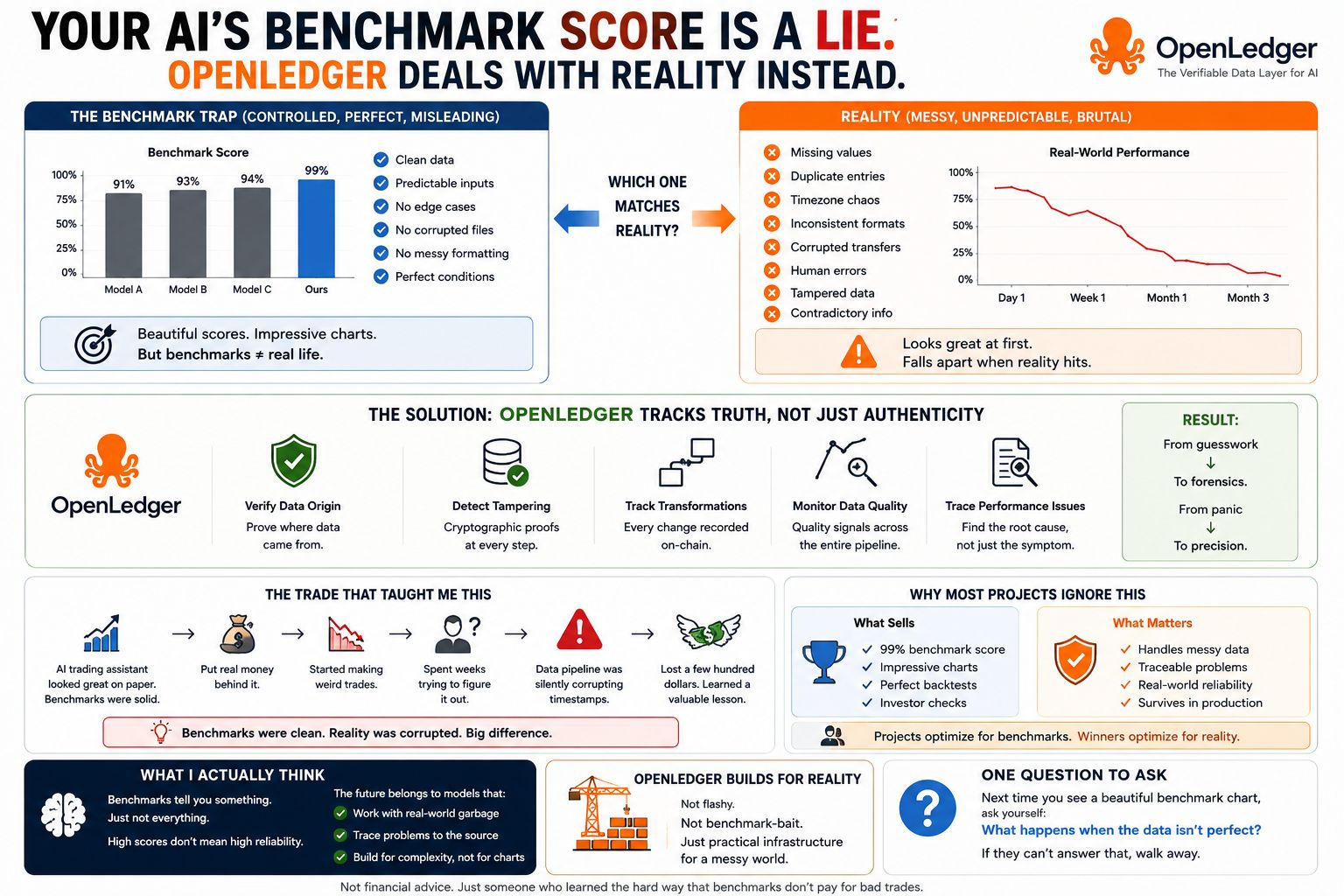
A trading assistant I used early last year started making aggressive moves. Not wrong, necessarily. Just... aggressive. Riskier than I'd set. When I asked the team why, they couldn't explain. The model had learned something, but they didn't know what or from where.
I pulled my funds. Lost a few hundred in exit fees. Better than losing thousands later.
That experience taught me something. Control isn't a switch you flip. It's a chain of custody. If you can't trace why an AI made a decision, you don't really control it. You're just along for the ride.
Where OpenLedger fits in
I've written about OpenLedger before — the verifiable data layer, the cryptographic proofs, the lineage tracking.
Most people talk about it as infrastructure for training. Clean data in, clean model out.
But the more important use case is operations. Running AI. Live decisions. Real-time accountability.
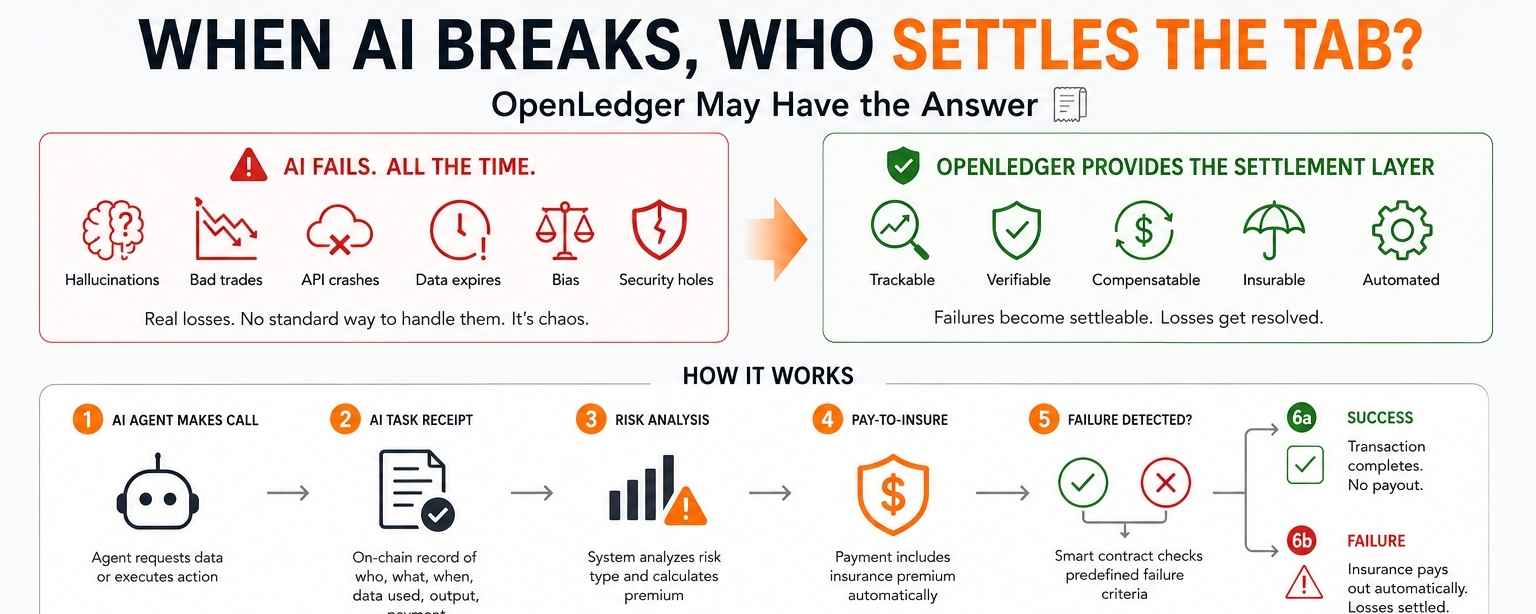
OpenLedger can trace every decision back to its data origins. Not just "the model decided to sell." But "the model decided to sell because it saw this specific data point from this specific source at this specific time."
That changes everything. You can audit. You can overrule. You can pinpoint exactly where a bad decision came from and fix it.
That's not just verification. That's control.
The Octoclaw thought experiment
There's a concept floating around called Octoclaw. Not a real project. More of a warning.
Imagine an AI with eight autonomous arms. Each arm making independent decisions. Trading. Negotiating. Managing resources. The arms learn from each other. They adapt. They optimize.
Now imagine something goes wrong. One arm starts hoarding resources. Another arm counter-trades it. The system starts fighting itself. By the time a human notices, the damage is done.
Who's responsible? The developer? The user? The AI itself?
Without a verifiable decision trail, that question is unanswerable. With OpenLedger, it's not. Every action has a lineage. Every arm's choices can be traced. You can identify the root cause, assign responsibility, and implement fixes.
That's not theoretical. That's just infrastructure we should have built yesterday.
The mistake most projects are making
They're optimizing for intelligence. Smarter models. Faster decisions. Better outputs.
But intelligence without accountability is dangerous. A smart AI that nobody can audit is just a liability waiting to happen.
OpenLedger is optimizing for the opposite. Verifiability first. Intelligence second. Because a slightly dumber model you can trust is better than a brilliant one you can't.
Most people don't think this way. They want the smartest AI, consequences be damned. I think that's backwards.
What control actually requires
Real control isn't a button. It's three things.
First, visibility. You need to see what the AI is seeing.
Second, traceability. You need to know why it made each decision.
Third, override. You need the ability to step in and say no.
OpenLedger provides the first two. The third is up to developers and regulators. But without the first two, the third is useless. You can't override a decision you don't understand.
What I actually think
I'm not anti-AI. I use trading assistants. I experiment with autonomous agents. I think this technology is incredible.
But I'm also realistic. We're handing more and more control to systems we don't fully understand. That's fine until it isn't. And when it isn't, the damage will be sudden and severe.
OpenLedger is building the audit trail for that moment. Not the flashiest project. Not the most hyped. But maybe the most necessary.
Most people are still chasing smarter AI. I'm watching who's building the guardrails.
One last thing
Next time you use an AI that makes autonomous decisions, ask yourself one question. If it does something I don't understand, can I figure out why?
If the answer is no, you don't control it. It controls you.
Not financial advice. Just someone who pulled funds out in time and learned to ask the right questions.