
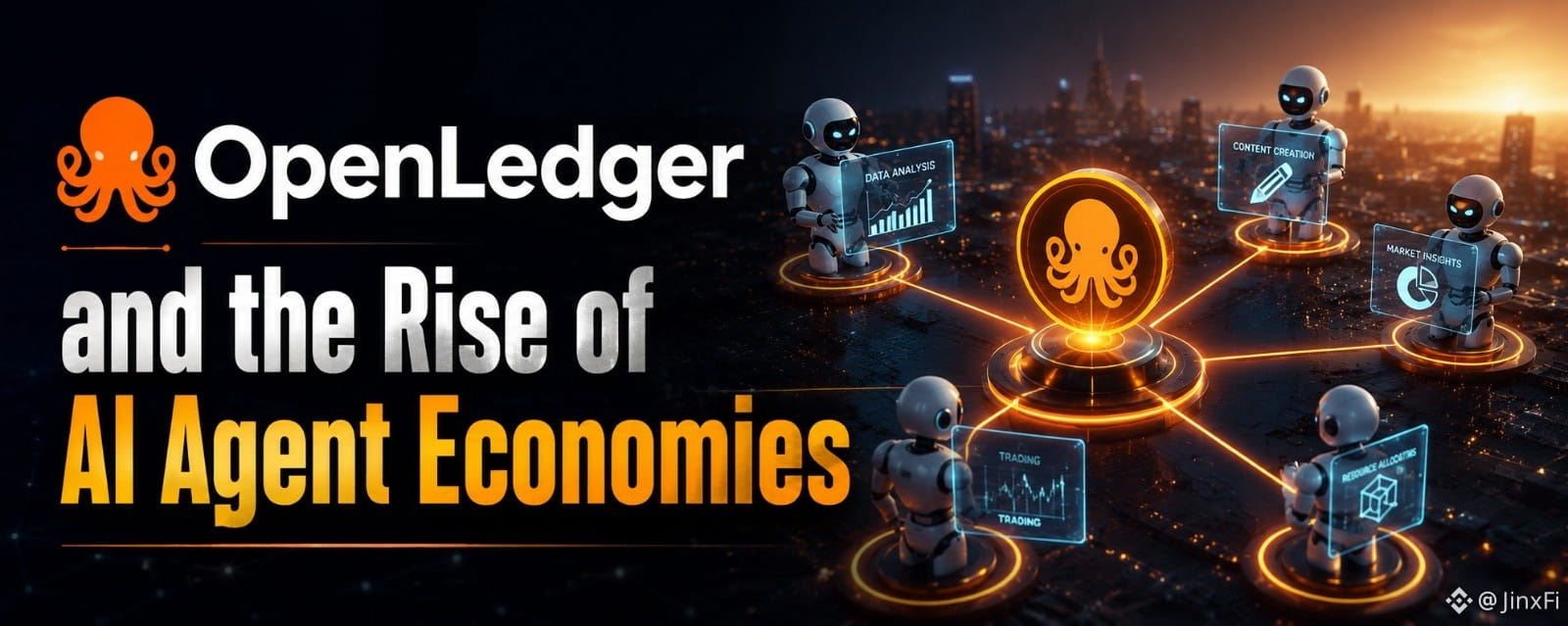
The more i think about AI agents, the less i think the challenge is intelligence.
Its economics.
Most software is passive. It waits for users, receives instructions, and produces outputs.
Agents change that assumption.
Once an agent can evaluate information, select tools, interact with systems, and execute tasks, it starts behaving less like software and more like a participant.
That distinction matters.
OpenLedger’s architecture repeatedly references AI agents as consumers of models and infrastructure rather than treating them as simple end products. Agents become part of the ecosystem itself, interacting with specialized models and generating activity across the network. That feels like a bigger shift than most people realize.
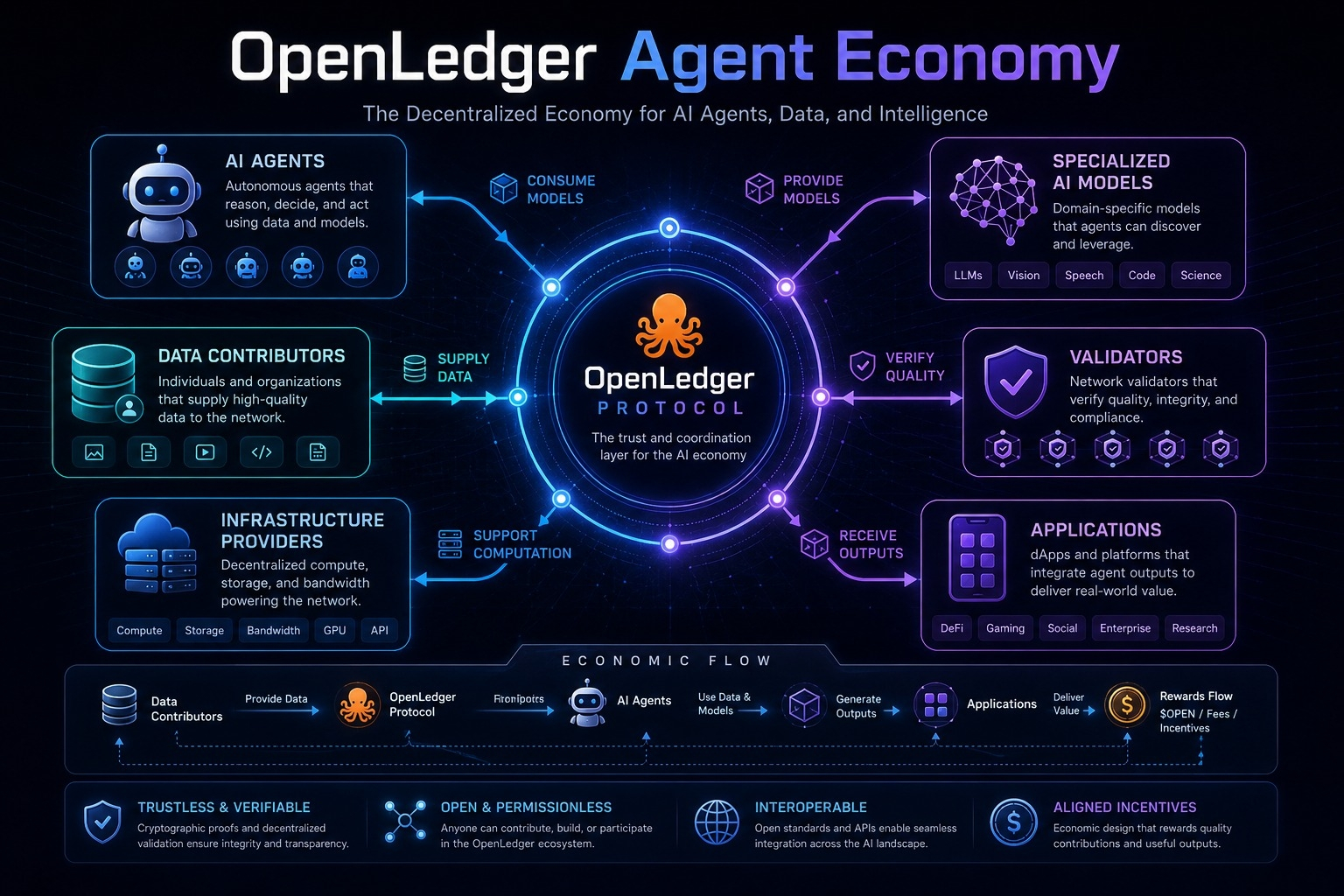
Because participation creates coordination problems.
Humans already struggle with incentives, governance, and resource allocation.
Now imagine introducing thousands of autonomous systems operating simultaneously.
Who decides which models they use?
How do they evaluate quality?
How do they coordinate scarce resources?
How do they avoid reinforcing low-quality feedback loops?
These questions start looking less like AI questions and more like economic questions.
And economics tends to become infrastructure.
Thats why i find OpenLedger’s broader vision interesting.
The protocol isnt only concerned with creating models. It also appears focused on building an environment where models, contributors, validators, and eventually agents can interact within the same system.
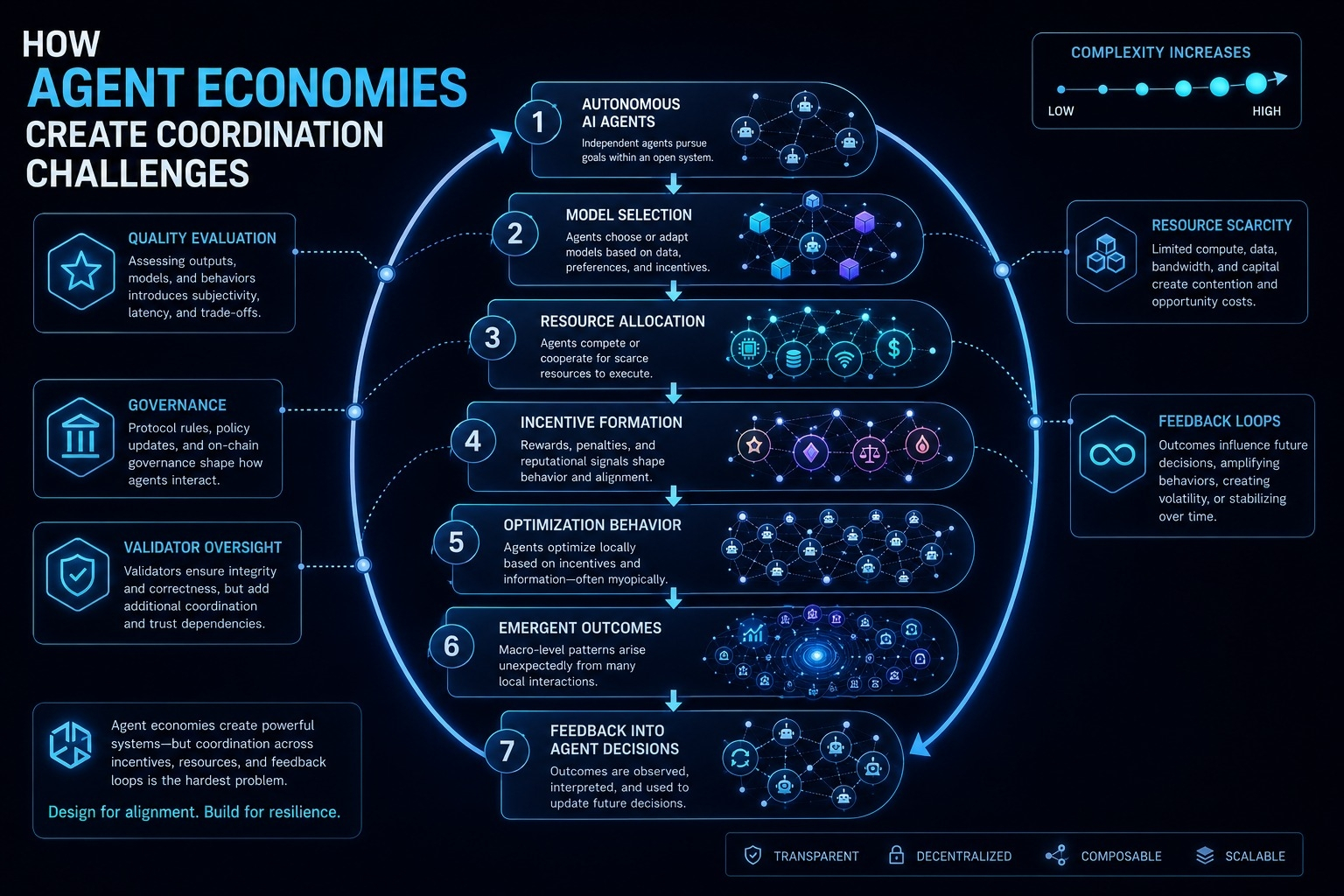
The challenge is that autonomous participation introduces complexity very quickly.
Every new participant creates new decision paths.
Every decision path creates new incentive structures.
Every incentive structure creates opportunities for optimization.
And optimization is where systems become unpredictable.
An agent economy sounds elegant in theory.
In practice, it could create coordination pressures that existing infrastructure was never designed to handle.
Still, ignoring that possibility doesnt make it disappear.
If agents become meaningful participants in digital systems, infrastructure designed exclusively around human coordination may eventually feel incomplete.
The question isnt whether agents become more capable.
The question is whether economic infrastructure evolves quickly enough to accommodate them.
Do AI agents remain advanced software tools, or do they eventually become a new class of economic participant that forces entirely new coordination systems to emerge??