Most crypto projects talk big and deliver small, so I don't hype easily anymore.
But @OpenLedger genuinely made me pause and rethink what blockchain is actually capable of.
Not because of the price surge, not because of the listing — because of the problem it's actually solving.
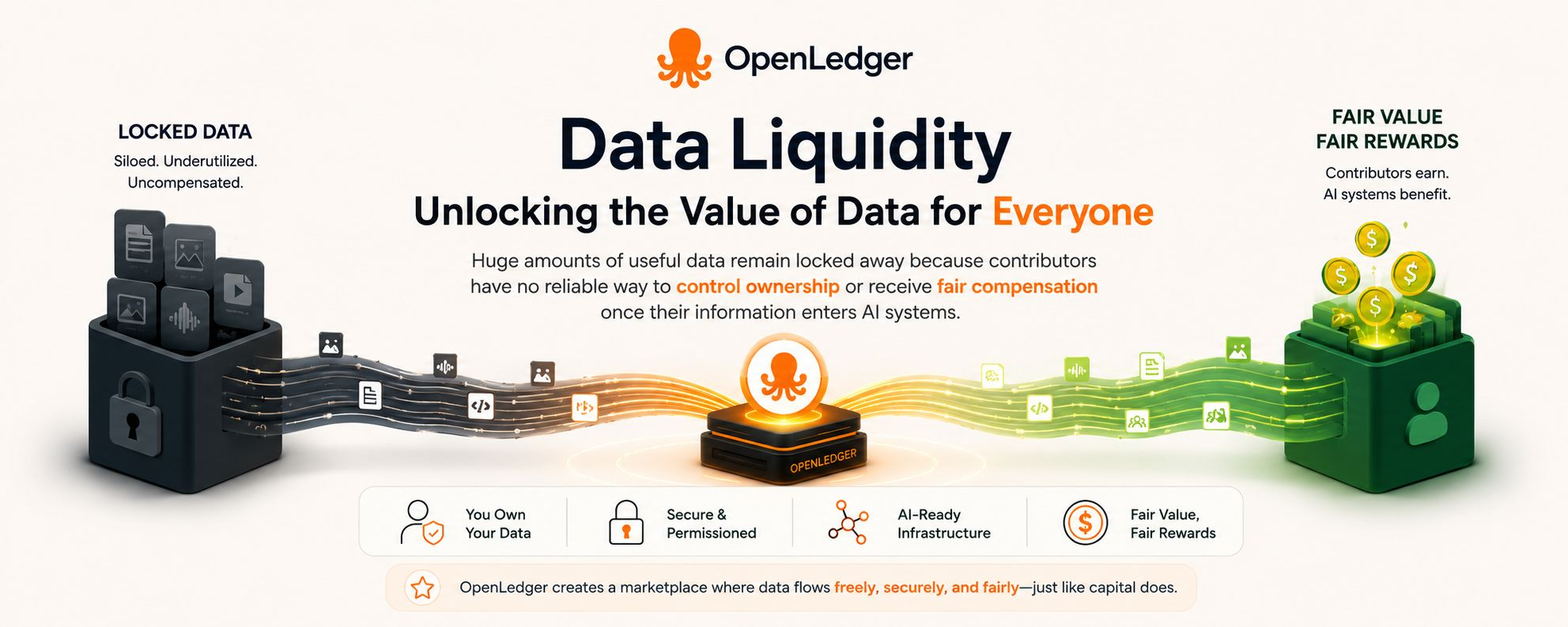
Every day you scroll, post, write, and search, you are feeding an AI economy that will never send you a check.
Your data is being consumed at industrial scale, and the people profiting from it are not you.
In my view, that's not just unfair — it's the single biggest unlocked value problem in tech right now.
#OpenLedger looked at that broken system and built an entirely new economic layer on top of it.
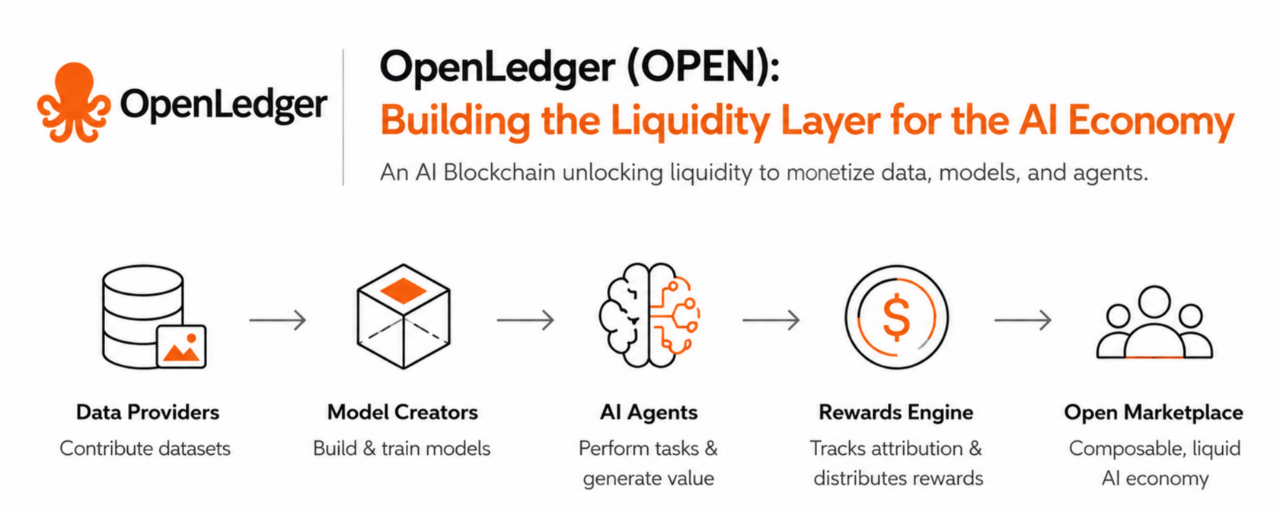
The tagline is simple — the AI blockchain, unlocking liquidity to monetize data, models, and agents.
I understand how that can sound like marketing noise, but stay with me, because the architecture behind it is genuinely different.
The core of everything OpenLedger does is something called Proof of Attribution.
Think of it as a receipt system that the AI industry has never had and desperately needs.
Every dataset you contribute, every training step, every inference a model makes using your data — it all gets written on-chain, permanently, with your name attached.
When that model earns, you earn, automatically, verifiably, with no middleman deciding your cut.
I think that single mechanism changes the entire incentive structure of how AI gets built.
Right now, data has value but no liquidity — #openledger is the market it never had.
Datanets are where the real grassroots energy lives on this protocol.
They are on-chain, community-owned data networks built around specific domains — legal text, medical transcripts, code, sensor data, niche knowledge of every kind.
You don't just upload data to a Datanet, you become a verified, on-chain participant in that knowledge structure.
Your contribution is traceable, your influence is measurable, your reward is automated.
From my experience watching DeFi unlock value from idle assets, this feels like the exact same energy — except the asset is human intelligence itself.
ModelFactory is the layer that turns those Datanets into something deployable.
It's a no-code platform, which means you don't need a PhD in machine learning to fine-tune a specialized AI model.
You bring the domain knowledge, the protocol handles the infrastructure, and every model version stays linked to the exact data that shaped it.
I find that transparency almost revolutionary compared to how closed the current model-training world is.
OpenLoRA handles the deployment side, and the economics of it are quietly mind-bending.
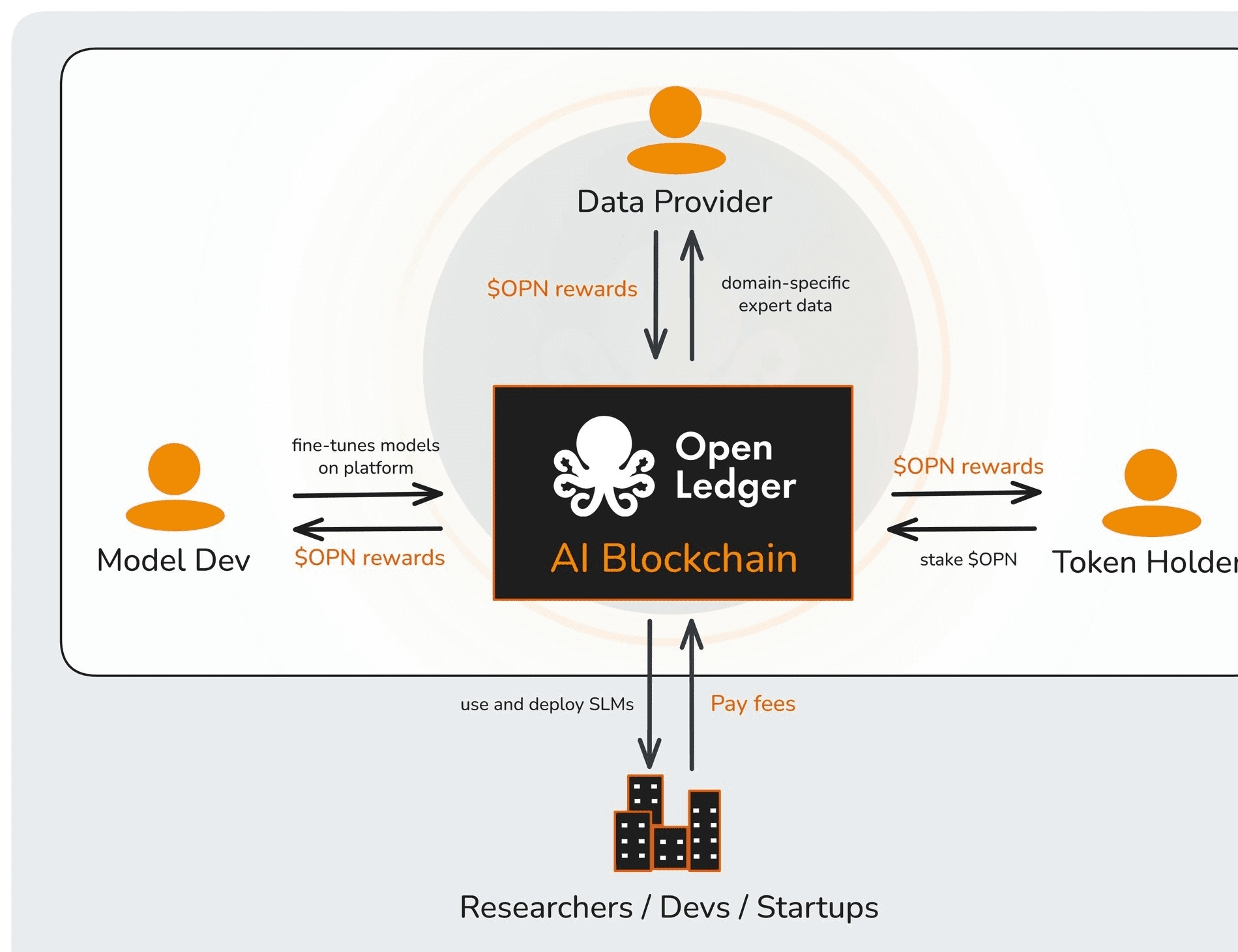
Running thousands of fine-tuned models on a single GPU means specialized AI becomes affordable enough to actually reach the world.
That's not a small detail — it's the difference between niche tools staying niche and actually going mainstream.
Then late in 2025, OpenLedger added something that I think most people haven't fully absorbed yet.
AI agents on the protocol can now analyze liquidity across multiple decentralized exchanges, find optimal routes, and execute real trades — all recorded on-chain, all auditable, all transparent.
In my view, this is where "data liquidity" grows its second meaning entirely.
It's not only about rewarding the people who trained the model — it's about deploying intelligent agents that act in real economic environments with full accountability baked in.
Autonomous AI with verifiable receipts is a genuinely new thing in the world.
The OPEN token launched September 2025, opened with a 200% surge, and then did what real assets do — it breathed, pulled back, and started building a floor.
What caught my attention wasn't the pump, it was the buyback program funded by actual protocol revenue.
When a team repurchases tokens using earned revenue and not raised capital, it tells you the machine is already generating value.
The tokenomics keep the majority of supply flowing to the community and ecosystem, vested slowly over four years, which reduces the mercenary capital problem most new launches suffer from.
OPEN converts 1:1 to gOPEN for governance, meaning the people building and contributing are the ones steering the protocol's future.
From my experience, the projects that survive bear markets are the ones with a clear answer to one simple question — what does this actually fix?
OpenLedger fixes the broken relationship between the people who create data and the AI systems that profit from it.
The mainnet launched November 2025, the Cambridge research partnership dropped alongside it, and the builder grants program started funneling capital to the next wave of developers building inside the ecosystem.
These aren't announcements made to juice a chart — these are execution signals from a team that knows where it's going.
I think we are standing at the beginning of something that will look obvious in three years but feels early right now.
The first blockchain wave gave us digital money.
The second wave gave us programmable ownership.
This wave is about intelligence — who owns it, who builds it, who gets paid when it's used.
OpenLedger is laying the foundation for that economy right now, one attributed dataset at a time.