
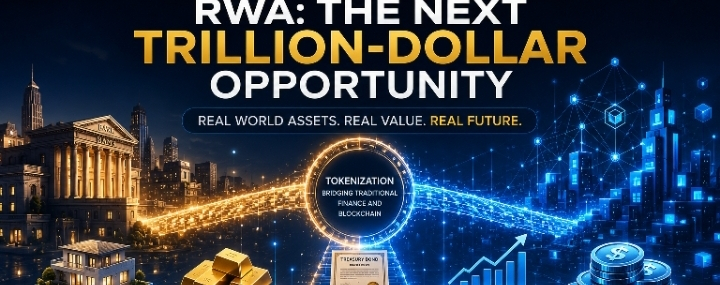
Why RWA Could Be Crypto's Biggest Opportunity in 2026
For years, the crypto market has been driven by narratives. We have witnessed the rise of DeFi, NFTs, Metaverse projects, AI tokens, and meme coins. While many of these sectors created massive opportunities, a new trend is quietly attracting the attention of institutions, investors, and blockchain developers alike: Real World Assets (RWAs).
Many market participants are still focused on short-term price movements, but some of the biggest players in finance are looking at a much larger opportunity. The tokenization of real-world assets has the potential to bridge the gap between traditional finance and blockchain technology, creating one of the most significant transformations the financial industry has ever seen.
What Are Real World Assets?
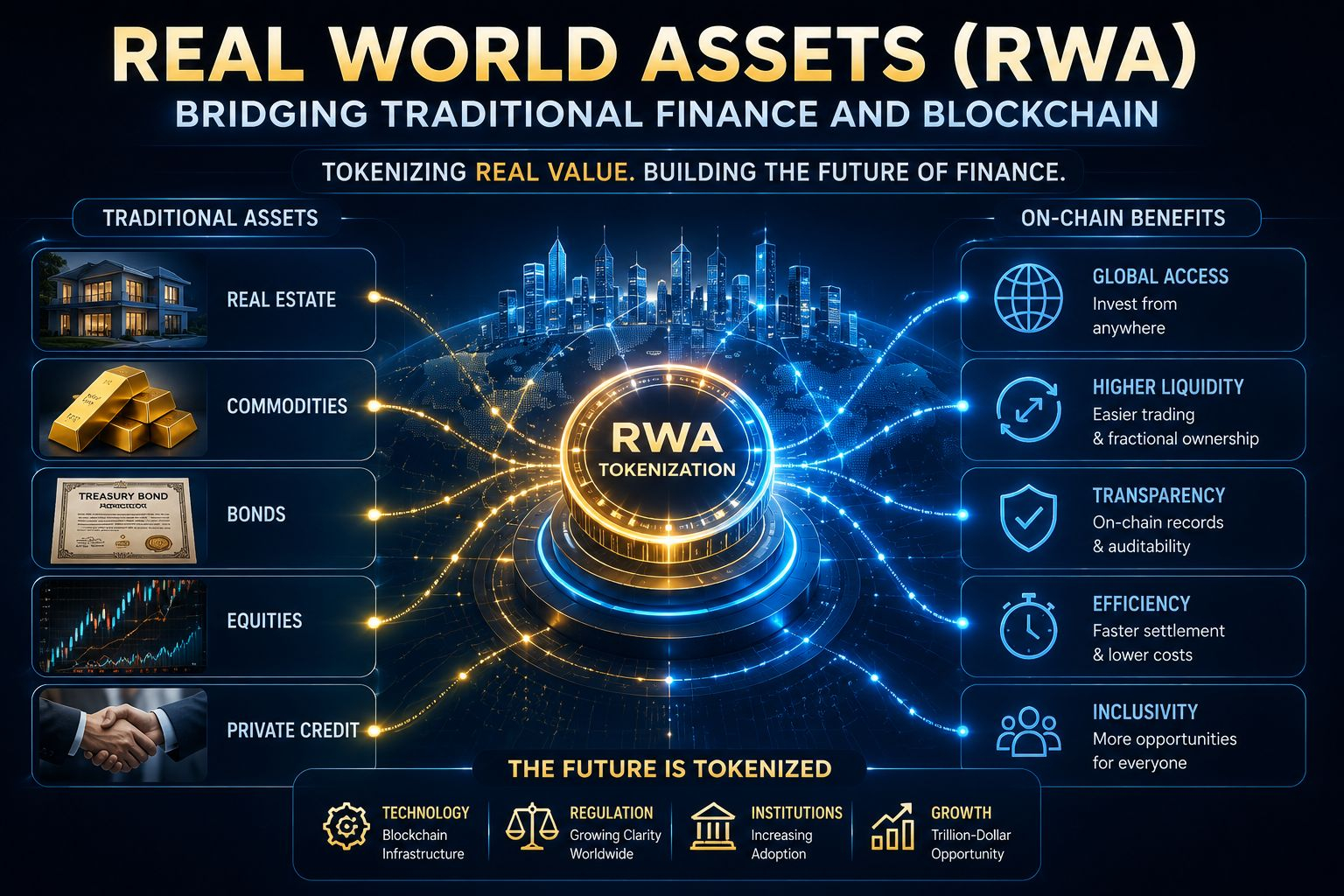
Real World Assets, commonly known as RWAs, refer to physical or traditional financial assets that are represented on a blockchain.
These assets may include:
Real estate
Government bonds
Treasury bills
Commodities such as gold
Stocks and equities
Private credit markets
Infrastructure investments
By tokenizing these assets, ownership can be divided into digital tokens that can be traded, transferred, and managed on blockchain networks.
In simple terms, RWAs allow traditional assets to benefit from the efficiency, transparency, and accessibility of blockchain technology.
Why Is Everyone Talking About RWAs?
The answer is simple: institutions are paying attention.
Unlike many previous crypto narratives that were primarily retail-driven, RWAs are attracting banks, asset managers, investment firms, and governments.
The reason is clear.
Traditional financial markets are worth hundreds of trillions of dollars. Even a small percentage moving onto blockchain networks could create enormous opportunities for the crypto industry.
Many experts believe that tokenization can reduce settlement times, lower costs, improve transparency, and unlock liquidity that previously remained inaccessible.
This is not merely a crypto trend. It is a financial infrastructure transformation.
The Advantages of Asset Tokenization
1. Increased Accessibility
Traditionally, investing in certain asset classes required large amounts of capital.
Tokenization allows investors to own fractions of high-value assets, making investment opportunities available to a much wider audience.
2. Improved Liquidity
Many traditional assets are difficult to buy or sell quickly.
Blockchain-based tokenization allows assets to be traded more efficiently, potentially increasing liquidity across multiple sectors.
3. Global Participation
Blockchain networks operate globally.
This enables investors from different regions to access markets that were previously restricted by geography or complex financial requirements.
4. Transparency and Security
Every transaction recorded on a blockchain can be verified publicly, reducing information asymmetry and improving trust.
Why 2026 Could Be a Breakthrough Year
Several factors are aligning simultaneously:
Growing institutional adoption
Increased regulatory clarity in major jurisdictions
Expanding stablecoin infrastructure
Improved blockchain scalability
Rising demand for efficient financial systems
As these developments continue, RWAs may evolve from a niche sector into one of the core pillars of the digital asset economy.
Many analysts believe that the next phase of blockchain growth will be driven less by speculation and more by real-world utility.
RWAs fit perfectly into that narrative.
Risks Investors Should Understand
While the opportunity is significant, investors should remain aware of potential risks.
These include
Regulatory uncertainty
Custody and legal ownership issues
Smart contract vulnerabilities
Market liquidity concerns
Valuation challenges
As with any emerging sector, proper research and risk management remain essential.
Final Thoughts
The crypto industry is constantly searching for the next major narrative.
While meme coins and short-term trends often dominate headlines, Real World Assets represent something different: a long-term transformation of how value is stored, transferred, and traded.
If blockchain technology is going to impact the global financial system at scale, RWAs may become one of the most important bridges connecting traditional finance with the digital economy.
The question is no longer whether tokenization will happen.
The real question is how quickly the world will adopt it.
And for investors willing to look beyond short-term market noise, RWA could become one of the defining opportunities of the next crypto cycle.
#RWA #Crypto #Blockchain #Tokenization #RealWorldAssets