
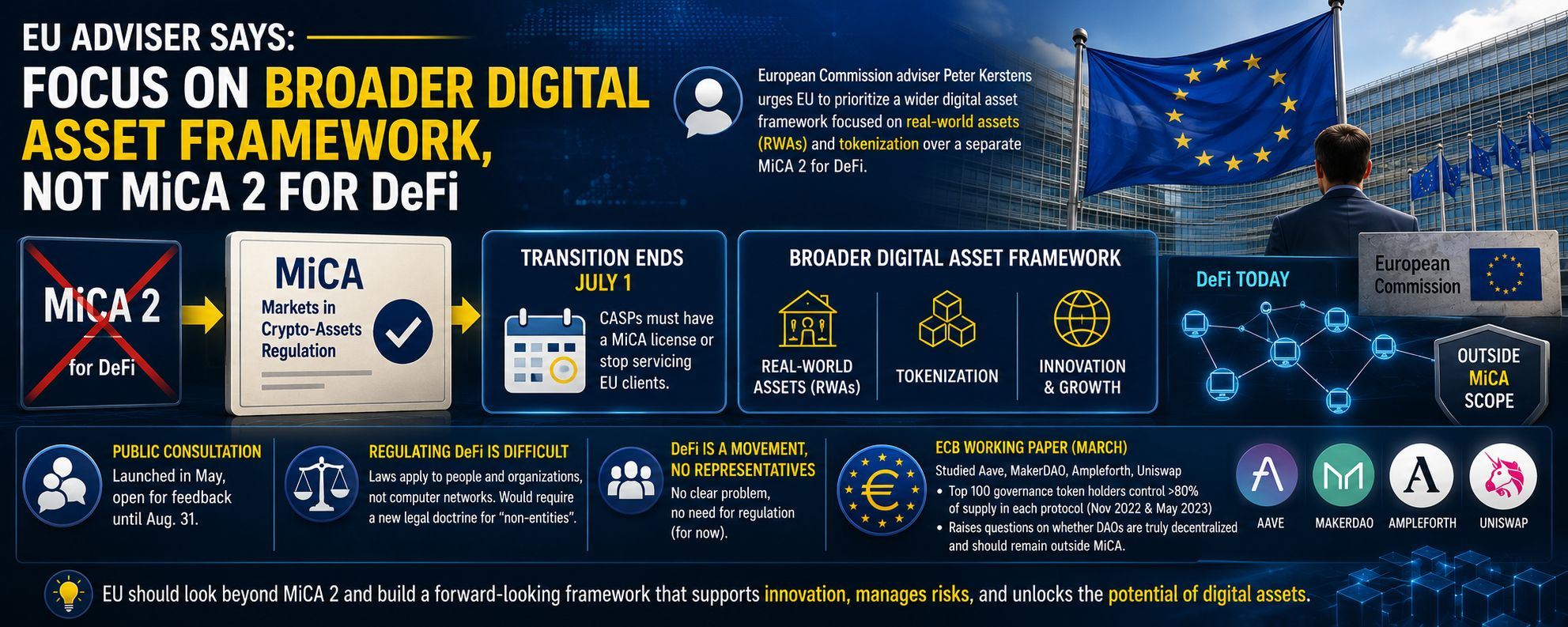

European Commission ke adviser Peter Kerstens ka maanna hai ki European Union ko DeFi ke liye MiCA 2 lane ki bajay ek wider digital asset framework par focus karna chahiye. Unke hisaab se future regulation ka main focus real-world assets (RWAs) aur tokenization hona chahiye.
Monaco me WAIB Summit 2026 ke dauran Kerstens ne kaha ki unke hisaab se MiCA abhi outdated nahi hua hai. Unhone bataya ki European Commission ne May me ek public consultation shuru ki thi jo 31 August tak feedback accept karegi. Isi feedback ke basis par future crypto regulations tay ki jayengi.
MiCA ka transition period 1 July ko khatam ho raha hai. Iske baad jo bhi Crypto Asset Service Providers (CASPs) European Union ke users ko service dena chahte hain, unke paas valid MiCA license hona zaroori hoga. Warna unhe apni services band karni pad sakti hain.
DeFi ko consultation me ek emerging risk area ke roop me discuss kiya gaya, lekin abhi bhi woh MiCA ke direct scope ke bahar hai. Kerstens ka kehna hai ki DeFi ko regulate karna mushkil hai kyunki kanoon aam taur par logon aur organizations par lagu hote hain, na ki decentralized computer networks par. Unhone kaha ki DeFi ek movement hai jiska koi central representative nahi hai, isliye bina kisi clear problem ke us par regulation lana zaroori nahi lagta.
Dusri taraf, March me European Central Bank ke ek working paper ne is baat par sawaal uthaya ki kya DAOs waqai itne decentralized hain ki unhe MiCA ke bahar rakha ja sake. Research me Aave, MakerDAO, Ampleforth aur Uniswap jaise protocols ka analysis kiya gaya. Report ke mutabik har protocol me top 100 governance token holders ke paas 80% se zyada token supply thi. Researchers ka maanna hai ki agar governance itni concentrated hai, to in DAOs ko "fully decentralized" maanna dobara evaluate karna chahiye.