
Why the 2026 Crypto "Bleed" is a Structural Reset, Not a Funeral
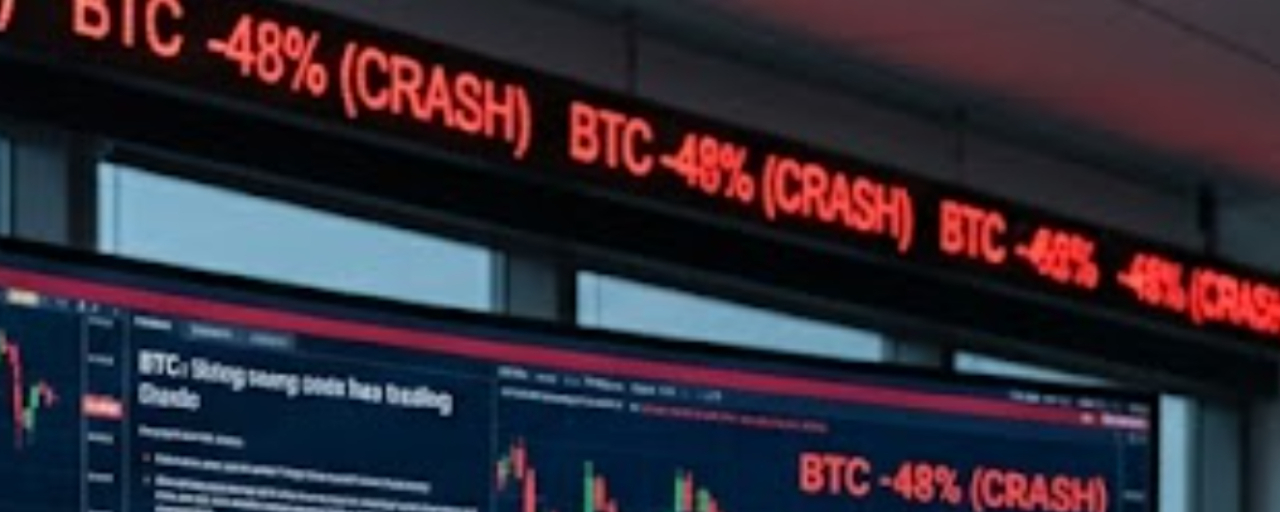
recently, If you opened Crypto Twitter, logged into your portfolio tracker, or read mainstream financial headlines, the sentiment was suffocatingly clear. Bitcoin had shaved off roughly 50% from its late-2025 all-time high of $126,200. We’d watched a brutal 13-day streak of ETF outflows drain over $3.4 billion from the market, and the psychological anchor of corporate HODLing drifted when MicroStrategy filed an SEC notice showing a tactical sale of 32 BTC.
The tourists are packing their bags. The mainstream media is dusting off its "Crypto is Dead" obituaries.
But if you’ve been in this game long enough, you aren't panicking. You’re recognizing this layout for exactly what it is: a sophisticated, institutional-grade market flush. This isn't the end of the crypto market; it is the mechanical re-architecting of its next macro floor. And history tells us this is exactly how the game is played.
The Illusion of the "Unprecedented" Crash
Every crypto crash feels unique and terminal while you are living through it. When Bitcoin slides to the low-$60,000s, the narrative shifts from "hyper-bitcoinization" to "systemic failure." But a cold look at historical data reveals that a 50% mid-cycle drawdown is not a malfunction—it's a feature.
To understand why 2026 is structurally sound, we have to compare it to the ghosts of cycles past.
The Macro View: Bitcoin’s Great Mid-Cycle Resets
The chart below highlights how Bitcoin routinely cuts its value in half during broader bull market cycles, only to establish a higher, more consolidated launchpad.
2017 Cycle --------> 40% Summer Flush-out --------> New ATH $19,600
2021 Cycle --------> 50% May "China Ban" --------> New ATH $69,000
2026 Cycle --------> 51% Institutional Reset ------> Accumulation Phase
2021 vs. 2026: A Tale of Two Microstructures
The closest psychological mirror to our current market is the infamous May 2021 crash. In a matter of weeks, Bitcoin plummeted from $64,000 to $30,000. It felt apocalyptic. But comparing the internal mechanics of that crash to today's market reveals why the 2026 structure is inherently healthier.
1. Liquidations: Chaos vs. Order
In May 2021, leverage was held by retail traders using unregulated offshore exchanges, often trading with absurd 100x leverage. When the market turned, cascading liquidations triggered a chaotic flash crash that broke exchange infrastructure.
In June 2026, the liquidations are institutional. Positions are bound to regulated CME futures, options, and prime brokers. While the dollar amounts are massive ($1.2B+ wiped out in days), the selling is orderly and execution-managed. The leverage is being extracted via structured risk-management parameters, not system failures.
2. The Nature of the Selling
In 2021, the crash was driven by existential regulatory panic (China banning mining) and fundamental narrative shifts (Tesla dropping BTC payments). People were fleeing the asset class out of fear it would be outlawed.
In 2026, capital isn't fleeing because Bitcoin failed; capital is rotating because macro conditions shifted. High interest rates have made cash expensive, and a massive chunk of global liquidity is temporarily rotating into AI and tech equities. This is a capital reallocation play, not a fundamental rejection of blockchain technology.
The Historical Timeline to Recovery
So, when does "another story" begin? History tells us that market bottoms are a process, not an event.
Following the May 2021 crash, Bitcoin didn't instantly bounce back to all-time highs. It spent 90 days in the "Summer Doldrums"; sideways, low-volume, deeply boring accumulation between $30,000 and $40,000. Retail traders swore off crypto forever, and volume dried up. Only after this exhaustion phase did the market quietly build the base that fueled the run to $69,000 in November of that year.
We are entering that exact phase now. June, July, and August are historically low-volume months. With Standard Chartered noting that the "low is almost in" and pointing to a long-term $100k target, the smart money is already planning for a choppy summer accumulation

My View: Price is the least interesting thing about crypto during a drawdown. The infrastructure tells the real story. This week, Kalshi went live with America’s first regulated Bitcoin perpetual futures; opening a multi-trillion-dollar derivatives pipeline natively on U.S. soil. A market that is "ending" does not get deeply integrated into the plumbing of global Wall Street finance. The market isn't dying; it's just changing hands from impatient leverage traders to patient institutional allocators. Clean off your charts, ignore the daily noise, and let the summer doldrums do their work.