
Lately, I've been thinking about something interesting in AI.$BTC
A lot of people say that AI needs more data, but I'm starting to think the bigger challenge might be privacy.
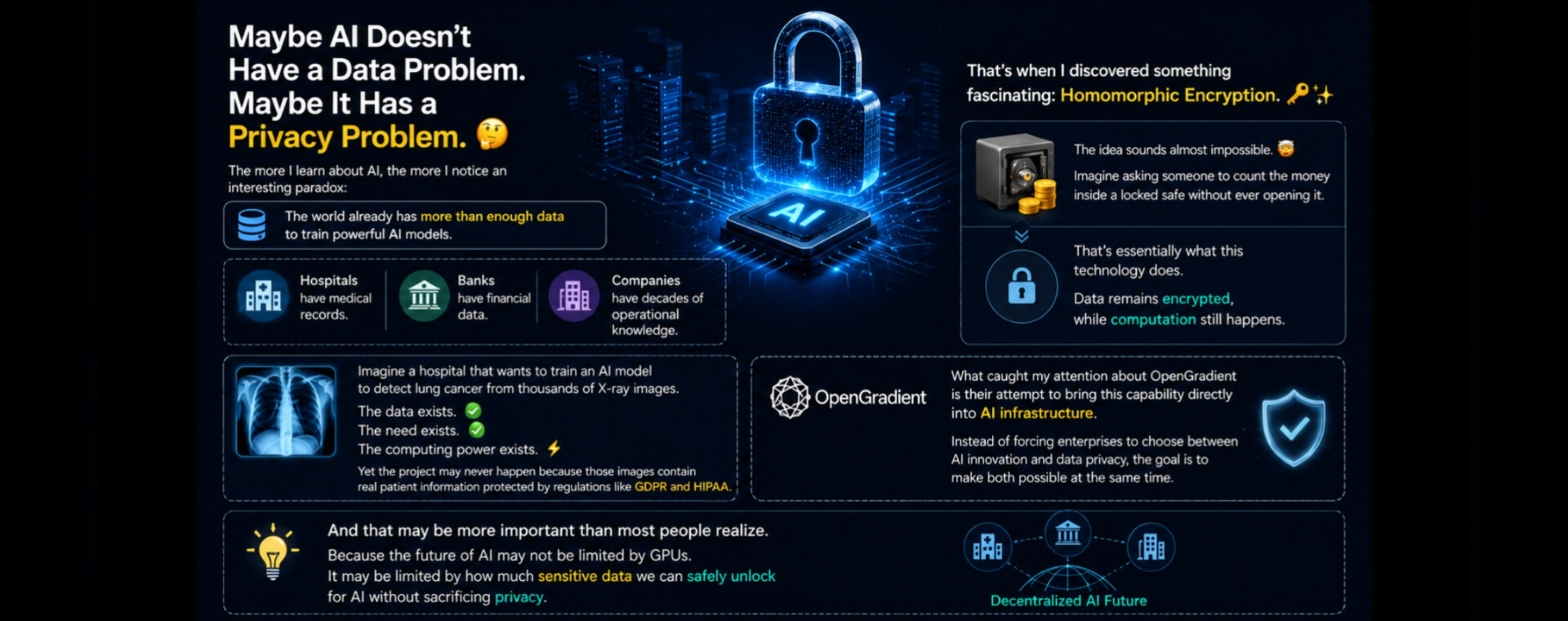
When you look around, there's already an enormous amount of valuable data available. Hospitals have medical records, banks have financial data, and companies have decades of business knowledge. The data is there.
The problem is that most of it is too sensitive to be freely used.
For example, a hospital might want to train an AI model to detect diseases from thousands of medical images. The data exists, the technology exists, and the computing power exists. But privacy regulations and patient confidentiality make it difficult to use that data safely.
While researching this topic, I came across Homomorphic Encryption, and I found the concept fascinating.
In simple terms, it allows data to remain encrypted while computations are performed on it. It's like getting useful results from information without ever exposing the information itself.
This is one reason why projects like OpenGradient caught my attention. They're exploring ways to combine AI innovation with strong privacy protection instead of forcing organizations to choose one or the other.
I believe the future of AI may not be limited by a lack of GPUs or computing power. It may be limited by our ability to safely use sensitive data without compromising privacy.
What do you think?
How long will it take before hospitals, banks, and other large institutions start using decentralized AI at scale?
Disclaimer: This is my personal opinion and analysis and should not be considered financial or investment advice.$BTC