
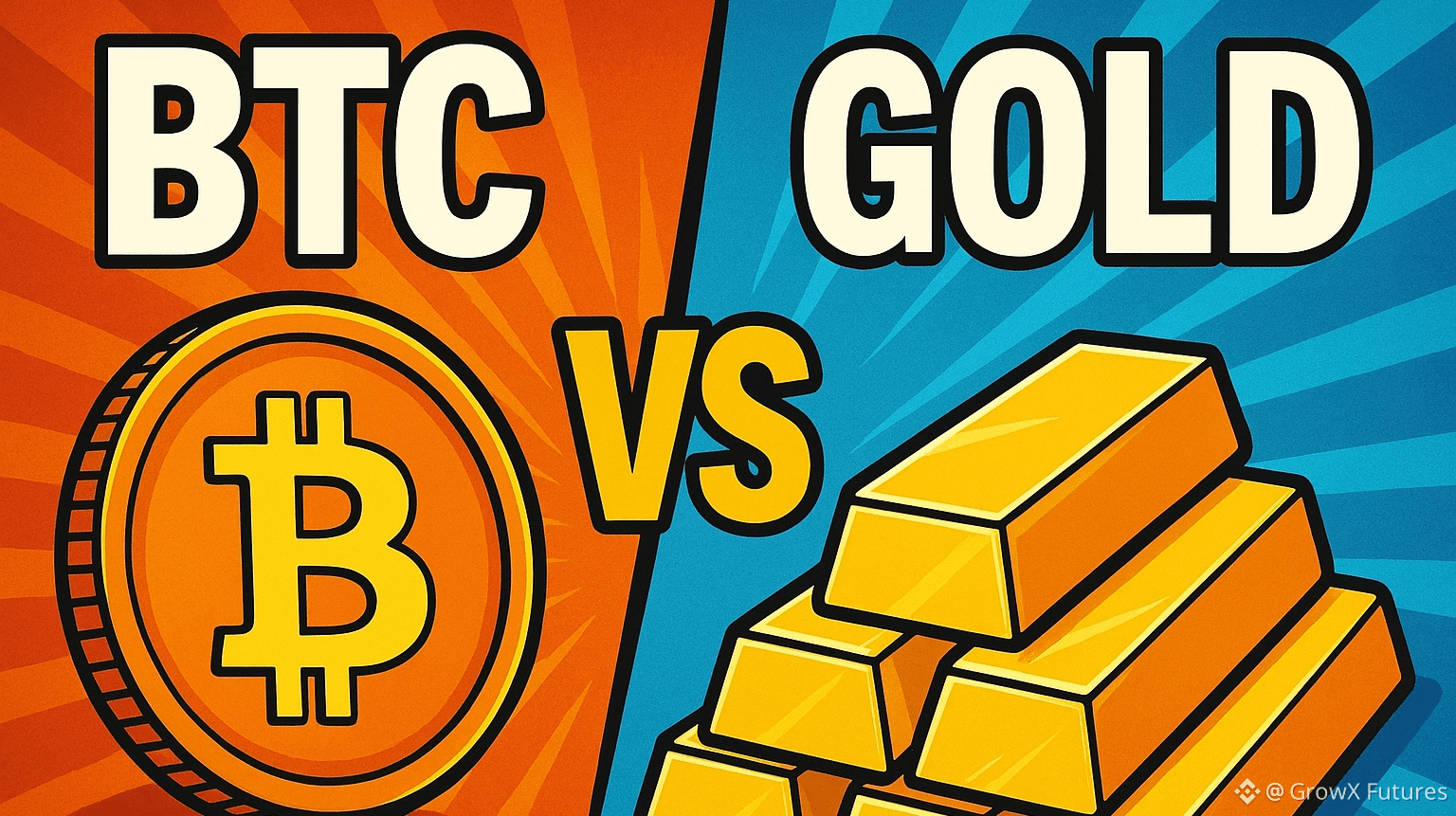
Gold has been a store of value for millennia. It’s a physical asset you can hold, never loses its shine, and is widely trusted.
When inflation spikes or markets tumble, investors turn to gold because it’s stable, liquid, and globally accepted.
Bitcoin, born in 2009, is the digital counterpart. It lives on the internet, has no owner, and its supply is capped at 21 million coins—creating scarcity like gold.
Yet its price swings wildly, attracting traders but unsettling savers. Institutional adoption is rising, but regulation and energy concerns still cloud its future.
Key Differences
Physicality: Gold = tangible bullion; Bitcoin = ledger entry.
Volatility: Gold ≈ stable; Bitcoin ±30‑% swings common.
Accessibility: Gold needs storage, insurance; Bitcoin needs a wallet.
Future Outlook
Bitcoin Maturity: Wider acceptance could soften volatility, turning BTC into “digital gold.”
Gold Stays King: If Bitcoin stalls, gold remains the safe‑haven benchmark.
Coexistence: Most portfolios will hold both—gold for stability, Bitcoin for growth.
Bottom Line
Both protect against currency debasement, but in different ways. Gold offers steady security; Bitcoin offers high‑upside tech potential. A blended approach captures each asset’s strengths. #BTCVSGOLD $BTC
