
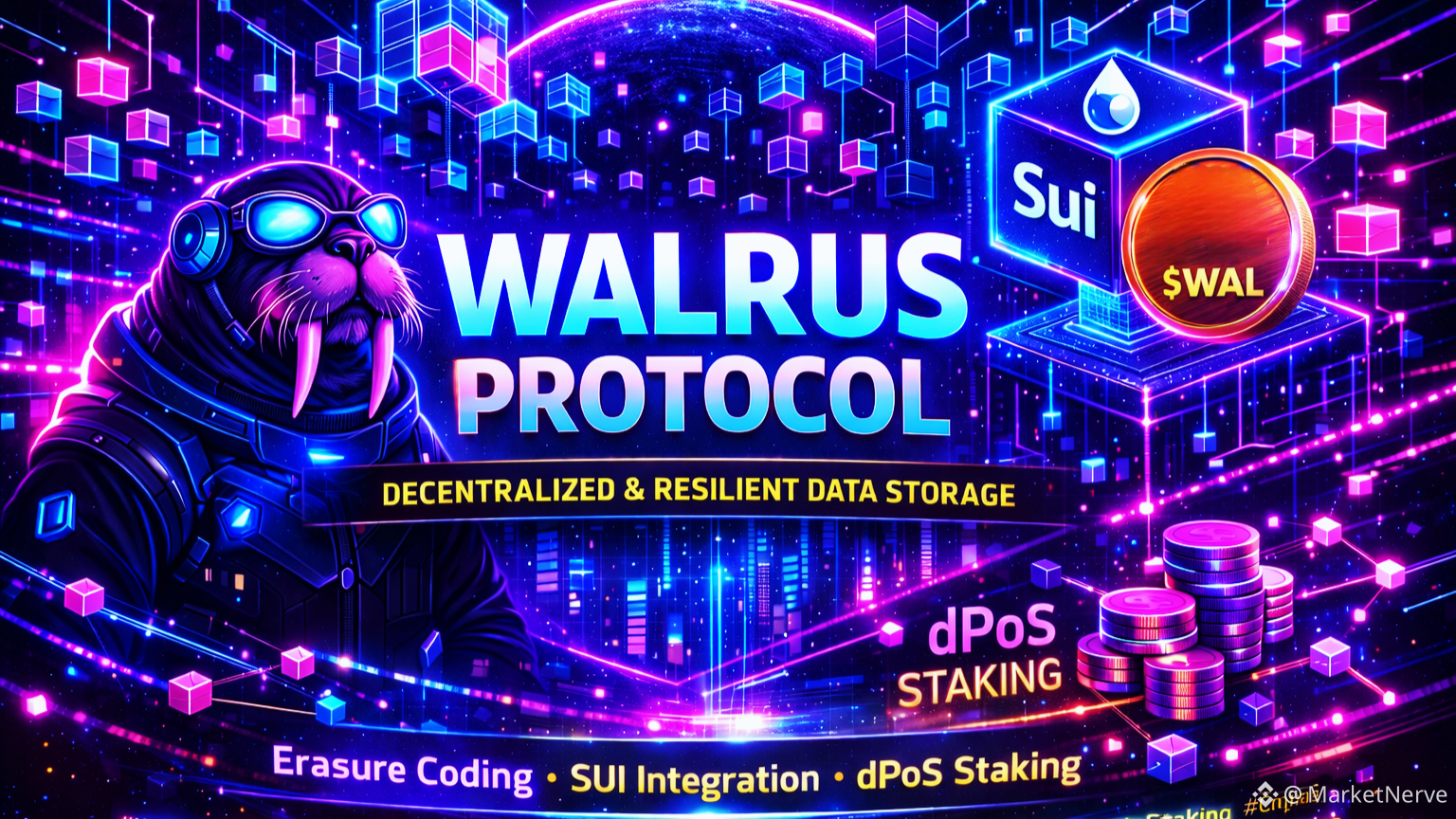
Wyobraź sobie, że Twoje dane nie polegają na stabilności jednego serwera ani na zentralnym hostcie. Nawet jeśli większość węzłów zostanie wyłączona, Twoje informacje nadal będą dostępne. Oto jak działa @walrusprotocol — protokół przechowywania danych rozproszonych oparty na nowoczesnych technologiach Web3 i napędzany tokenem $WAL token.
🧩 W tym artykule omówimy:
jak działa kodowanie danych w Walrusie;
dlaczego integracja z Sui otwiera nowe możliwości;
jak działa delegowanie przez dPoS;
oraz co to wszystko oznacza dla deweloperów i użytkowników Web3 i Web2.
🔧 Kodowanie Erasure — Inżynieria przechowywania
Tradycyjne rozwiązania przechowywania w chmurze replikują całe pliki wielokrotnie, aby zapewnić niezawodność. Walrus przyjmuje mądrzejsze podejście: dzieli plik na wiele fragmentów, a następnie koduje je w taki sposób, że tylko część fragmentów jest potrzebna do przywrócenia pełnego pliku. Nawet jeśli do 66% węzłów przejdzie offline, Twoje dane pozostaną bezpieczne i dostępne.
Ta metoda jest nie tylko bardziej wydajna — jest również znacznie tańsza niż klasyczna replikacja pełnych plików. Umożliwia skalowalne przechowywanie bez niepotrzebnej redundancji.
⚙️ Głęboka integracja z siecią Sui
Każdy plik blob przechowywany przez Walrus jest reprezentowany jako obiekt w Sui. Otwiera to potężne przypadki użycia dla inteligentnych kontraktów:
sprawdzanie obecności konkretnego bloba;
ustawianie lub aktualizowanie czasu przechowywania;
programowe usuwanie danych na podstawie logiki kontraktu.
Oznacza to, że przechowywanie staje się częścią logiki Twojej aplikacji dApp, a nie tylko usługą zaplecza. W połączeniu z narzędziami CLI, SDK i API HTTP, deweloperzy mogą bezproblemowo integrować się zarówno z aplikacjami Web3, jak i Web2.
🪪 Nagrody za Delegację i Staking za pośrednictwem dPoS
Protokół Walrus wykorzystuje mechanizm Delegowanego Dowodu Stawki (dPoS). Umożliwia to $WAL posiadaczom tokenów:
delegować swoje tokeny do węzłów przechowujących;
zarabiać pasywne nagrody za uczestnictwo w sieci;
wspierać decentralizację i odporność sieci.
Im więcej WAL jest delegowanych do węzła, tym większa jego szansa na wybór do przechowywania nowych fragmentów danych. Tworzy to wyraźny ekonomiczny bodziec dla węzłów, aby pozostały online i dostarczały stabilną usługę.
📌 Podsumowanie
Protokół Walrus oferuje nową paradygmat przechowywania danych: rozproszony, wydajny i natywnie zintegrowany z blockchainem. Dla deweloperów Web3 to szansa na budowanie naprawdę zdecentralizowanych aplikacji. A dla $WAL posiadaczy — okazja do zarabiania pasywnego dochodu przy jednoczesnym wzmacnianiu sieci.
👉 Śledź @Walrus 🦭/acc , bądź na bieżąco z aktualizacjami i odkrywaj przyszłość zdecentralizowanego przechowywania.
#walrus #DecentralizedStorage #Web3 #SuiBlockchainExplorer #DPoS
🔁 Jeśli uznałeś ten artykuł za wartościowy, zapisz go, podziel się nim i zostaw komentarz: jakie przypadki użycia przechowywania danych są dla Ciebie najbardziej interesujące?