Modele typu Banku Włoch: upadek Ethereum i ryzyko infrastrukturalne
Streszczenie
Gdy sieci blockchain stają się istotne dla systemu, banki centralne i instytucje finansowe coraz częściej badają ryzyka infrastrukturalne ukryte w publicznych blockchainach. Wykorzystując podejścia modelowe podobne do tych stosowanych przez instytucje takie jak Bank Włoch, niniejszy artykuł bada hipotetyczny scenariusz: co się stanie, jeśli Ethereum doświadczy dużego upadku? Analizujemy Ethereum jako infrastrukturę finansową, identyfikujemy punkty narażone na awarię i wyjaśniamy, jak naprężenie sieci może się rozprzestrzenić na dezentralizowane finanse (DeFi), stablecoiny i światowe rynki kryptowalut.
1. Ethereum jako infrastruktura finansowa, a nie tylko token
Ethereum nie jest już tylko kryptowalutą. Funkcjonuje jako:
Warstwa rozliczeniowa dla DeFi
Kręgosłup zabezpieczeniowy dla stablecoinów
Silnik wykonawczy inteligentnych kontraktów
Hub płynności dla NFT, mostów i warstwy 2
Z perspektywy modelowania banków centralnych, Ethereum przypomina infrastrukturę rynku finansowego (FMI)—podobną do systemów płatniczych lub domów rozliczeniowych.
➡️ To oznacza, że ryzyko awarii Ethereum jest systemowe, a nie izolowane.
2. Jak banki centralne modelują ryzyko infrastruktury
Instytucje takie jak Bank Włoch zazwyczaj używają:
Modele teorii sieci
Ramy testów stresowych
Symulacje oparte na agentach
Modele zarażania płynnością
Zastosowane do Ethereum, te modele koncentrują się na:
Koncentracja węzłów
Zachęty dla walidatorów
Zależności płynnościowe
Interkoneksje inteligentnych kontraktów
Celem jest odpowiedzenie na jedno pytanie:
Czy wstrząs w jednej części systemu może spowodować całkowitą awarię?
3. Kluczowe punkty kruchości w architekturze Ethereum
3.1 Ryzyko koncentracji walidatorów
Dowód-stawka Ethereum polega na walidatorach, ale:
Duzi dostawcy stakingu kontrolują znaczną część
Naciski regulacyjne na walidatorów mogą powodować skoordynowane wyjścia
Wydarzenia slashingowe mogą nasilać panikę
📉 Wynik modelu: Zmniejszona uczestnictwo walidatorów → wolniejsza finalność → utrata zaufania.
3.2 Pętle sprzężenia zwrotnego płynności DeFi
Ethereum obsługuje ogromne pozycje lewarowane poprzez:
Protokoły pożyczkowe
Tokeny stakingu płynnego (LST)
Aktywa syntetyczne
W modelach stresowych:
Cena ETH spada
Współczynniki zabezpieczenia zawodzą
Likwidacje gwałtownie rosną
Opłaty za gaz wzrastają
Zator w sieci się pogarsza
To tworzy negatywną pętlę refleksyjności.
3.3 Ryzyko zależności od stablecoinów
Większość głównych stablecoinów zależy od infrastruktury Ethereum.
Jeśli Ethereum się zatrzyma:
Wykupy stablecoinów spowalniają
Arbitraż się łamie
Niestabilność pegów wzrasta
📊 Symulacje w stylu banków centralnych pokazują, że stres stablecoinów przyspiesza systemowy upadek szybciej niż sama zmienność cenowa.
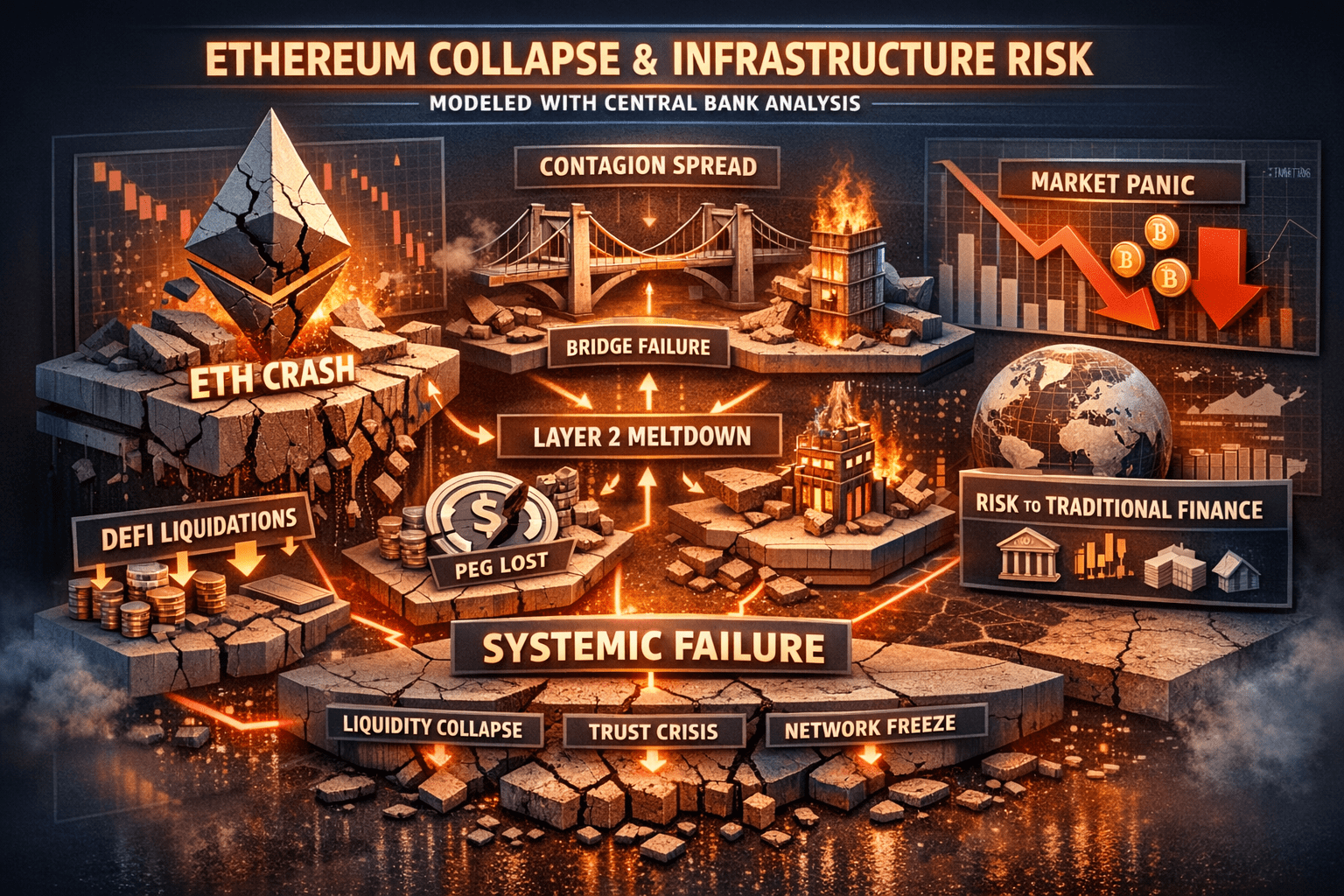
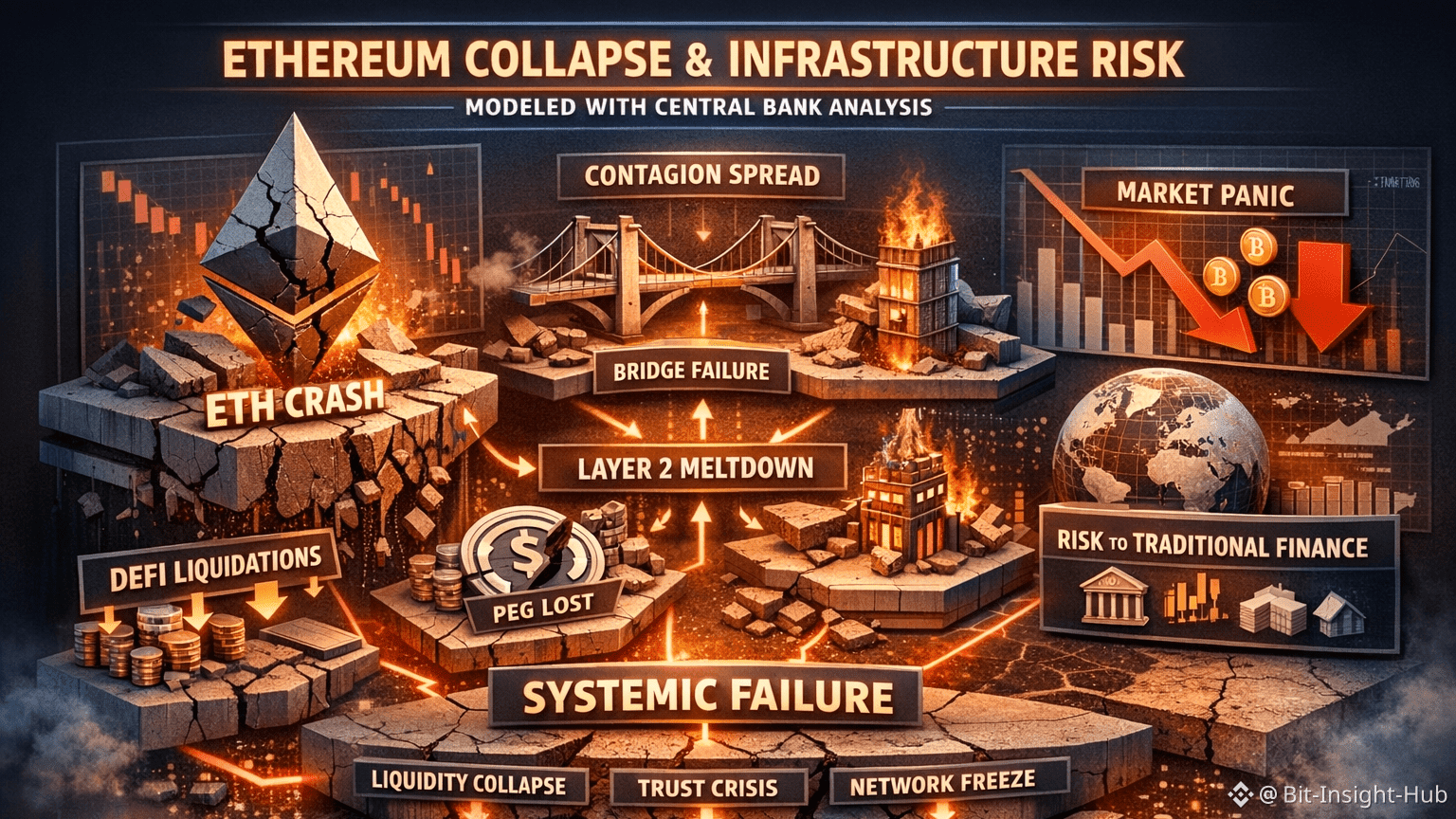
4. Hipotetyczny scenariusz upadku Ethereum (modelowany)
Faza 1: Wydarzenie wstrząsowe
Działania regulacyjne, poważne eksploity lub przerwy w działaniu walidatorów
Cena ETH gwałtownie spada
Faza 2: Zamrożenie płynności
Protokoły DeFi wstrzymują wypłaty
Mosty stają się wąskimi gardłami
Opłaty za gaz gwałtownie rosną
Faza 3: Zarażenie
L2 nie udaje się z powodu zależności od Ethereum
Płynność międzyłańcuchowa wysycha
Zaufanie do stablecoinów eroduje
Faza 4: Przesunięcie rynku
ETH traci status „bezpiecznego zabezpieczenia kryptograficznego”
Kapitał migruje do alternatywnych łańcuchów lub całkowicie opuszcza kryptowaluty
5. Dlaczego to ma znaczenie poza kryptowalutami
Z makroekonomicznego punktu widzenia w stylu Banku Włoch:
Rynki kryptowalutowe są coraz bardziej powiązane z tradycyjnymi finansami
Ethereum działa jako warstwa rozliczeniowa w cieniu
Awaria mogłaby wpłynąć na:
Fundusze kryptograficzne
Startupy płatnicze
Tokenizowane aktywa realnego świata (RWA)
Dlatego regulatorzy badają Ethereum nie jako innowację—lecz jako ryzyko infrastruktury.
6. Ryzyko ma charakter strukturalny, a nie techniczny
Ważna wskazówka z modelowania infrastruktury:
Ethereum nie zawodzi tylko z powodu złego kodu —
zawodzi, gdy zachęty ekonomiczne, płynność i zaufanie łamią się jednocześnie.
Nawet doskonała technologia nie może przetrwać:
Biegi płynnościowe
Paraliż zarządzania
Upadek zaufania
7. Czy Ethereum może zmniejszyć ryzyko upadku?
Strategie łagodzenia zidentyfikowane w modelach systemowych obejmują:
Decentralizacja walidatorów
Lepsze ograniczenia likwidacyjne
Zmniejszone lewarowanie DeFi
Redundancja rozliczeń wielołańcuchowych
Jednak żaden system nie jest odporny na upadek—tylko odporny na upadek.
Wnioski
Używając logiki modelowania podobnej do tej stosowanej przez Bank Włoch, Ethereum wyłania się jako krytyczna, ale krucha infrastruktura finansowa. Upadek nie byłby prostym załamaniem cenowym—byłby to ogólnosystemowy kryzys płynności i zaufania, z kaskadowymi skutkami w całym ekosystemie kryptowalut.
Dla traderów, twórców i decydentów lekcja jest jasna:
Ryzyko Ethereum nie jest już ryzykiem spekulacyjnym — jest ryzykiem infrastruktury systemowej.