
Pierwszy raz, kiedy Walrus naprawdę się przełamał dla mnie, nie był to moment wzrostu ceny. Był to zwyczajny, nudny moment: przeglądałem aplikację onchain, która miała się nazywać dezentralizowaną, ale połowa doświadczenia użytkownika wciąż zależała od jednego serwera hostującego obrazy i dane. Łańcuch mógł przetrwać tysiąc ataków, ale jeśli ten serwer się wyłączył, aplikacja wyglądałaby na uszkodzoną w ciągu jednej nocy. Wtedy zrozumiałem cichą prawdę: większość systemów „Web3” dezentralizuje własność, ale nie przechowywanie danych. Walrus istnieje konkretnie po to, by rozwiązać tę lukę, i właśnie dlatego inwestorzy i traderzy powinni traktować go mniej jak hiperboliczny token i bardziej jak infrastrukturę.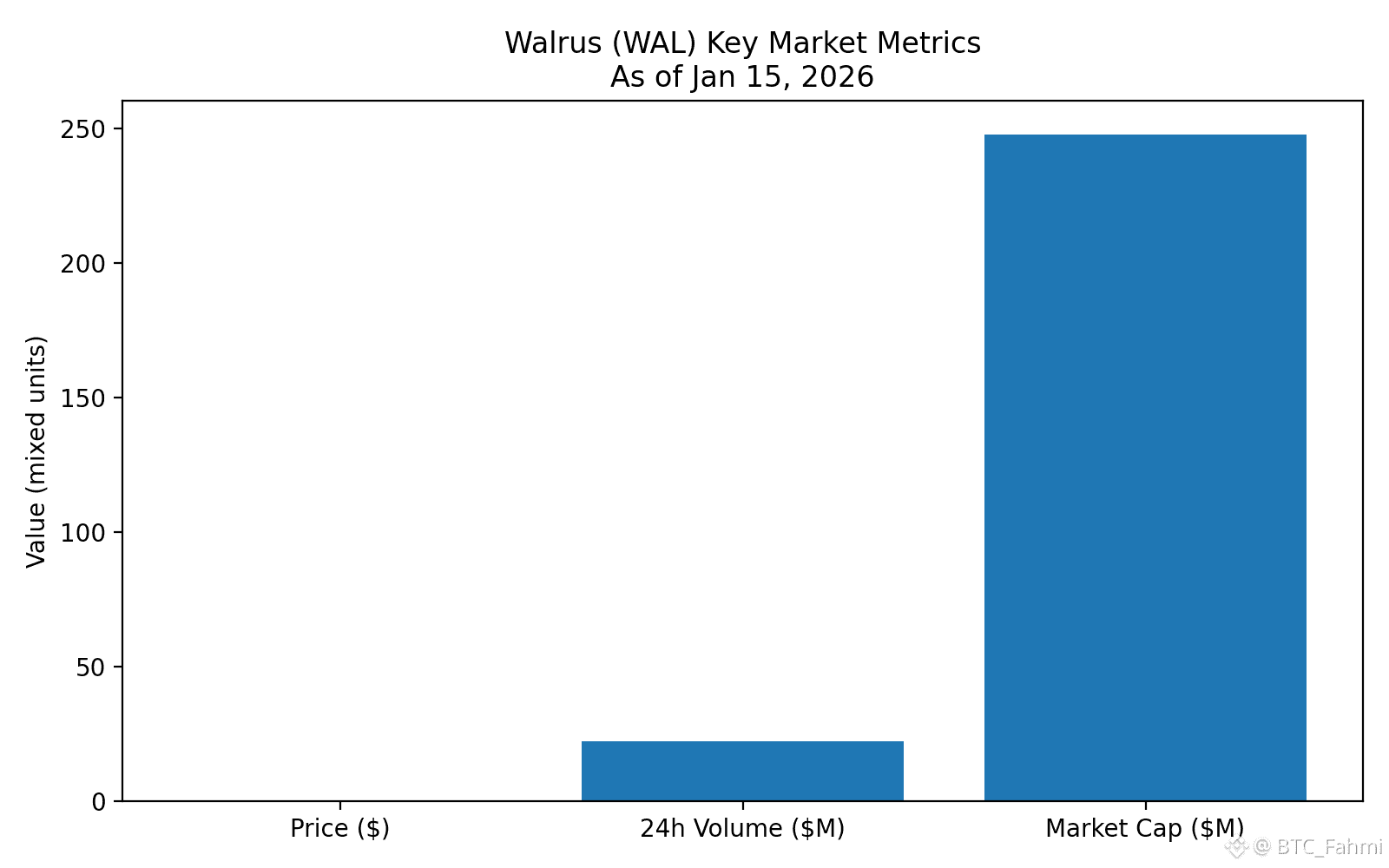
Na dzień 15 stycznia 2026 roku, WAL handluje wokół 0,157 USD, wzrastając o około +3% do +4% w ciągu ostatnich 24 godzin, z wolumenem dziennym wynoszącym około 20M–24M USD w zależności od narzędzia, i kapitalizacją rynkową bliską 248M USD. Cirkulująca podaż wynosi około 1,577B WAL, przy maksymalnej podaży 5B. Ten ślad rynkowy ma znaczenie, ponieważ sygnalizuje, że WAL nie jest już płynny w mikro-kapitałach, ale nie jest też wyceniany jak zakończony monopol na przechowywanie „wygrywający bierze wszystko”. Jest gdzieś pośrodku, co jest miejscem, gdzie ryzyko i możliwość zazwyczaj się pokrywają.
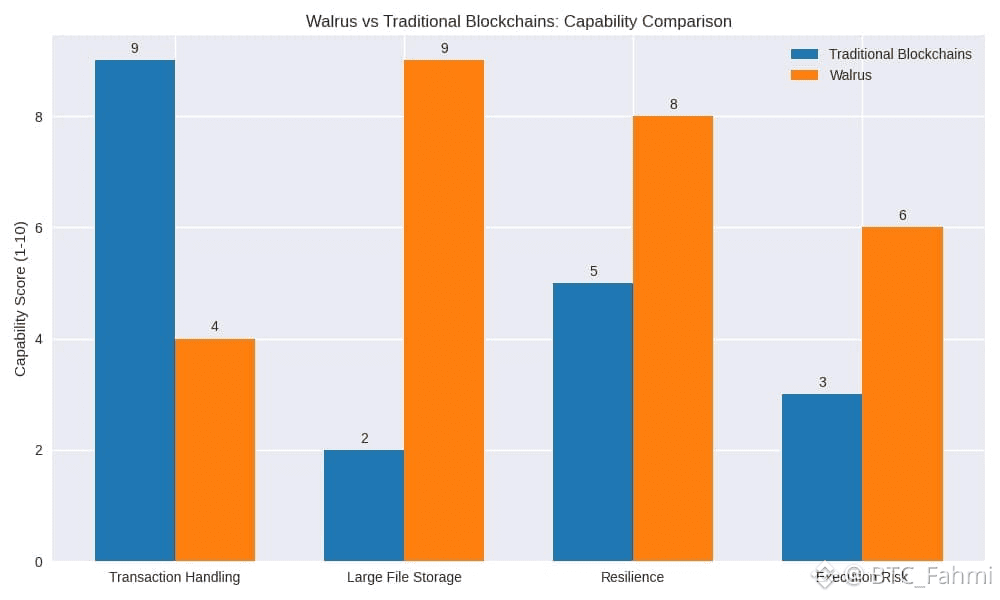
Czym więc jest Walrus, w prostym języku? Walrus to zdecentralizowany protokół przechowywania zaprojektowany do przechowywania dużych plików, często opisywanych jako „bloby”. Blockchainy są świetne w rejestrowaniu prawdy, własności i transakcji, ale są okropne w przechowywaniu dużych danych. Nikt nie chce przechowywać filmów, zbiorów danych AI, obrazów medycznych ani pełnej biblioteki zasobów gry bezpośrednio w księdze blockchain. Walrus ma być warstwą przechowywania, która wtyka się w ten świat, zaprojektowaną wokół idei, że dane powinny pozostać dostępne, nawet jeśli niektóre węzły zawiodą, opuszczą lub będą działać złośliwie.
Prosta analogia z życia codziennego pomaga. Wyobraź sobie firmę transportową. Blockchain to system paragonów, który udowadnia, kto posiada który pakunek i kiedy został wysłany. Walrus to sieć magazynów, która faktycznie przechowuje paczki w wielu obiektach. Jeśli jeden magazyn spłonie lub wyłączy się, pakunek może być nadal odtworzony z innych obiektów. To jest taki rodzaj „przetrwania przez projekt” systemy przechowywania dążą do, i to jest dokładnie ścieżka, na którą celuje Walrus.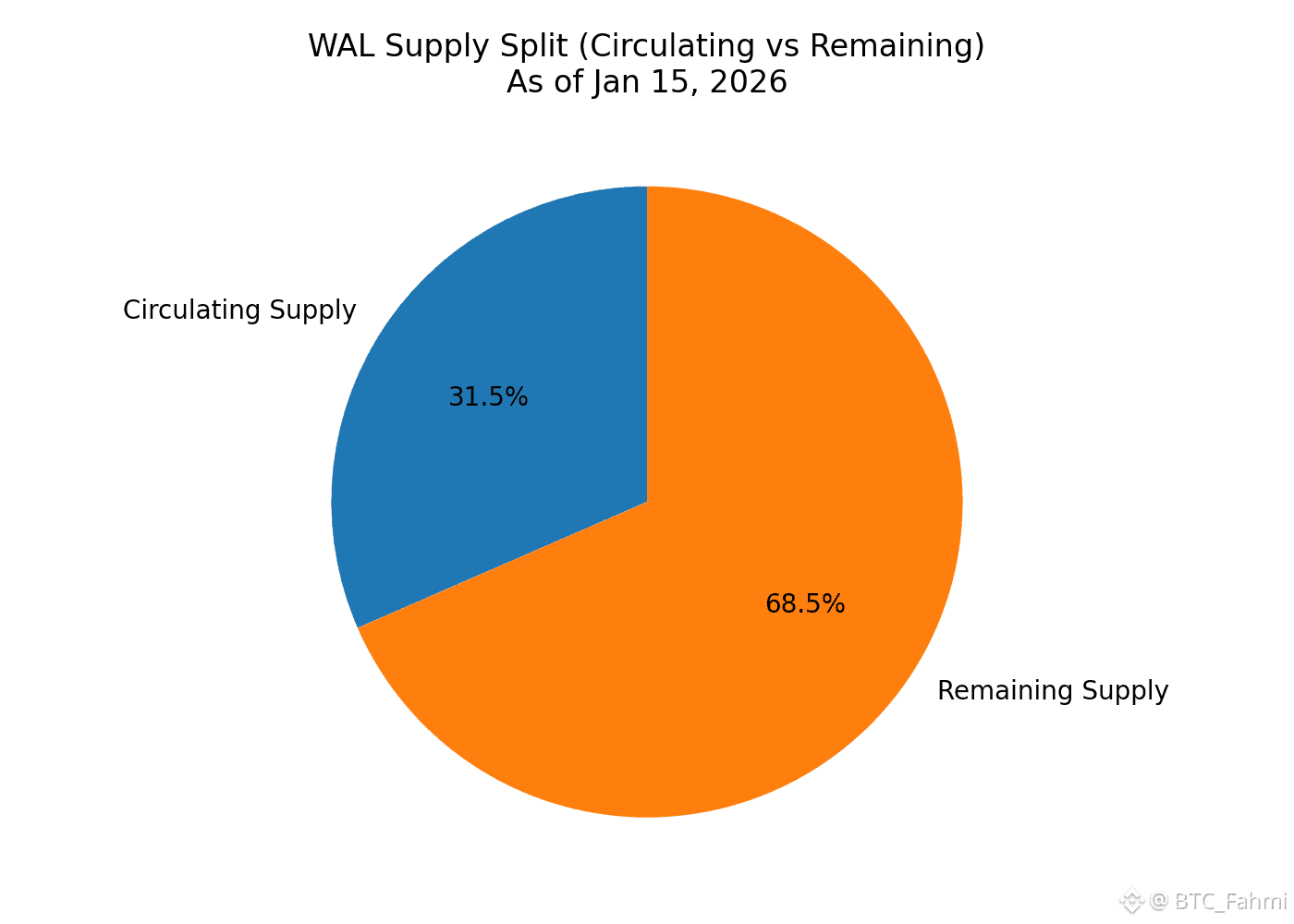
Część, którą handlowcy często przeoczają, to to, że zdecentralizowane przechowywanie to nie tylko „prześlij plik, gotowe”. Przechowywanie to żywy system ekonomiczny. Węzły muszą być opłacane, aby utrzymać dane dostępne w czasie. Sieć potrzebuje zachęt, aby działać uczciwie, gdy nikt nie patrzy. A odzyskiwanie musi wydawać się wystarczająco szybkie, aby normalni użytkownicy go nie porzucili. Walrus stara się rozwiązać to, używając rozproszonej sieci węzłów przechowywania i warstwy odzyskiwania, gdzie agregator zbiera wymagane elementy z węzłów przechowywania i może dostarczać przez warstwę pamięci podręcznej/CDN dla wydajności. Innymi słowy: przechowywanie jest zdecentralizowane, ale doświadczenie użytkownika nadal musi wydawać się płynne.
To tutaj WAL staje się czymś więcej niż „tylko tokenem”. WAL jest mechanizmem płatności i zachęt wewnątrz protokołu. Walrus pozycjonuje WAL jako token używany do płacenia za przechowywanie, z projektem płatności mającym na celu utrzymanie stabilnych kosztów w walucie fiat w czasie i dystrybucję WAL płaconego z góry w czasie do węzłów przechowywania i stakerów jako rekompensaty. To bardzo specyficzny wybór projektowy. Wiele sieci ma token, ale niewiele myśli głęboko o rzeczywistości, że zapotrzebowanie na przechowywanie jest długoterminowe, podczas gdy ceny tokenów są chaotyczne.

Jeśli ocenisz WAL jako handlowca, oto czystszy model mentalny: WAL jest bliżej aktywa „paliwo + zachęta” niż aktywa meme. Gdy zapotrzebowanie na przechowywanie rośnie, ekonomiczne znaczenie WAL rośnie. Jeśli Walrus stanie się użyteczną infrastrukturą dla aplikacji, które potrzebują dużej skali utrzymywania danych, WAL staje się częścią tej powtarzającej się pętli ekonomicznej. Ale jeśli zapotrzebowanie na przechowywanie się nie zmaterializuje, lub jeśli programiści wciąż będą używać scentralizowanej chmury z przyzwyczajenia, narracja WAL szybko osłabnie.
Dystrybucja tokenów również ma znaczenie dla długoterminowej presji i świadomości uwolnienia. Podsumowania tokenomiki Walrus przez strony trzecie oparte na oficjalnym planie opisują dużą część zarezerwowaną na potrzeby społeczności (w tym zachęty i rezerwy), podczas gdy alokacje istnieją również dla głównych współpracowników i inwestorów. Niezależnie od tego, czy jesteś optymistą, czy ostrożnym, nie możesz zignorować, że dynamika podaży może kształtować cenę przez miesiące, nawet gdy technologia jest silna.
Teraz przyjrzyj się „dlaczego teraz”. Czas na zdecentralizowane przechowywanie jest lepszy, niż był w 2021 roku. Wtedy większość aplikacji kryptograficznych była na tyle prosta, że przechowywanie nie stanowiło wąskiego gardła. W 2026 roku to się zmienia. Aplikacje o dużej wadze AI, gry onchain, produkty społecznościowe, dokumentacja RWA i zapisy zgodności tworzą ogromne ślady danych. Ludzie chcą weryfikowalnego, odpornego na manipulacje przechowywania, ale chcą też szybkości i niezawodności. Walrus zasadniczo zakłada, że następna era aplikacji onchain będzie obciążona danymi, a ten, kto dostarczy najbardziej niezawodną warstwę przechowywania blobów, stanie się cicho niezbędny.
To także dlatego Walrus jest zbudowany wokół ekosystemu Sui ma znaczenie, ponieważ daje protokołowi „bazę domową”, gdzie integracja może być naturalna, a jednocześnie może być używana poza jedną łańcuchem. Sam Walrus zauważa, że nie jest ograniczony tylko do twórców Sui i może być integrowany przez programistów z innych ekosystemów. Dla inwestorów to nieco zmniejsza ryzyko „jednego łańcucha”, przynajmniej teoretycznie.
Najbardziej uczciwy sposób, aby zakończyć ten przewodnik, to z równowagą. Walrus to rodzaj projektu, który wygrywa powoli, a nie głośno. Jeśli to działa, staje się nudną infrastrukturą. To jest wymarzony wynik: nie trendując co tydzień, ale cicho używanym każdego dnia. Ryzyko jest równie realne: przechowywanie jest konkurencyjne, nawyki użytkowników są przywiązane, a scentralizowani dostawcy chmur są niezwykle trudni do pokonania pod względem wygody. Cena WAL może się poruszać w krótkim okresie w zależności od sentymentu rynkowego, ale w długim okresie pytanie jest proste: czy aplikacje naprawdę będą przechowywać znaczące dane na Walrusie, płacąc WAL za to, rok po roku?
Jeśli twój horyzont czasowy jest krótki, WAL jest instrumentem zmienności związanym z narracją i płynnością. Jeśli twój horyzont czasowy jest długi, $WAL jest zakładem na to, czy zdecentralizowane przechowywanie stanie się domyślnym wymogiem dla następnej generacji aplikacji kryptograficznych. I to jest rodzaj zakładu, który na początku nie wydaje się ekscytujący… aż nagle zauważysz, że cały rynek cicho na tym polega.