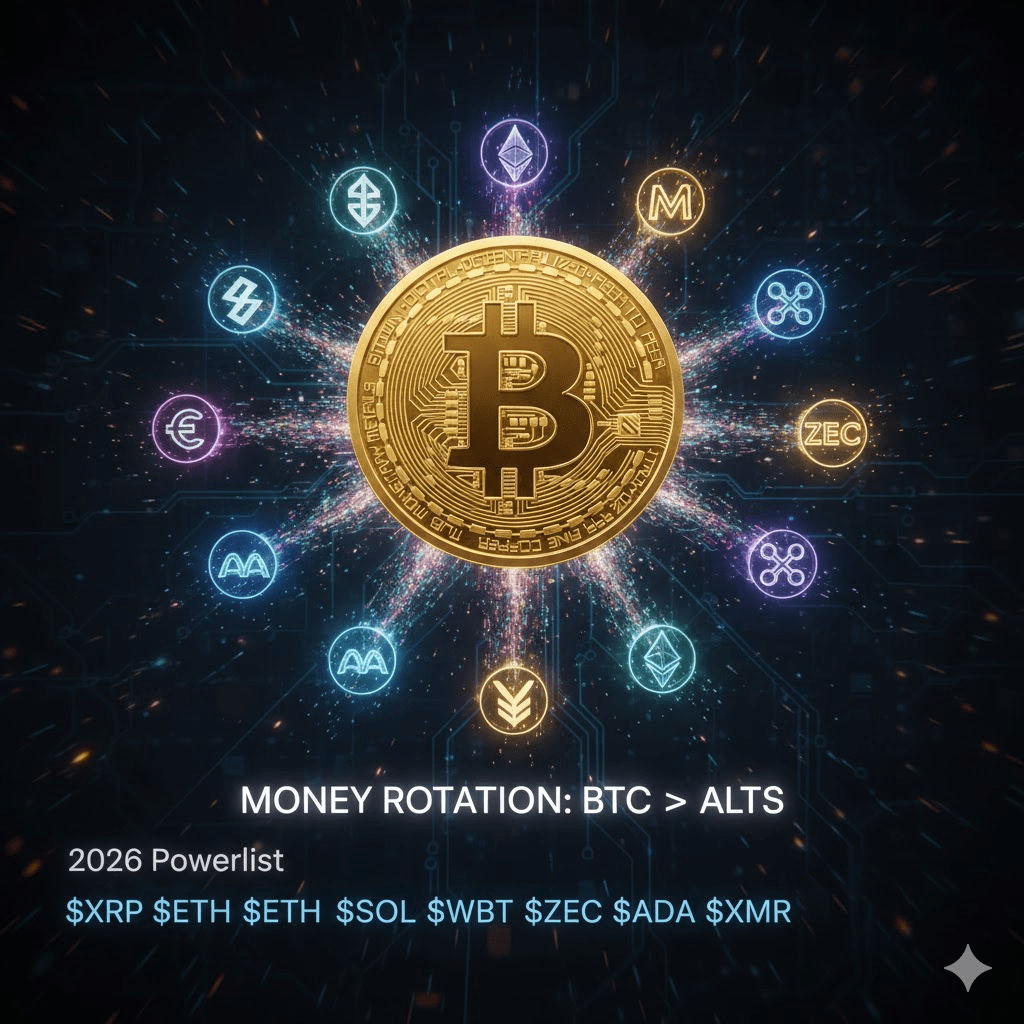
Kiedy coraz bardziej zbliżamy się do 2026 roku, wielu traderów zastanawia się, czy strategia oparta wyłącznie na "Bitcoin" nadal jest najefektywniejszym sposobem na zysk z wzrostu. Choć $BTC stał się fundamentem portfeli instytucjonalnych, jego rola zmienia się w kierunku bardziej stabilnego aktywu, pełniącego funkcję "przechowywania wartości". Ten przełom często stanowi sygnał startowy cyklu przepływu kapitału.
Powerlist 2026: Imiona do obserwacji
Obecnie wśród analizatorów długoterminowych dominuje konkretna lista aktywów. Te projekty są wyróżniane nie tylko z powodu sensacji, ale także z powodu swojego rozwoju strukturalnego i roli na rynku:
$XRP & $ETH : Ugruntowani liderzy w płatnościach transgranicznych i ekosystemach smart contract [cyt. 2026-01-14].
$SOL & $WBT: Sieci o wysokiej wydajności i ekosystemy wspierane przez giełdy, które przyciągają znaczną ilość wolumenu on-chain [cyt. 2026-01-14].
$ZEC & $XMR: Narracja dotycząca prywatności pozostaje krytycznym, choć specjalistycznym, kątem rynku [cyt. 2026-01-14].
$ADA: Kontynuuje swoją drogę w kierunku zarządzania zdecentralizowanego opartego na badaniach [cyt. 2026-01-14].
Plan strategicznej rotacji
Prawdziwa przewaga na tym rynku nie polega na zgadywaniu, która moneta wzrośnie następna; chodzi o zrozumienie przepływu płynności. Dyscyplinowany plan na 2026 roku podąża klasycznym wzorem:
Fundament: Kapitał najpierw osiada w $BTC.
Główne aktywa: Płynność przepływa do aktywów o dużej kapitalizacji, takich jak Ethereum i Solana.
Ekspansja: Kapitał w końcu dociera do mniejszych aktywów, gdy apetyt na ryzyko wzrasta.
Moja perspektywa: Obserwowanie "Hubów Tematycznych" dla tych konkretnych aktywów jest bardziej wartościowe niż śledzenie codziennych świec cenowych. Zrozumienie, dlaczego pieniądze przepływają do konkretnego ekosystemu, to to, co odróżnia profesjonalnego tradera od hazardzisty.
Ankieta społeczności:
Która klasa aktywów, Twoim zdaniem, poprowadzi rotację po następnej fazie konsolidacji Bitcoina?
Layer 1s ($SOL, $ETH) 🌐
Infrastruktura i płatności ($XRP, $WBT) 💳
Prywatność i zarządzanie ($ZEC, $ADA) 🔒