Knowing When to Close: The Difference Between Greed and Growth
Every trader loves seeing green numbers on the screen. A strong move, a clean setup, price moving exactly in the expected direction. It feels validating. It feels rewarding. But this is also the most dangerous phase of any trade.
Not when you’re in loss. Not when the setup is unclear.
The most dangerous moment is when everything looks perfect.
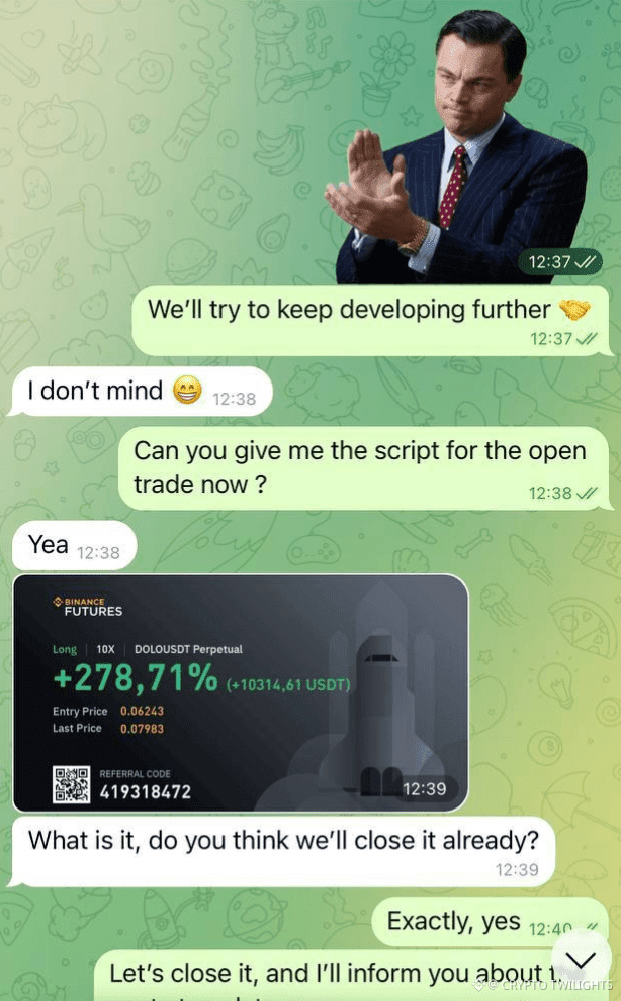
The image above captures that exact moment. A trade deeply in profit. Confidence in the execution. Mutual understanding that things are working well. And then comes the most important question in trading:
“Do you think we should close it already?”
That single question separates disciplined traders from emotional ones.
---
Big Profits Don’t Just Test Strategy — They Test Character
Anyone can hold a losing trade and hope. Anyone can enter a position. But not everyone can close a highly profitable trade without hesitation.
Why?
Because profit creates attachment.
When numbers grow, the mind starts rewriting the plan:
“What if it goes even higher?”
“This move looks strong.”
“I don’t want to miss the extension.”
Greed doesn’t always look like desperation. Sometimes it looks like confidence.
That’s why discipline matters most when you’re winning.
---
The Market Doesn’t Care About How Good It Looks
A trade showing massive unrealized gains does not mean the market is obligated to continue. Strength can fade in minutes. Momentum can disappear without warning. News, liquidity shifts, or simple exhaustion can reverse a move instantly.
Professional traders understand one thing very clearly: The market gives opportunities — it does not promise continuation.
When price delivers more than expected in a short period, that is not a signal to demand more. It’s a signal to respect what has already been given.
---
Closing Is a Decision, Not a Reaction
In the conversation, notice how the decision to close is calm and immediate. No debate. No emotional negotiation. No hesitation.
“Exactly, yes. Let’s close it.”
That sentence carries weight.
It means:
The plan has been fulfilled
Risk is no longer justified
Capital protection now matters more than potential
This is not fear. This is maturity.
Closing a trade like this is not reacting to fear of loss. It’s executing a decision made before the trade was ever opened.
---
Unrealized Gains Are Fragile
Unrealized profit feels powerful, but it is also extremely fragile. It exists only as long as price cooperates. The moment the market changes its mind, unrealized profit can evaporate.
Experienced traders treat unrealized gains with caution, not excitement.
They ask:
Has my target been reached?
Is momentum slowing?
Is risk-reward still favorable?
If the answer is no, the trade no longer deserves exposure — no matter how good it looks.
---
Why “Let’s Close It” Is Often the Best Trade of the Day
Sometimes, the best trade you make is the one you exit.
Closing at the right time:
Protects capital
Protects confidence
Protects discipline
Over time, this behavior compounds. Not just financially, but mentally. You build trust in yourself. You learn that you don’t need to squeeze every move to succeed.
Consistency comes from surviving hundreds of trades, not winning one spectacular trade.
---
The Ego Trap of Big Percentage Numbers
Large percentage gains are seductive. They make traders feel invincible. This is where ego quietly enters the system.
Ego says:
“I was right, so I’ll stay longer.”
“I understand the market now.”
“This is different.”
But the market humbles ego faster than anything else.
Smart traders do not trade to prove they are right. They trade to protect what they have earned.
Closing a big trade is not admitting weakness — it’s refusing to let ego take control.
---
Growth Is Built on Repeatable Decisions
One perfect trade does not make a trader successful. One big profit does not define skill.
What defines a trader is the ability to repeat good decisions over and over:
Entering with logic
Managing risk
Exiting without emotion
The screenshot shows growth not because of the profit number, but because of the decision-making behind it.
That’s what lasts.
---
You Don’t Need the Top — You Need Your Part
Many traders lose money trying to catch the very top or bottom. They want the screenshot to look perfect. They want bragging rights.
Professionals want something else: Their part of the move.
Once your part is taken, staying longer is no longer strategy — it’s hope.
And hope has no place in risk-based decision making.
---
Clear Communication Reflects Clear Thinking
Another important detail here is clarity in communication. There’s no confusion. No mixed signals. Both sides understand what’s happening.
Clear thinking leads to clear communication. Clear communication leads to clean execution.
When trading decisions become simple, it’s usually because complexity has been removed from the process.
---
Final Thought
The market rewards discipline quietly and punishes greed loudly.
Closing a profitable trade at the right time may feel anticlimactic, but it is one of the strongest habits a trader can build.
It shows:
Respect for the market
Control over emotion
Commitment to long-term survival
You don’t grow by holding forever. You grow by knowing when to let go.
And sometimes, the most powerful move in trading is simply saying:
“Let’s close it.”