***Wprowadzenie
Brevis to protokół infrastruktury danych nowej generacji zero-knowledge (ZK) zaprojektowany w celu pomocy zdecentralizowanym aplikacjom (dApps) w bezpiecznym dostępie, weryfikacji i obliczaniu historycznych danych on-chain. Stworzony dla nowoczesnego ekosystemu Web3, Brevis umożliwia inteligentnym kontraktom korzystanie z bogatych danych blockchain bez poświęcania prywatności, skalowalności ani decentralizacji. Rodzimym tokenem ekosystemu jest BREV.
***Problem, który rozwiązuje Brevis
Blockchainy są doskonałe w przechowywaniu danych, ale inteligentne kontrakty napotykają poważne ograniczenia:
Nie mogą łatwo uzyskać dostępu do historycznych lub międzyłańcuchowych danych
Obliczenia na łańcuchu są drogie i wolne
Prywatność jest trudna do osiągnięcia przy weryfikacji złożonych historii użytkowników lub transakcji
Tworzy to tarcia dla zaawansowanych zastosowań, takich jak ocena ryzyka DeFi, zarządzanie DAO, reputacja na łańcuchu i logika gier.
***Czym jest Brevis?
Brevis to ZK współprocesor i warstwa weryfikacji danych, która pozwala inteligentnym kontraktom obliczać na podstawie historycznych danych blockchain off-chain, generować dowód zerowej wiedzy, a następnie przesyłać ten dowód z powrotem na łańcuch do weryfikacji.
Mówiąc prosto:
👉 Brevis pozwala inteligentnym kontraktom "rozumieć przeszłość" bez przechowywania lub przetwarzania ogromnych danych na łańcuchu.
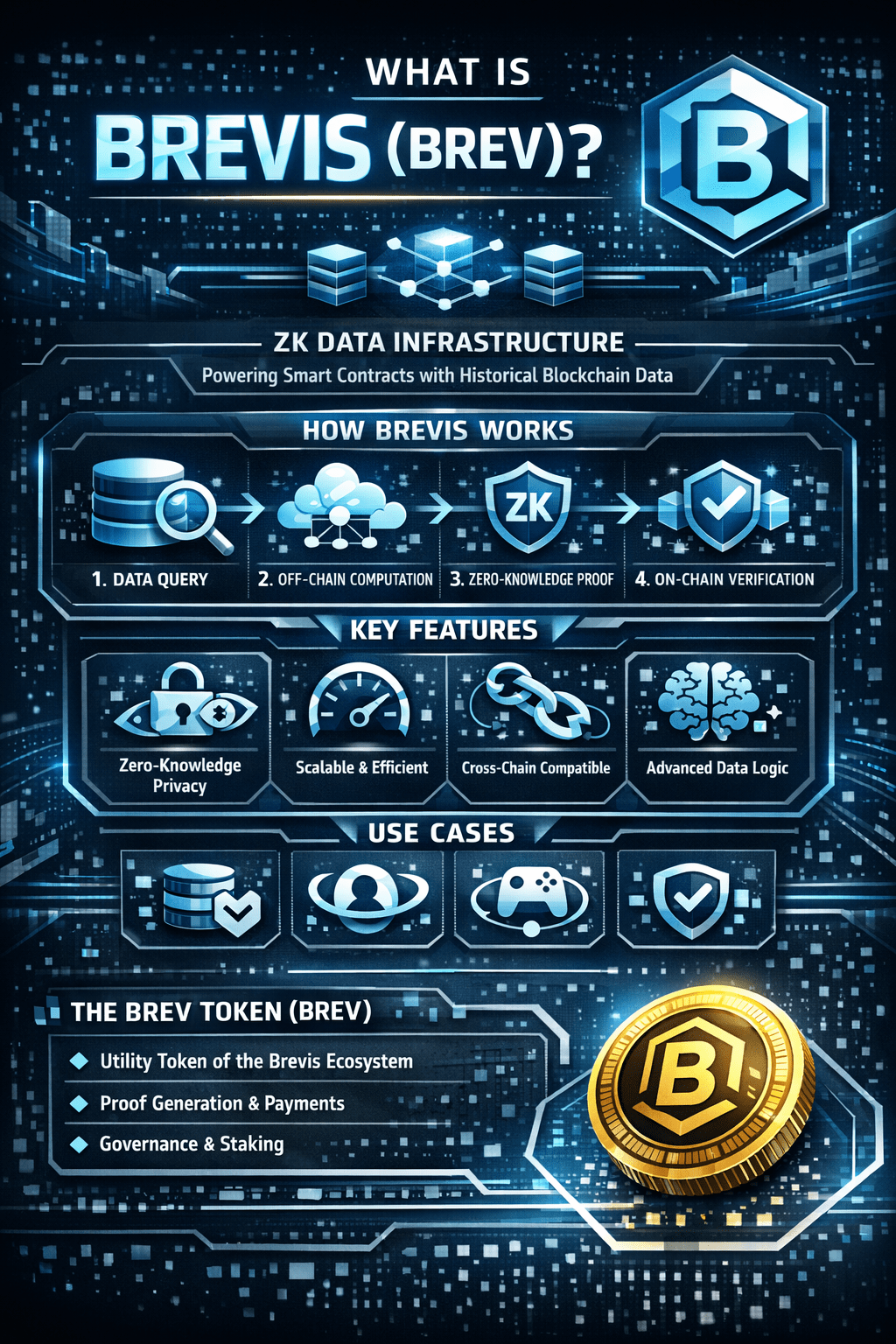
***Jak działa Brevis (uproszczone)
Zapytanie danych – dApp żąda konkretnej historycznej danych na łańcuchu (transakcje, salda, interakcje itp.)
Obliczenia off-chain – Brevis przetwarza te dane off-chain
Dowód zerowej wiedzy – Generowany jest dowód kryptograficzny, aby potwierdzić, że wynik jest poprawny
Weryfikacja na łańcuchu – Inteligentne kontrakty weryfikują dowód tanio i bezpiecznie
Wszystko to dzieje się bez ujawniania wrażliwych danych użytkowników.
***Kluczowe cechy Brevis
🔐 Prywatność zerowej wiedzy
Brevis zapewnia, że dane są weryfikowane bez ujawniania podstawowych informacji.
⚡ Skalowalność
Ciężkie obliczenia są wykonywane off-chain, co zmniejsza opłaty za gaz i zator w sieci.
🌐 Kompatybilność międzyłańcuchowa
Brevis może agregować i weryfikować dane z wielu blockchainów.
🧠 Potężna logika danych
Programiści mogą budować zaawansowaną logikę, korzystając z:
Historia zachowań portfela
Wzorce aktywności DeFi
Rejestry własności NFT
Metryki uczestnictwa DAO
***Zastosowania Brevis
DeFi – Ocena kredytowa, logika likwidacji, optymalizacja zysków
DAOs – Siła głosu na podstawie historycznego uczestnictwa
Tożsamość Web3 – Systemy reputacji bez ujawniania tożsamości
Gry i NFT – Nagrody i rozwój oparte na osiągnięciach
Aplikacje przyjazne zgodności – Ustalanie warunków bez ujawniania danych
***Czym jest token BREV?
BREV jest natywnym tokenem użyteczności ekosystemu Brevis i spodziewa się, że będzie używany do:
Płacenie za generowanie i weryfikację dowodów
Zachęcanie uczestników sieci
Decyzje w zakresie zarządzania i protokołu
Wspieranie długoterminowego wzrostu ekosystemu
***Dlaczego Brevis ma znaczenie
Brevis łączy prywatność, skalowalność i inteligencję danych, co czyni go kluczowym elementem dla następnej fali aplikacji Web3. W miarę jak dApps stają się coraz bardziej złożone i oparte na danych, protokoły takie jak Brevis będą odgrywać kluczową rolę w umożliwieniu obliczeń bez zaufania z rzeczywistą użytecznością.
***Podsumowanie
Brevis (BREV) redefiniuje sposób, w jaki inteligentne kontrakty współdziałają z danymi blockchain. Wykorzystując dowody zerowej wiedzy i obliczenia off-chain, Brevis odblokowuje potężne, zachowujące prywatność zastosowania, które wcześniej były niemożliwe lub zbyt kosztowne na łańcuchu. Reprezentuje to znaczący krok naprzód w kierunku skalowalnej i inteligentnej infrastruktury Web3.