


The structure of the American economy has undergone a dramatic transformation. For decades, the "US consumer" was synonymous with a broad, thriving middle class. Today, that narrative is mathematically obsolete. New data reveals that the top 10% of earners now account for a record 49% of all consumer spending, effectively making the US economy dependent on the wealth of a small minority rather than the wages of the majority.
❍ A Dramatic Shift in Spending Power
The consolidation of economic power is accelerating.
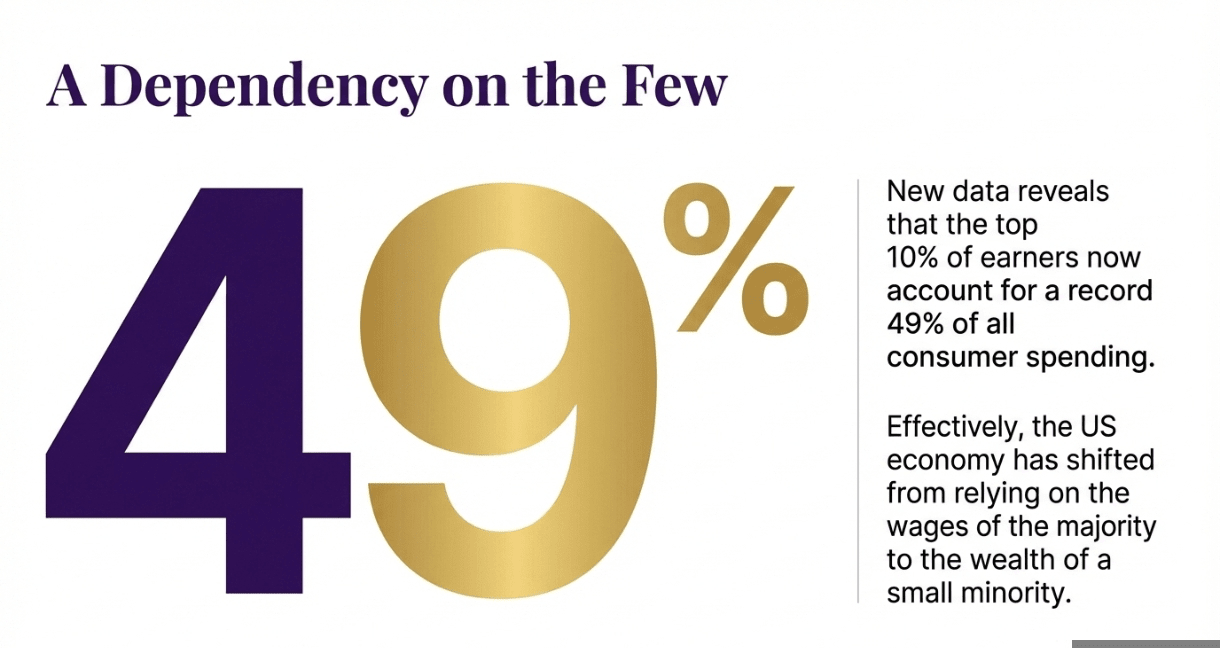
49% of Spending: The top 10% of earners are now responsible for nearly half of every dollar spent in the US.
+13 Point Rise: This isn't a sudden blip; it is a structural trend. This share has risen by +13 percentage points over the last 30 years, marking a massive transfer of economic influence from the middle to the top.
❍ The Bottom 80% Are Vanishing from the Narrative
While the top tier spends more, the vast majority of Americans are contributing less to the economic engine.
Just 37% of Spending: The bottom 80% of earners, the traditional working and middle class—now represent only ~37% of total consumer expenditures.
-11 Point Decline: Since 1995, this group's share of spending has collapsed by -11 percentage points. The "mass market" is shrinking in relevance.
❍ GDP Is Now a Function of Asset Prices
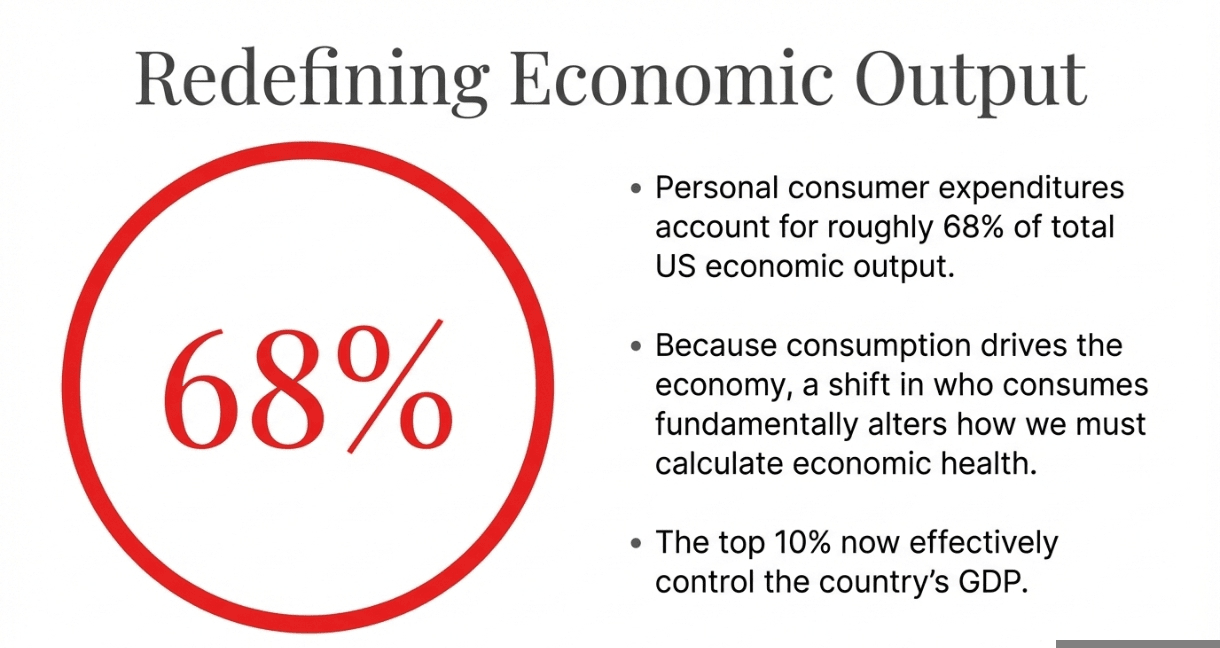
This shift has profound implications for how we calculate economic health. Since personal consumer expenditures account for roughly 68% of total US economic output, the top 10% now effectively control the country's GDP.
33% of GDP: The top 10% alone account for a record 33% of the entire US GDP.
25% of GDP: In stark contrast, the bottom 80% now drive just 25% of the US economy.
Some Random Thoughts 💭
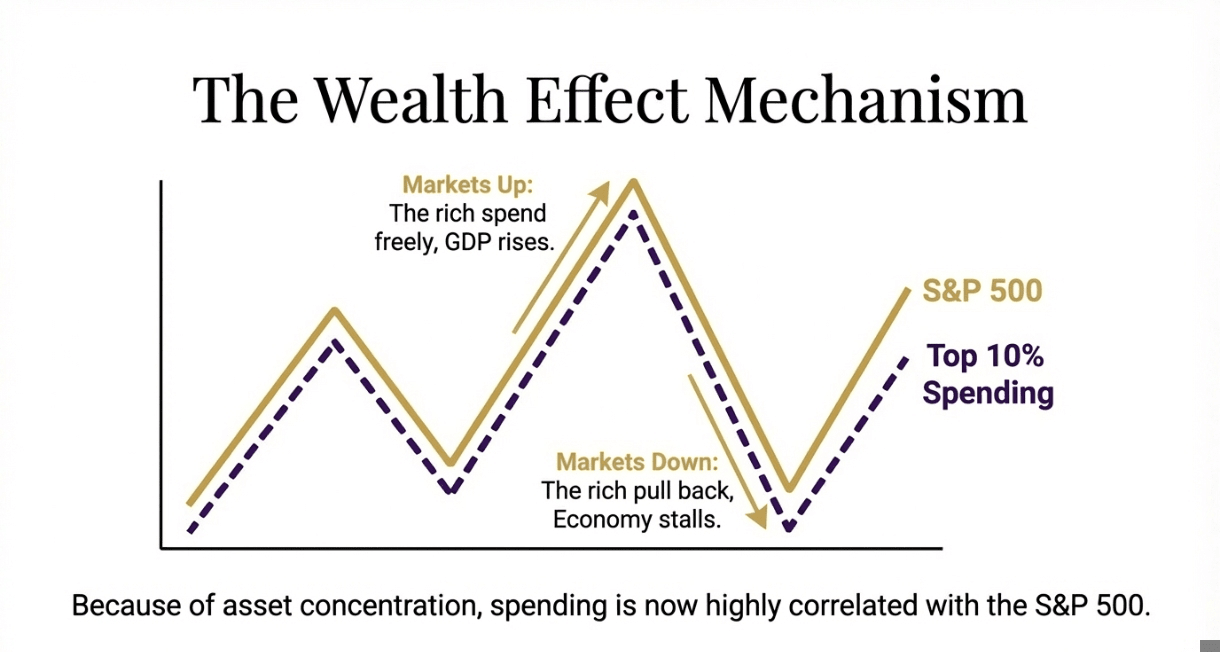
This data explains why the economy often feels disconnected from the average person's reality. We have transitioned from a wage-based economy to an asset-based economy. Because the top 10% own the vast majority of stocks and real estate, their spending is highly correlated with the S&P 500. When markets are up, they feel rich and spend freely, propping up GDP.
When markets fall, the "wealth effect" reverses, and the economy stalls. We have effectively built a system where the bottom 80% are just passengers, and the top 10% are the only ones with their hands on the wheel. Asset owners are the only winners; everyone else is just watching the game.