

Walrus as a Digital Commodity: Is It There Yet?
Let’s talk about Walrus (WAL) and this idea floating around that it could become a digital commodity. Honestly, it’s a fascinating thought, especially now, when people seem to care more about infrastructure tokens than just chasing the next speculative pump. But is it really time to call Walrus a digital commodity? Or are we getting ahead of ourselves? To figure that out, we’ve got to get clear about what “digital commodity” even means in crypto—and see where Walrus actually fits.
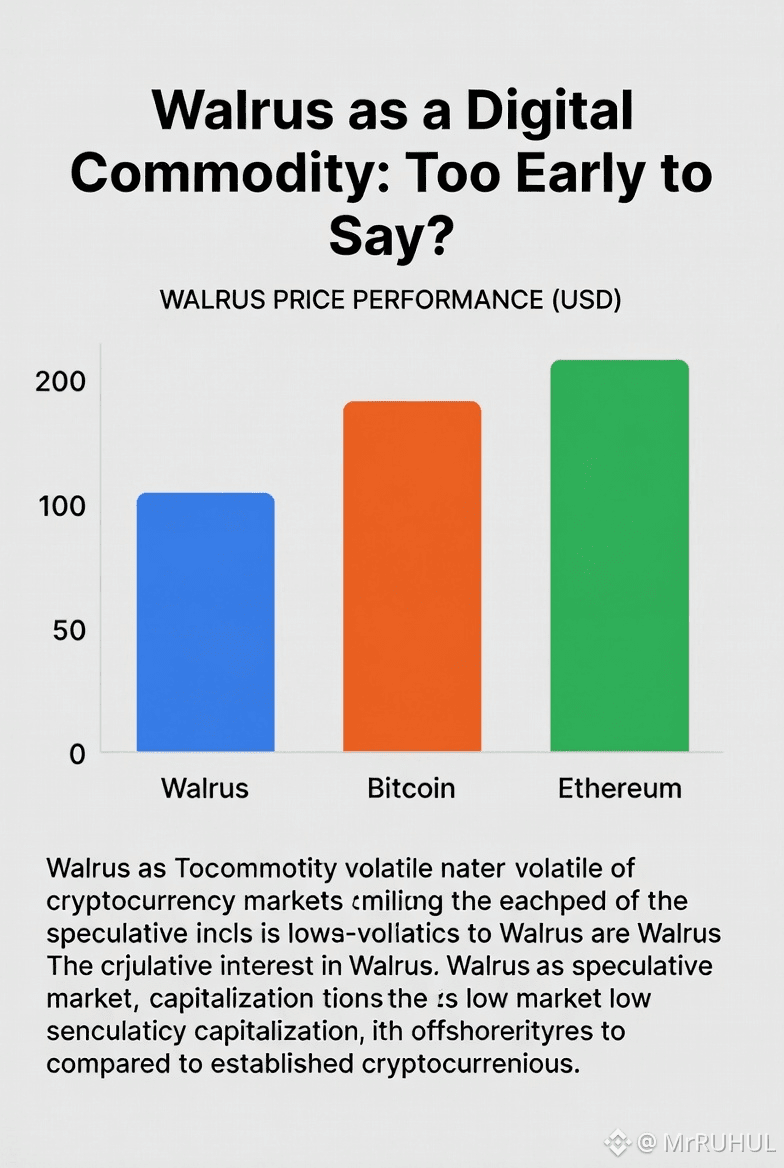
A digital commodity isn’t just another token that goes up and down in price. It’s something people actually need, all the time—a token that gets its value from steady demand for a real service, has a clear use, and sits right in the guts of digital infrastructure. Think Bitcoin, obviously. But you see similar moves with tokens powering storage, bandwidth, computing, and data networks. These projects all want to turn digital resources into tradeable goods. Walrus is right in that mix, aiming at decentralized storage.
If you’re just looking at the basics, Walrus already looks more like a commodity than just another app token. Storage isn’t some passing fad; it’s universal. Everyone needs it, no matter what’s trendy or what kind of mood the market’s in. Bull market, bear market, whatever—data still needs to be stored and accessed. So storage feels a lot more like core digital plumbing than flashy software. Walrus, with its focus on scalable decentralized storage, sits pretty comfortably in that “potential commodity” zone.
But here’s the thing—intent doesn’t make something a commodity. Outcomes do, and they take time. Commodities usually share three traits: people always need them, prices get squeezed by competition, and the story stops mattering as much. That’s where the “too early” part comes in. Walrus is still getting its network off the ground. Most of the demand right now is people hoping it’ll get big—not people actually using it at scale. The market’s still driven by what could happen, not by massive storage demand today.
You know you’ve made it as a commodity when usage matters more than speculation. For Walrus, that would mean real, ongoing demand from apps, protocols, businesses—folks who need it, no matter what WAL is trading at. Until storage demand breaks free from the token’s price swings, WAL acts more like an early-stage infrastructure play than a true commodity. And that’s fine. It’s just where it is right now.
Pricing matters, too. Commodities get cheaper and more efficient as they scale up—think lower storage costs, more throughput. For Walrus, the real test is whether WAL’s value grows with volume and actual usage, not just because people think it’ll be scarce. If the token’s main job becomes settling usage, providing collateral, or enabling access—and not just speculation—that’s when the commodity story really kicks in. But you only see that stuff with real scale and time.
Don’t forget decentralization. Commodities aren’t supposed to be controlled by any one group or person. Walrus’s shot at being a true digital commodity depends on how decentralized its storage providers, governance, and economics actually get. Early on, a little centralization happens—it’s almost unavoidable. But if that sticks around too long, it chips away at the whole commodity argument. So, on that front too, it’s just a bit early to call.
And let’s be honest, crypto always loves a good story before the facts catch up. Calling Walrus a digital commodity today is risky—it’s almost like trying to skip to the ending before the hard work is done. Ironically, the less hype there is and the more people just use Walrus without thinking about it, the closer it gets to real commodity status.
Still, it’d be silly to write off the whole idea. Walrus is pointed in the right direction. Storage is one of the few parts of crypto that actually has a clear path to becoming a commodity. If Walrus nails scale, reliability, and keeps prices competitive, WAL could turn into more of a digital resource than a tech stock. Not many projects even get that chance.
So, is it too soon to call Walrus a digital commodity? Yeah, if you’re being strict. There’s just not enough real usage and data yet to say that with a straight face. But is it too soon to say Walrus is heading that way? Not really.
Right now, Walrus is a digital infrastructure asset with real commodity potential. Whether it crosses that line depends less on price and more on whether it becomes something nobody talks about—because everyone just uses it and it works. In crypto, that’s the hardest trick to pull off. But it’s also the one that matters most.@Walrus 🦭/acc #Walrus $WAL


