
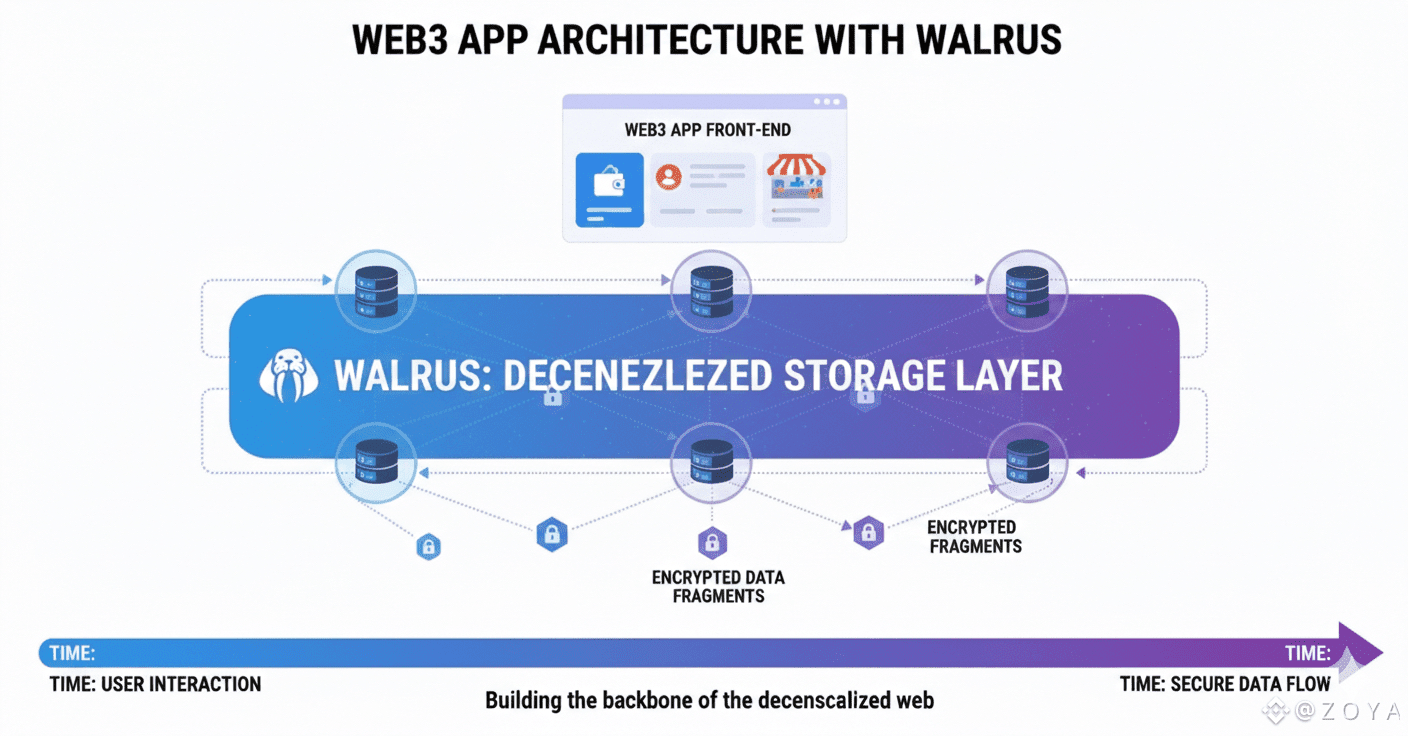
You don’t notice it until it breaks.
A file hangs. A dataset disappears. An NFT image fails to load mid-drop. That’s when the quiet parts of Web3—the ones no one tweets about—become suddenly loud.
Walrus lives there. In the neglected corners. In the low-lit corridors of infrastructure that nobody glances at. And it thrives on being ignored. Because when storage is reliable, it’s invisible. It just works. When it’s not, everyone panics.
The system is messy by design. Data gets sliced, encrypted, and scattered across independent nodes. Losing a few fragments doesn’t matter. Losing trust does. Nodes vanish. Connections fail. Life happens. Walrus expects that. It plans for it. Chaos isn’t an enemy. It’s part of the game.
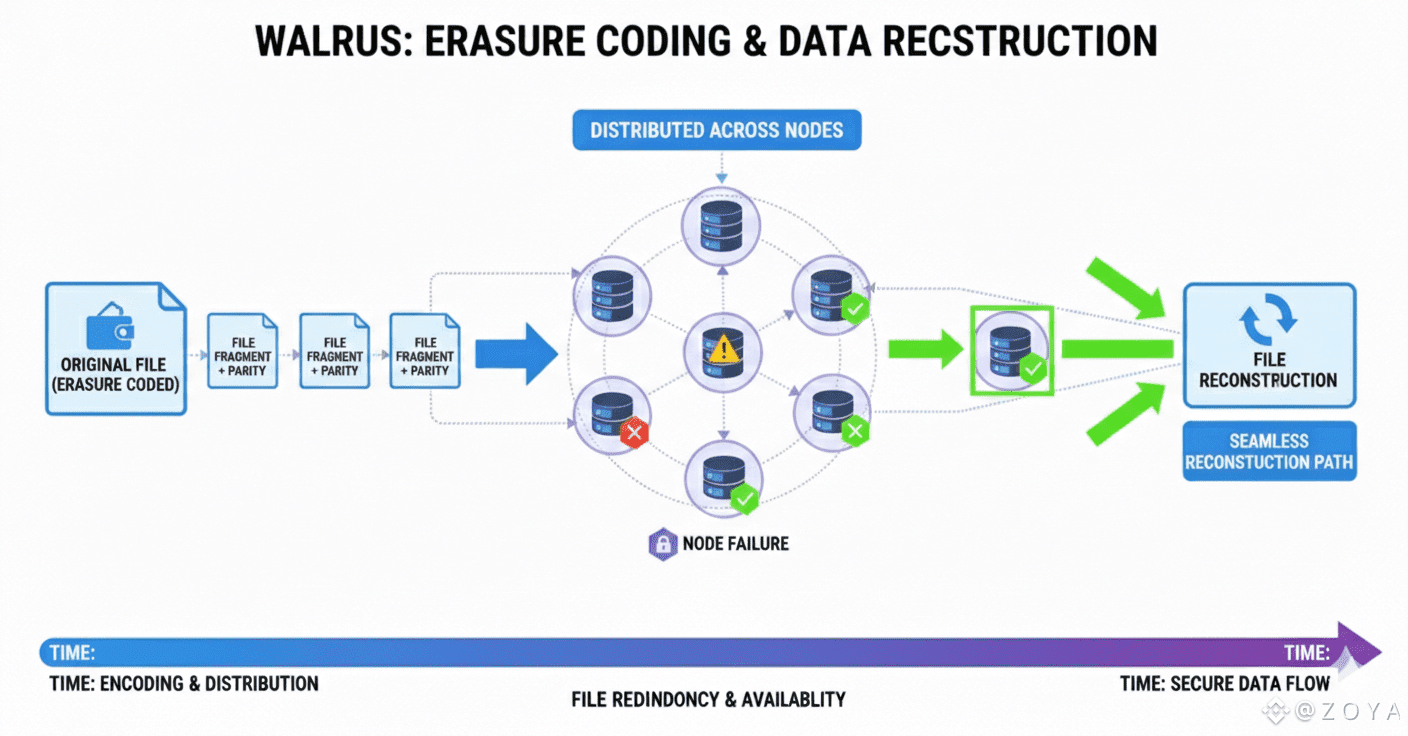
Privacy is uncompromising. No node can peek. No insider can reconstruct data. The burden of curiosity is removed. Indexing and analytics take work, but that’s intentional. Security costs inconvenience, and Walrus is willing to pay it.
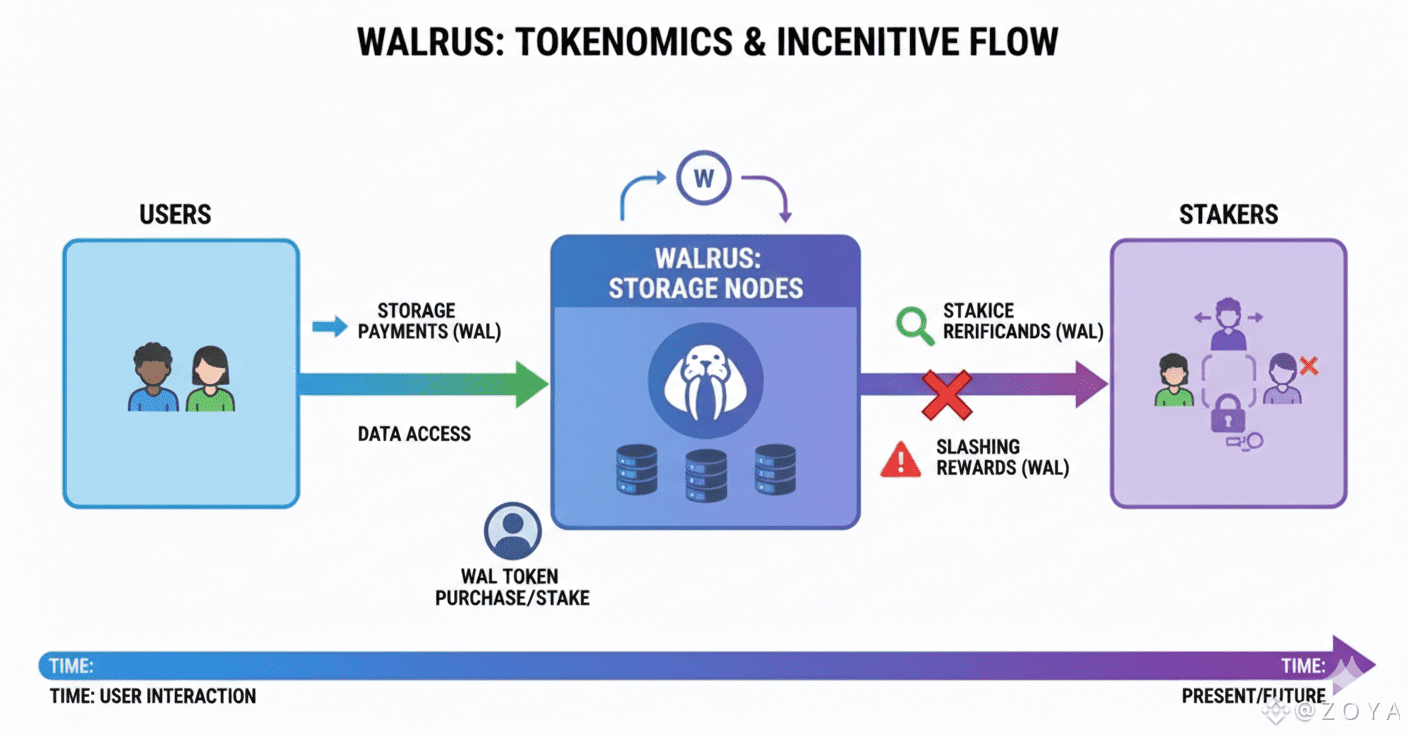
The WAL token doesn’t wink at you. It disciplines you. Operators stake. Users pay. Misbehavior costs real value. Incentives aren’t a gimmick—they’re gravity. They keep the network honest without anyone standing over it with a checklist.
Adoption won’t arrive in press releases. Storage doesn’t trend. It sneaks in. Builders notice the difference after their first outage-free deployment. Then another. Then enough that missing files feel like a bad memory from before. That’s how real infrastructure wins. Quietly. Without applause.
Walrus won’t be flashy. It won’t show up in headlines. But when it works, nothing else matters. You don’t thank a light switch. You just flip it, and it’s there. That’s the power Walrus is building. The kind that underpins everything else without asking for a medal.

