
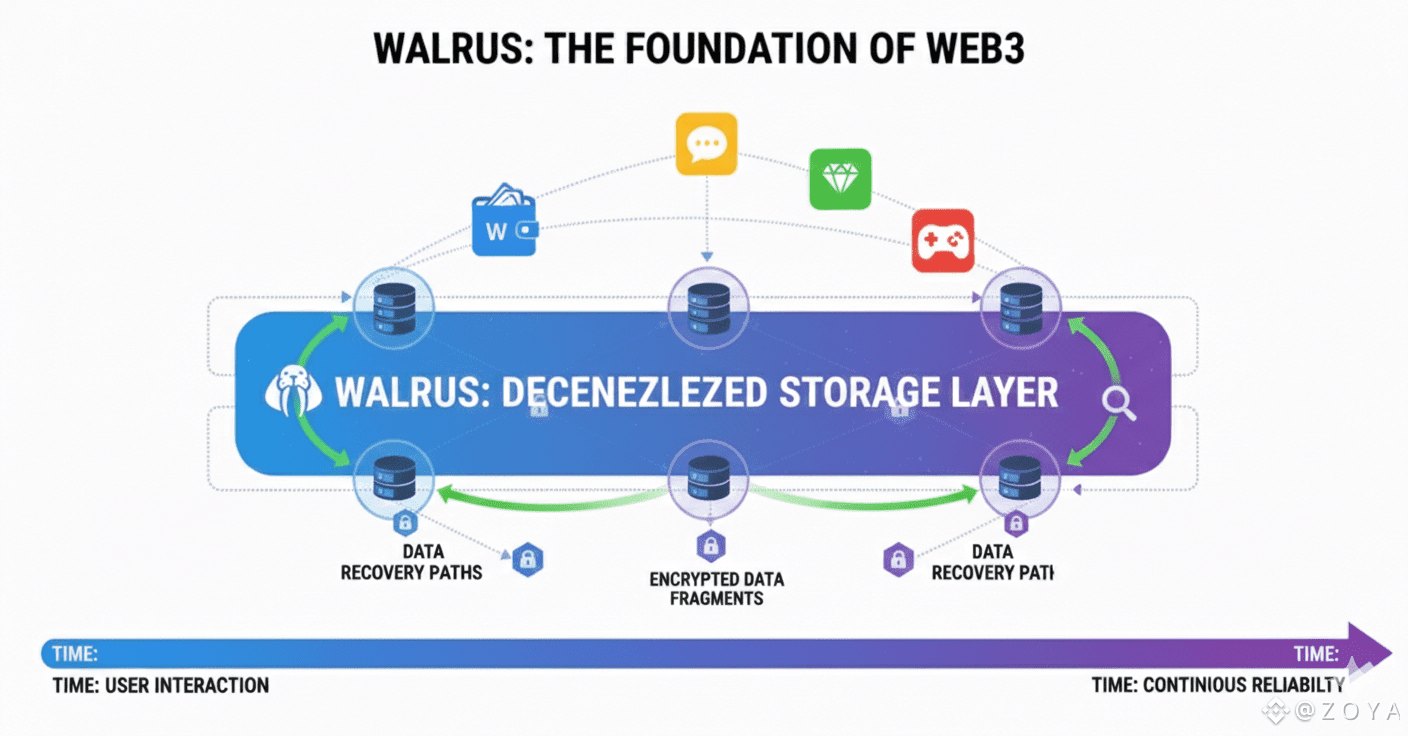
Everyone loves the shiny layer. The flashy apps. The hype. Until it vanishes. Then the real work shows up. The layer no one talks about. The one holding all the chaos in place. That’s Walrus.
It doesn’t beg for attention. It doesn’t promise virality. It quietly handles failure. Nodes drop. Fragments scatter. Loads spike. And still, the system hums. That’s the kind of resilience nobody can fake with a splashy launch or a Twitter thread.
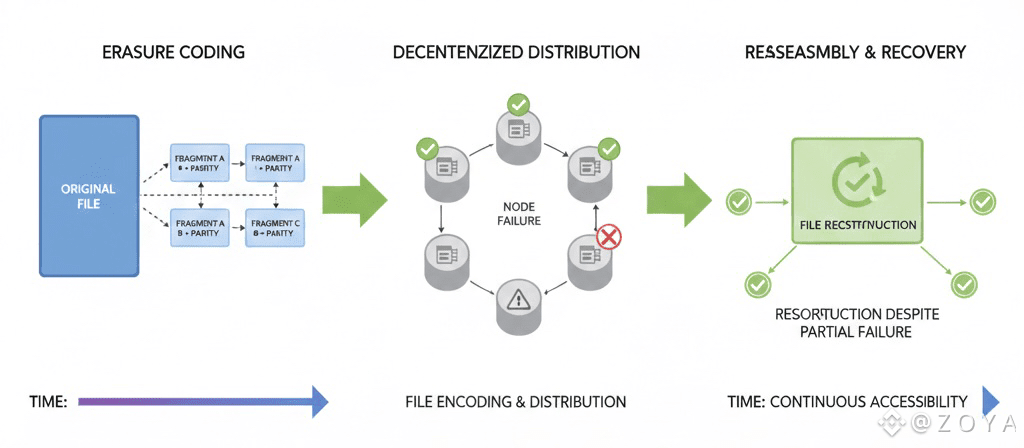
This is what makes builders uneasy. Walrus doesn’t offer excuses. Outages aren’t luck. They’re flaws in design. By assuming instability, Walrus removes the illusion that everything else can just “work itself out.” Redundancy isn’t a buzzword. It’s insurance against human error, hardware failure, and bad timing. Elegance here is practical, not aesthetic. It’s about files surviving 3 a.m. server crashes, not looking pretty on a slide.
Privacy is just as deliberate. Nodes see nothing. Fragments are meaningless alone. Curiosity is irrelevant. That’s the discipline baked in. Convenience is sacrificed because permanence demands it. This isn’t a playground; it’s infrastructure built for those who care what happens when everyone else leaves.
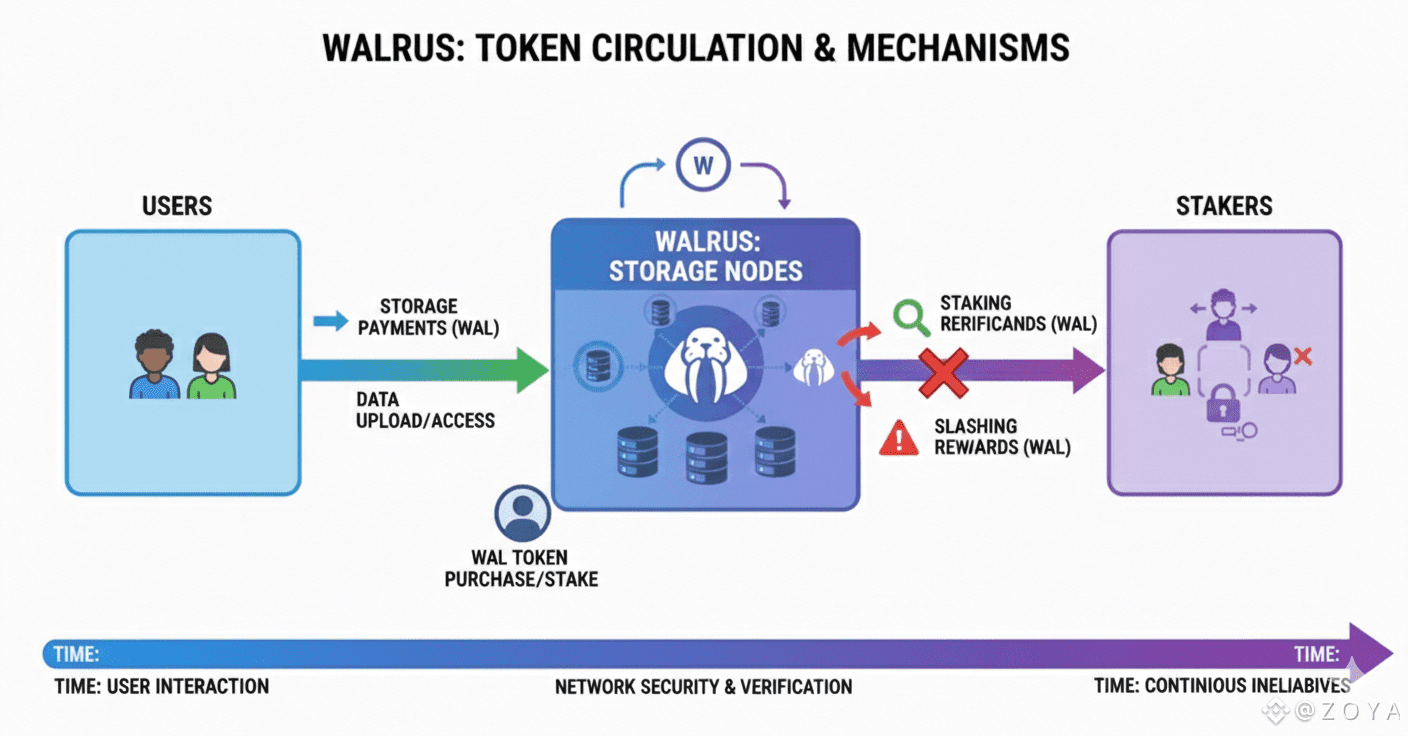
WAL behaves the same way. Stake, earn, fail, or pay. Consequences aren’t optional. There’s no grand narrative—just a network behaving predictably under pressure. That’s power. That’s gravity. That’s why someone building a serious system will care more about WAL than any flashy token with a marketing budget twice its size.
Storage doesn’t trend. You don’t post about uptime. But when apps stop breaking, the quiet layer becomes the difference between chaos and order. That’s Walrus’ ambition: not to be noticed, not to be loved, but to be indispensable. Reliable, unsexy, and completely necessary.

