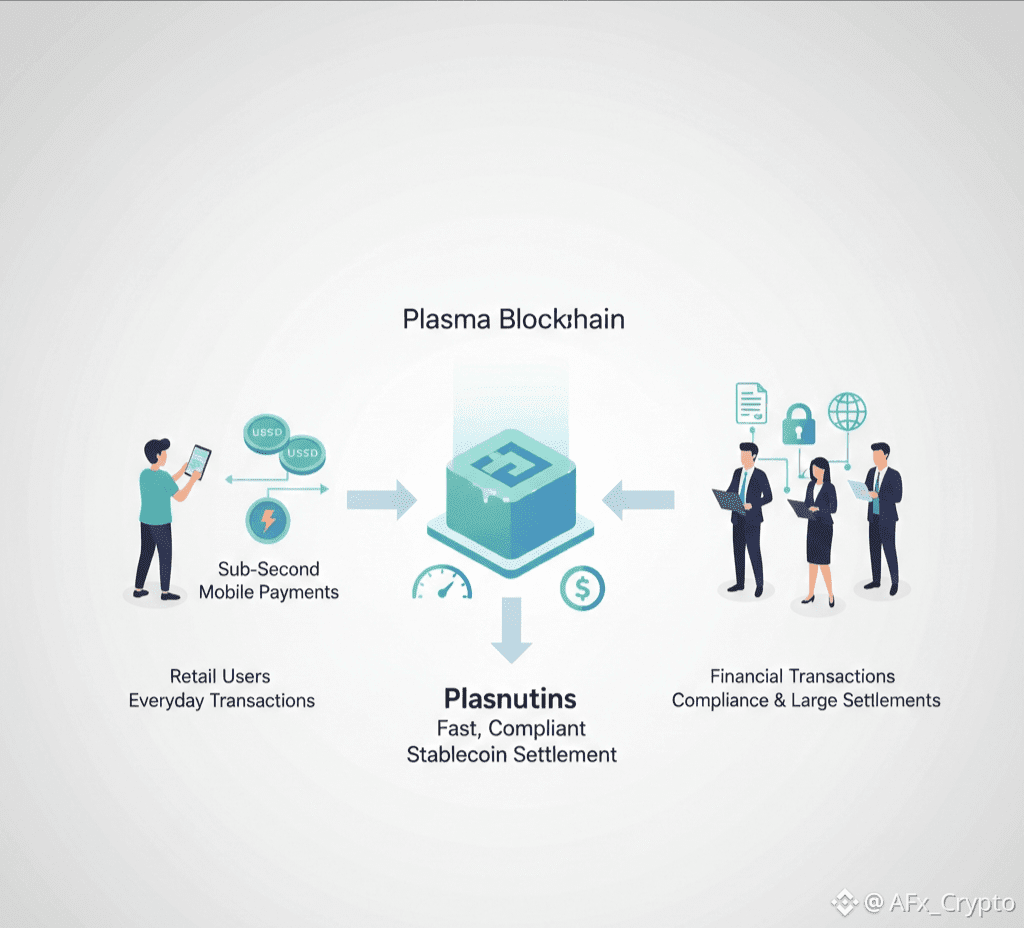
@Plasma is a Layer 1 blockchain designed with a clear and focused objective: to support efficient, reliable, and compliant stablecoin settlement for real-world financial use cases. While many blockchains aim to serve a wide range of applications, Plasma concentrates on optimizing the core infrastructure needed for digital payments, particularly those involving stablecoins such as USDT.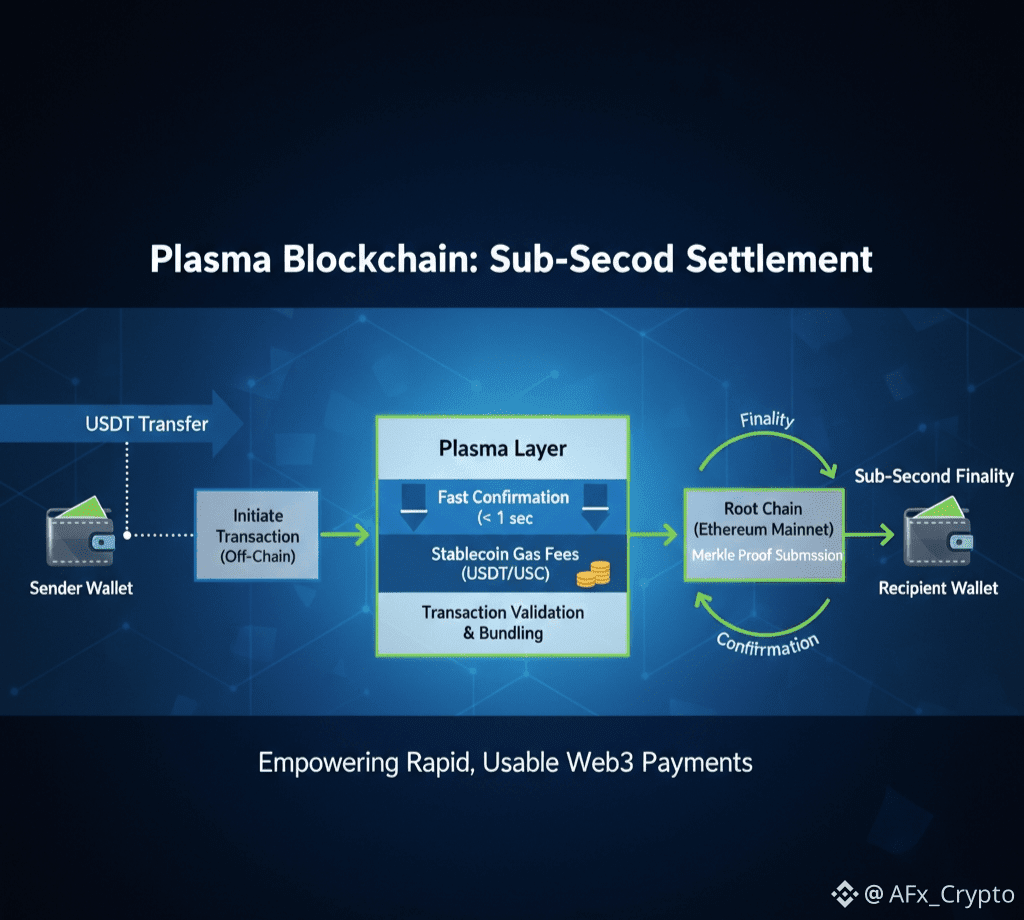
At the protocol level, Plasma offers full EVM compatibility through the Reth client. This allows developers to deploy existing Ethereum-based smart contracts with minimal modification. Familiar tooling, libraries, and development workflows can be reused, reducing friction for teams migrating applications or building new payment-focused solutions on Plasma.
One of Plasma’s defining technical features is its sub-second finality, enabled by the PlasmaBFT consensus mechanism. Faster finality reduces settlement uncertainty, which is especially important for payment systems where delays can affect user trust, merchant operations, and liquidity management. In traditional financial infrastructure, predictable settlement times are critical. Plasma aims to replicate that reliability in an on-chain environment.
A major focus of the network is improving the usability of stablecoin transactions. Plasma supports gasless USDT transfers, removing the requirement for users to hold a volatile native token just to move funds. In addition, transaction fees can be paid directly in stablecoins. This improves cost predictability for both individuals and businesses, making stablecoin payments more practical for everyday use cases such as remittances, merchant payments, and cross-border transfers.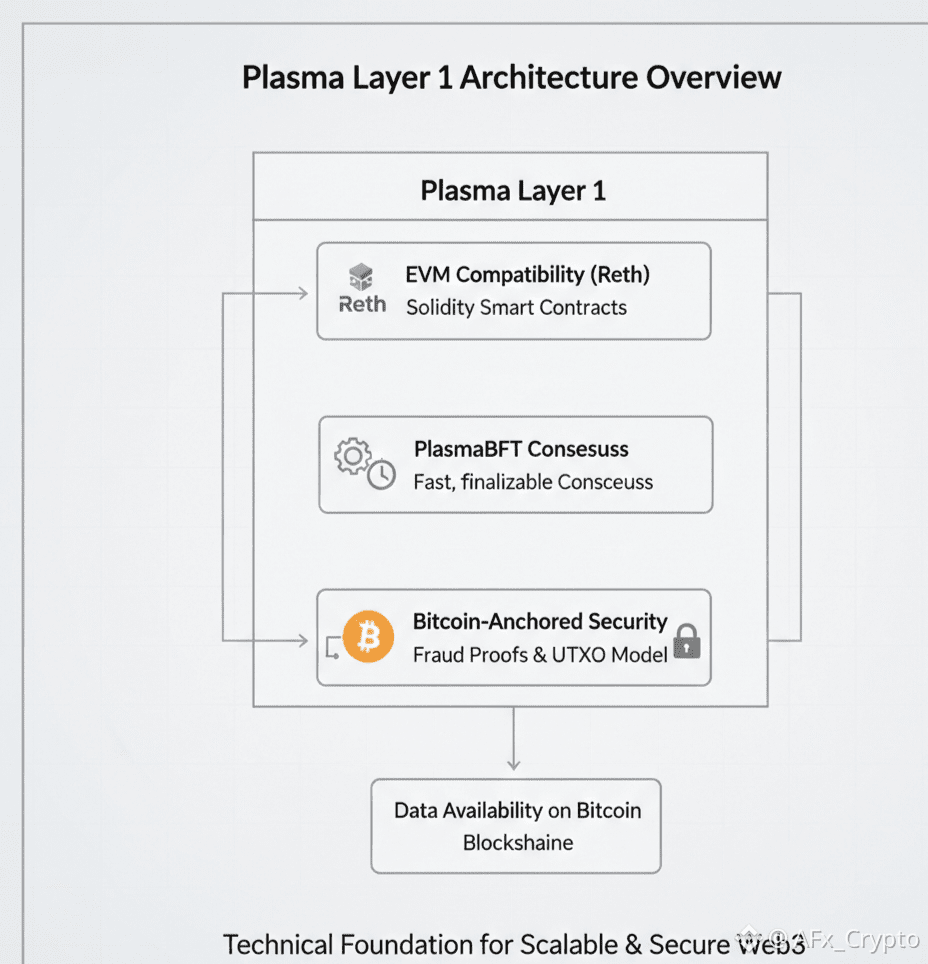
From a security and neutrality perspective, Plasma is designed with Bitcoin-anchored verification. By referencing Bitcoin’s security model, Plasma strengthens censorship resistance and reduces reliance on a single execution environment. This approach supports trust in the settlement layer, particularly for institutional and regulated financial use cases where neutrality and resilience are important considerations.
Plasma’s infrastructure is built to serve two primary user groups. The first is retail users in regions with high stablecoin adoption, where stablecoins are commonly used for savings, payments, and international transfers. These users benefit from fast confirmations, predictable fees, and simplified transaction processes. The second group is institutions in payments and financial services that require reliable settlement, compliance-friendly infrastructure, and integration with existing financial workflows.
Rather than competing as a general-purpose blockchain, Plasma positions itself as a specialized settlement layer. Its design choices reflect the specific needs of stablecoin-based finance: fast execution, predictable costs, regulatory compatibility, and strong security foundations. This focused approach allows Plasma to optimize for payment efficiency without compromising on reliability or developer accessibility.
As stablecoins continue to play a larger role in global digital finance, infrastructure that supports their safe and efficient use becomes increasingly important. Plasma’s combination of EVM compatibility, sub-second finality, stablecoin-native features, and Bitcoin-anchored security reflects a long-term strategy to support the next generation of digital payment systems.